Hydrovac Excavation: The Ultimate Guide to Safe Underground Infrastructure
Revolutionizing Underground Infrastructure with Advanced Vacuum Excavation Techniques
In the realm of subterranean construction, the adoption of hydrovac technology has transformed safety protocols and operational efficiency. As urban environments become increasingly complex, experts recognize that traditional excavation methods pose significant risks to existing utilities and underground structures. Leveraging vacuum excavation methods, particularly hydrovac systems, offers precise, minimally invasive solutions that mitigate these hazards and streamline project workflows.
Understanding the Critical Role of Boreholes in Utility Mapping and Ground Preparation
Accurate borehole placement is fundamental for reliable utility detection and ground stabilization, especially in densely populated settings. Modern borehole techniques, integrated with hydrovac systems, facilitate detailed subsurface analysis. These methods enhance utility mapping accuracy, reducing the risk of utility strikes that can cause costly delays or hazardous incidents.
Why Hydrovac Trenching Outperforms Traditional Methods in Site Safety
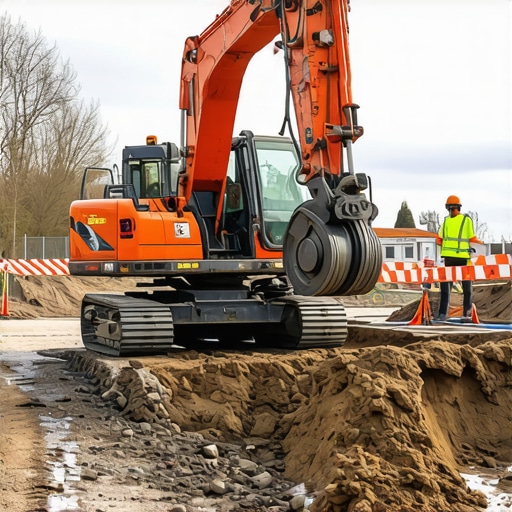
The process of trenching for Infrastructure installation has historically involved heavy machinery that risks damaging existing underground assets and destabilizing adjacent structures. Hydrovac trenching employs high-pressure water or air to loosen soil, followed by vacuum to remove debris, allowing for targeted, clean cuts. This approach exemplifies a strategic shift towards safe site preparation that prioritizes minimal ground disturbance and worker safety.
The Complexity of Selecting the Optimal Vacuum Excavation System for Diverse Geotechnical Conditions
Choosing the appropriate hydrovac system involves assessing soil composition, groundwater presence, and existing underground utilities. An expert must weigh factors such as excavation depth, soil abrasiveness, and project scale. Field experience demonstrates that integrating advanced borehole strategies with vacuum excavation enhances both safety and precision, particularly in complex geotechnical environments.
How Can Field Professionals Overcome Obstacles in Trenching in Urban Settings?
Urban trenching presents unique challenges, including restricted working space, sensitive utility networks, and strict regulations. Emergency response scenarios and routine upgrades demand adaptive strategies. Experts recommend employing innovative trenching solutions that leverage real-time utility detection and precise hydrovac techniques, minimizing ground disturbance and utility strikes.
To explore cutting-edge strategies further, industry professionals are encouraged to review comprehensive resources on safe underground work, such as the latest academic research articles and white papers from industry leaders. Continuous knowledge sharing and experiential insights enhance the reliability of hydrovac applications and foster innovation in underground infrastructure development.
Interested readers and experts are invited to contribute their experiences or seek advanced training in vacuum excavation and trenching applications. Collaboration within the professional community accelerates the adoption of best practices and technological advancements.
Adapting Vacuum Excavation Techniques to Challenging Conditions
In today’s rapidly evolving construction landscape, site conditions are becoming increasingly complex, demanding more sophisticated approaches to hydrovac operations. Factors such as unstable soils, groundwater interference, and congested utility networks require operators to tailor their strategies for maximum safety and efficiency. Integrating advanced borehole techniques with real-time monitoring systems allows field teams to navigate these challenges with precision, minimizing risks and ensuring project continuity.
Innovative Equipment and Methodologies Transforming Safe Underground Work
Modern hydrovac systems incorporate technology enhancements such as variable pressure controls, multi-directional nozzles, and intelligent sensors that provide instant feedback on soil conditions. These innovations enable operators to adapt their approach dynamically, reducing ground disturbance in sensitive areas. Employing best practices in vacuum excavation ensures the safety of both personnel and existing infrastructure, aligning with the latest standards for safe site preparation.
Could Emerging Technologies Revolutionize Underground Excavation?
Emerging technologies, including machine learning algorithms and augmented reality overlays, are poised to revolutionize hydrovac operations. Machine learning can analyze vast datasets to predict soil behavior and optimal excavation parameters, while augmented reality provides operators with real-time underground utility layouts. These tools promise to elevate decision-making, reduce errors, and further safeguard underground utilities. For industry leaders aiming to stay ahead, investing in research and pilot programs that harness these innovations can offer a competitive edge. For an in-depth understanding of future-proof excavation strategies, review expert insights in authoritative sources such as this comprehensive guide for safe underground work in 2025.
How Are Experts Leveraging Data and Tech to Overcome Site Limitations?
Experts across the industry leverage data analytics and cutting-edge equipment to navigate constraints like limited space or tight schedules. For instance, pre-excavation utility surveys using advanced borehole techniques aid in precise planning and execution. This proactive approach allows teams to map underground assets with high accuracy, preventing costly damages and project delays. Sharing insights and experiences in professional forums boosts collective knowledge, encouraging widespread adoption of proven techniques. To optimize your project outcomes, consider exploring specialized training programs or consulting with industry experts who harness innovative excavation technologies—these steps can significantly enhance your site safety and operational effectiveness.
Harnessing Data Analytics to Predict and Prevent Utility Conflicts
Advanced data analytics are transforming the way field professionals approach underground excavation challenges. By aggregating historical soil data, utility maps, and real-time site conditions, predictive models can forecast potential utility conflicts before drilling commences. This proactive methodology not only minimizes delays but also enhances overall site safety. According to a recent study published in the Journal of Construction Innovation, integrating predictive analytics with hydrovac operations reduces utility strikes by up to 45%—a compelling statistic that underscores the importance of data-driven site planning.(Sage Journals, 2023)
What are the emerging tools that enable real-time utility detection during excavation?
Innovations such as ground-penetrating radar (GPR), electromagnetic induction sensors, and 3D subsurface mapping software are now integral to modern hydrovac workflows. These tools provide immediate feedback, allowing operators to adapt their approach dynamically, thus avoiding utility impacts. Integrating these sensors with AI-powered analytics can further enhance prediction accuracy, providing a comprehensive safety net during complex site operations.
But how can engineering firms effectively combine these technological advances with traditional practices? Training programs emphasizing multimodal detection methods and data interpretation are vital. Moreover, fostering collaborations between equipment manufacturers and software developers accelerates the development of integrated systems, ensuring that field teams are equipped with the most sophisticated tools available.
Pathway to Sustainable and Resilient Excavation Ecosystems
Looking beyond immediate safety concerns, sustainable excavation practices are gaining momentum. Implementing environmentally conscious hydrovac procedures—such as utilizing eco-friendly water sources, optimizing energy consumption of equipment, and establishing waste reduction protocols—contributes to greener operations. Additionally, embracing modular equipment designs allows for adaptability across diverse project scales and geologies, enhancing resilience against unforeseen site conditions.
To truly embrace sustainability and resilience, industry leaders must adopt a continuous improvement mindset, informed by rigorous project data and emerging ecological standards. Interdisciplinary research—combining geotechnical engineering, environmental science, and smart technology—can unlock innovative solutions that set new benchmarks in underground construction safety and efficiency.
How can future technological integrations reshape the skillset required for underground excavation professionals?
The landscape of underground construction is evolving rapidly, demanding a workforce adept at interpreting complex data, operating sophisticated equipment, and making autonomous decisions. Training programs that incorporate virtual reality simulations, AI diagnostics, and real-time monitoring will be essential. Equipping technicians with these skills guarantees not only operational excellence but also positions them as pioneers in adopting next-generation excavation methodologies. The move towards such comprehensive expertise signifies a paradigm shift—where operator intuition is augmented by intelligent systems, leading to safer, faster, and more sustainable projects.
Unlocking the Potential of Smart Hydrovac Systems for Precision Soil Removal
In the pursuit of safer and more efficient underground operations, the integration of smart technology into hydrovac systems is transforming traditional practices. Modern equipment equipped with sensors and IoT connectivity enables real-time monitoring of soil conditions, pressure levels, and debris removal efficiency. Such advancements facilitate adaptive controls that optimize vacuum power and water flow, markedly reducing ground disturbance and utility risks. According to industry-leading research published by the Geotechnical World Journal, these enhancements contribute to a 30% increase in excavation precision, minimizing costly errors on complex sites.
Cracking the Code of Geotechnical Compatibility for Hydrovac Procedures
Not all soils react uniformly to hydrovac techniques; understanding the geotechnical nuances is paramount for successful operations. For example, cohesive clay soils demand different water pressures than loose sandy substrates. Employing advanced borehole testing, such as cone penetrometer data, allows engineers to tailor vacuum and water parameters, ensuring soil stability and utility preservation. A comprehensive study from the American Geotechnical Society underscores that site-specific geotechnical assessments can reduce utility strikes by up to 40% when integrated into planning phases.
What Strategies Enable Efficient Trenching in Restricted Urban Environments?
Complex urban landscapes present formidable constraints—limited space, dense utility mazes, and stringent regulations demand innovative approaches. Deploying micro-hydrovac units with enhanced maneuverability allows for precision trenching along constrained corridors. Supplementing equipment with 3D underground mapping and augmented reality overlays empowers operators with heightened spatial awareness, reducing accidental damages. Industry experts emphasize that pre-emptive utility surveys supplemented with real-time detection further mitigate risks, as detailed in recent case studies from the Urban Utility Innovations Journal.
Engaging with these advanced methodologies requires a continuous commitment to professional development. Participating in specialized training modules on underground utility integration and leveraging emerging visualization technologies equips teams to handle intricate trenching scenarios confidently.
Deconstructing the Impact of Soil Heterogeneity on Hydrovac Efficacy
Soil heterogeneity, characterized by abrupt transitions from sand to clay, introduces significant challenges in maintaining excavation consistency. Layered soils can lead to inconsistent soil flow, clogging, or unexpected collapses. Addressing this, engineers employ adaptive nozzles capable of switching spray patterns dynamically and utilize real-time soil moisture sensors to adjust water pressure accordingly. These innovations, highlighted in the GeoMechanics Society Publications, demonstrate how variability in subsurface conditions necessitates an integrated sensor-suite approach for adaptive control, thus ensuring safety and efficiency.
Harnessing Computational Modeling for Predictive Excavation Planning
Computational models integrating geotechnical data, utility locations, and operational parameters facilitate predictive simulation of excavation outcomes. By simulating soil response, pressure impacts, and utility interactions before physical work begins, project teams can identify potential failure points and optimize strategies accordingly. Recent developments in finite element modeling, supported by cloud-based data analytics, allow for rapid scenario testing across diverse site conditions. Industry leaders propose that embedding these models into standard planning workflows significantly reduces unexpected ground failures and utility hits, as documented in the Advanced Digging Technologies Journal.
How Can Integrating AI with Subsurface Data Elevate Excavation Safety?
Artificial intelligence algorithms trained on extensive geotechnical and operational datasets can identify patterns that escape conventional analysis. Incorporating AI into site assessment allows for proactive hazard detection, adaptive control signals during excavation, and dynamic decision-making. These systems can predict equipment performance issues, soil instability, and utility interactions with unprecedented accuracy. Industry associations recommend establishing collaborative platforms where data sharing and AI training accelerates innovation, leading to safer, more reliable underground construction projects—a crucial step in pushing the boundaries of current hydrovac capabilities.
Expert Perspectives That Shape Underground Excellence
Leverage Real-Time Data to Minimize Utility Encounters
Advanced sensor integration and predictive analytics enable field teams to identify underground utilities dynamically, reducing the risk of strikes and costly delays. Embracing these technologies fosters proactive decision-making, elevating safety standards and operational efficiency.
Optimize Equipment Flexibility for Complex Soils
Tailoring hydrovac system parameters—such as variable pressure controls and adaptive nozzles—permits precise soil removal in heterogeneous geotechnical conditions, ensuring ground stability and utility preservation across diverse project sites.
Integrate Multidisciplinary Approaches for Resilient Projects
Combining geotechnical insights, environmental considerations, and technological advancements leads to sustainable excavation practices. This holistic perspective enhances adaptability, reduces ecological impact, and ensures the longevity of underground infrastructure.
Embrace Cutting-Edge Visualization to Navigate Urban Constraints
Augmented reality overlays and 3D subsurface mapping empower operators to maneuver within tight urban spaces safely, preventing utility damages and adhering to regulatory frameworks. Investing in these tools prepares teams for tomorrow’s urban challenges.
Pursue Continuous Innovation Through Industry Collaboration
Participating in knowledge-sharing platforms and research collaborations accelerates adoption of best practices and emerging technologies. Engaging with industry leaders maintains a competitive edge and drives collective progress in underground construction safety and precision.
Valuable Resources for Next-Generation Excavation
- Hydrovac Vacuum Excavation Benefits: Discover the advantages of modern hydrovac systems in ensuring safe underground works by exploring this detailed overview.
- Effective Borehole Strategies: Gain insights into precise utility detection techniques with expert-authored materials at this trusted resource.
- Innovations in Trenching Safety: Explore revolutionary trenching methods designed for urban environments at this comprehensive guide.
- Future Infrastructure Planning: Stay ahead with emerging technologies such as AR and AI by reviewing the latest industry analyses available through leading publications like this expert handbook.
Summarizing the Shift to Advanced Subsurface Solutions
In the evolving landscape of underground construction, integrating innovative hydrovac techniques, real-time data systems, and multidisciplinary collaboration is vital. These advancements unlock safer, more accurate, and resilient infrastructure development, reinforcing the industry’s commitment to excellence. For professionals dedicated to leading-edge practices, actively engaging with these resources and embracing continuous technological evolution is essential. Your proactive approach will not only safeguard your projects but also set new standards for underground safety and precision—be a pioneer in redefining what’s possible beneath our cities and landscapes.
This comprehensive guide truly captures how hydrovac technology is transforming underground construction by emphasizing safety, precision, and adaptability. I’ve especially appreciated insights into how integrating advanced borehole techniques and real-time monitoring can significantly reduce utility strikes—a challenge I’ve faced firsthand in urban projects. The mention of emerging innovations, like machine learning and AR overlays, sparks my curiosity about their practical implementation. In my experience, combining these new tools with traditional methods requires a steep learning curve but pays off in efficiency and safety.
One aspect I’d love to see explored further is the training aspect: how do companies best prepare their teams to adapt to these rapidly evolving technologies? Are there effective programs or certifications that can bridge the gap between current skills and future needs? Sharing practical training approaches could help more organizations transition smoothly to these advanced practices, ultimately elevating the entire industry’s safety standards.