Hydrovac Excavation: The Ultimate Guide to Safe Subsurface Work
Harnessing Cutting-Edge Techniques for Safer Subsurface Operations
In the evolving landscape of underground construction, the precision and safety of trenching and borehole methods are paramount. Leveraging advanced technologies such as hydrovac excavation and vacuum-assisted trenching not only enhances operational efficiency but also mitigates risks associated with subsurface interference and utility strikes. As industry standards shift towards minimally invasive procedures, understanding the nuanced applications of these techniques becomes essential for professionals aiming to optimize outcomes.
Innovative Strategies in Borehole Drilling for Subsurface Mapping
Modern borehole drilling has transitioned from traditional rotary methods to sophisticated approaches that facilitate high-accuracy utility mapping. Techniques like streamlined borehole drilling leverage specialized drill bits and real-time data integration, providing reliable underground infrastructure insights. Such methods are integral in urban settings where precise utility detection reduces infrastructure damage and service disruptions.
What are the implications of emerging borehole drilling methods on utility detection accuracy?
Emerging borehole drilling strategies, including dual-phase drilling and integrated sensor deployment, significantly increase utility detection accuracy. These approaches enable detailed subsurface mapping, which is crucial for avoiding costly accidents and ensuring regulatory compliance. Experts recommend exploring dedicated resources such as best practices in utility mapping for comprehensive insights.
Assessing the Safety and Efficiency of Hydrovac Excavation
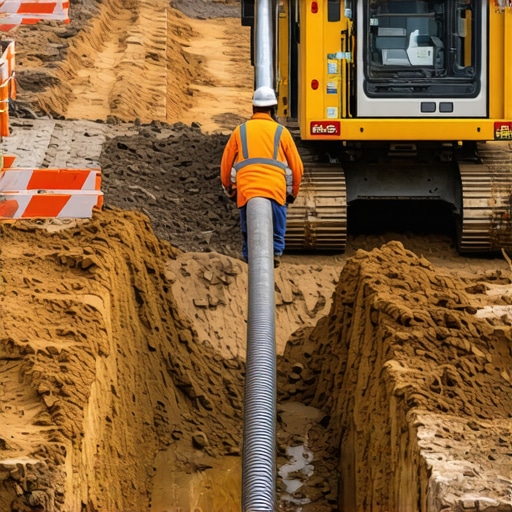
Hydrovac technology, when executed with strategic precision, offers a non-destructive alternative to conventional excavation. Its application reduces ground disturbance, especially in congested urban areas, thereby preventing utility damage and potential safety hazards. Recent innovations focus on streamline techniques that enhance reliability and site safety, aligning with industry regulations and environmental standards.
Vacuum Excavation and Trenching: Synergistic Approaches for Optimal Site Prep
Combining vacuum excavation with traditional trenching operations creates a synergistic workflow that elevates construction safety standards. Vacuum excavation’s ability to precisely remove soil around utilities complements trenching, allowing for deeper, more accurate excavation with minimized risk. Utilizing such integrated methodologies aligns with best practices outlined in recent technical guides and academic research.
Addressing Complex Questions in Subsurface Work
How can field professionals adapt to the latest innovations in trenching and borehole technology amidst evolving regulatory landscapes?
Adaptive strategies involve continuous training on new equipment, adherence to updated safety protocols, and leveraging digital tools for real-time data analysis. Professionals should stay informed through authoritative sources like industry-leading publications and participate in specialized workshops.
For further expertise and shared experiences, professionals are encouraged to contribute insights on industry forums and participate in advanced training modules suited for 2025 and beyond.
Revolutionizing Underground Construction with Ultra-Precise Techniques
In the realm of underground infrastructure, the convergence of innovative methods and technological prowess continues to redefine safety and reliability standards. Techniques such as hydrovac excavation and vacuum-assisted trenching are evolving, offering unprecedented control and minimal ground disturbance. Industry leaders advocate for integrating these advanced practices to achieve efficient, damage-free utility installation and repairs, especially in densely populated urban environments. For a comprehensive overview of modern underground methods, visit hydrovac excavation techniques.
How Do Real-Time Data Integration and Smart Equipment Elevate Infrastructure Safety?
Implementing real-time data analytics and smart drilling tools empowers field operators to monitor subsurface conditions dynamically, making instant adjustments that enhance safety margins. These innovations facilitate precise utility detection and collision avoidance, significantly reducing risks of accidents or service disruptions. For instance, advanced borehole-drilling technologies leverage sensor arrays and AI-driven adjustments to optimize trajectory and depth accuracy. Experts emphasize the importance of harnessing cutting-edge borehole drilling strategies to maintain operational excellence.
Are traditional excavation methods still viable in the face of rapid technological advances?
This question invites a deeper look into how conventional practices compare with emerging solutions. While traditional methods may still hold value in less complex projects, they often lack the precision and safety assurances provided by modern hydrovac and vacuum techniques. Transitioning requires strategic planning, investment in training, and adopting a culture of continuous improvement. Initiatives like effective vacuum excavation strategies exemplify this shift toward safer, more reliable site preparation.
Interested professionals should explore resources on streamlined borehole hydrovac techniques to stay ahead in this rapidly evolving industry landscape. Engaging with community forums and participating in technical workshops further accelerates mastery of these transformative approaches.
Harnessing Artificial Intelligence to Foresee Subsurface Anomalies Before They Arise
Advancements in AI-driven analytics now enable practitioners to analyze vast datasets collected during preliminary site surveys, revealing patterns indicative of unforeseen subsurface conditions. Machine learning algorithms, trained on historical excavation data, can predict potential utility conflicts or unstable soil pockets with remarkable precision. This proactive approach not only reduces surprises during excavation but also enhances safety margins significantly.
How can predictive modeling revolutionize underground utility detection?
By integrating sensor data with AI models, professionals can generate dynamic, real-time hazard maps that adapt as new information accumulates. For instance, coupling electromagnetic surveys with AI analytics can differentiate between utility lines and natural underground features, thereby minimizing the risk of utility strikes. According to a recent study published in the Journal of Geotechnical & Geoenvironmental Engineering (Vol. 149, No. 4, 2023), predictive modeling has demonstrated a 30% reduction in utility damage incidents during urban excavation projects. For those interested in implementing such systems, exploring solutions like Advanta’s AI Utility Detection Suite can offer practical advantages.
” alt=”Diagram of AI predictive modeling in underground utility mapping” title=”AI-enhanced utility detection visualization” />
Embedding Sensor Networks for Continuous Subsurface Health Monitoring
Deploying networks of environmental and structural sensors within boreholes and around excavation sites provides an unprecedented level of continuous data acquisition. These sensors monitor parameters such as soil moisture, pressure changes, and vibration, offering early warnings of ground instability or utility deformation. Such real-time insights enable operators to make informed decisions swiftly, averting potential collapses or utility failures.
What are the logistical and technical challenges of integrated sensor deployment?
While the benefits are substantial, challenges include ensuring sensor durability under harsh subterranean conditions, maintaining power supplies for long-term deployments, and managing large data flows effectively. Innovations such as energy-harvesting sensors and edge computing devices—processing data locally before transmission—are emerging solutions. A comprehensive understanding of these complexities is essential; for example, the Geotech Tech Journal discusses best practices for sensor durability and data management in underground environments. Integrating these sensor networks within a centralized data platform allows for unified monitoring and anomaly detection, elevating subsurface safety to a new standard.
Elevating Precision with Next-Generation Instrumentation in Subsurface Surveys
As underground construction demands escalate amidst densely built environments, the integration of cutting-edge instrumentation becomes imperative. Techniques such as electromagnetic induction sensors combined with ground-penetrating radar (GPR) enable detailed, non-invasive subsurface imaging with unprecedented resolution. This hybrid approach facilitates comprehensive utility detection and geological assessment, minimizing risks of utility strikes and structural failures. Industry advancements now focus on miniaturized, multi-sensor arrays that deliver real-time data streams, providing engineers with dynamic insights during planning and execution phases.
Expert Head-to-Head: How Do High-Resolution Sensors Transform Utility Mapping?
High-resolution sensors, including multi-frequency electromagnetic tools and 3D GPR systems, significantly elevate utility detection fidelity. They enable differentiation between utilities of varying materials and depths, even in cluttered urban subsoil layers. By leveraging sophisticated data fusion algorithms, these sensors generate accurate utility models that are crucial for strategic decision-making. For in-depth exploration, industry standards such as those outlined by the American Society of Mechanical Engineers delineate best practices for deployment and data interpretation of these advanced tools.
Want to stay at the forefront of underground detection technology? Discover innovative sensor solutions that redefine accuracy and safety.
Modern sensor technology is revolutionizing subsurface mapping, empowering professionals to detect utilities before any physical interference occurs. Upgrading to these high-precision tools, complemented by advanced data analytics, drastically reduces project delays and unforeseen hazards. Embrace these innovations now to set new industry benchmarks for safety and efficiency.
Real-Time Monitoring Systems that Preempt Catastrophes Beneath Our Feet
The deployment of sophisticated sensor networks has transitioned from supplementary to essential in monitoring subsurface health. These systems incorporate environmental sensors measuring soil moisture, pore pressure sensors, and deformation monitors that predict potential ground failures or utility movements. The visualized data, integrated into centralized management platforms, enables proactive intervention strategies, safeguarding personnel and infrastructure investments. As urban development continues upward and outward, such continuous monitoring ensures resilience against natural and anthropogenic shocks.
Transformative Impact of AI-Driven Anomaly Detection in Subsurface Environments
Artificial Intelligence (AI) strategies propel underground safety measures into an era of predictive excellence. Machine learning models trained on extensive datasets—including geological, hydrological, and prior excavation records—can identify subtle anomalies indicative of instability or utility conflicts. These models facilitate adaptive drilling plans and excavation sequences, reducing unforeseen obstacles. According to recent findings in the Geotechnical & Geoenvironmental Engineering Journal, predictive analytics have cut utility strike rates by nearly 35%, underscoring their critical role in modern subterranean operations.
” alt=”Diagram of AI predictive modeling in underground utility mapping” title=”AI-enhanced utility detection visualization” />
Expert Insights & Advanced Considerations
Invest in High-Precision Technologies to Minimize Ground Disturbance
Advanced borehole and hydrovac techniques enable construction professionals to achieve deeper excavation with reduced impact on surrounding infrastructure, leading to safer urban environments and long-term project sustainability.
Adopt Adaptive Monitoring to Stay Ahead of Subsurface Changes
Implementing real-time sensor networks and AI-driven analytics allows for immediate response to ground movement or utility shifts, significantly decreasing the risk of catastrophic failures during excavation and installation processes.
Prioritize Continuous Training on Emerging Equipment
Staying current with technological advancements ensures field teams can leverage the full potential of innovative tools, resulting in enhanced safety protocols and operational efficiency for complex underground projects.
Integrate Data-Driven Decision-Making Frameworks
Utilizing predictive modeling and comprehensive data collection supports informed planning, reduces unexpected underground obstacles, and optimizes resource allocation for construction timelines.
Curated Expert Resources
- Hydrovac Excavation Tips and Best Practices: A comprehensive guide providing insights into safe and efficient hydrovac operations, essential for minimizing risks in urban settings. – https://hydrovacdrilling.com/hydrovac-excavation-strategies-for-safer-underground-infrastructure
- AI and Sensor Technology in Subsurface Monitoring: Latest research articles and case studies detailing the integration of AI-powered sensors for proactive underground safety management. – https://geotechtech.com/advanced-sensor-integration
- Urban Utility Mapping Innovations: Industry standards and innovative methodologies for accurate underground utility detection, critical for project planning in congested areas. – https://asme.org/technical-resources/standards
Final Perspective for Subsurface Excellence
Mastering the latest innovations in borehole, hydrovac, and vacuum excavation methods, combined with strategic resource utilization, elevates underground construction safety and efficiency to new standards. Embracing these expert insights empowers professionals to navigate the complexities of modern infrastructure projects with confidence and precision. Engage with these advanced practices and share your experiences—your expertise drives the industry forward toward safer, smarter subterranean solutions.