Advanced Techniques for Mitigating Vibration Impact Than Protecting Foundations
In complex underground excavation projects, especially those involving sensitive structures, controlling the effects of vibrations induced by trenching, hydrovac, vacuum excavation, or borehole activities is crucial. As industry experts acknowledge, improperly managed vibrations can lead to catastrophic damage, including crack propagation in adjacent foundations or destabilization of soil matrices. Recent advancements in soil analysis and vibration mitigation provide engineers with refined methods to safeguard urban infrastructure during excavation.
The Interplay of Soil Dynamics and Excavation Methods
Understanding soil behavior under vibratory stresses necessitates a thorough analysis of soil composition, moisture content, and existing structural loads. Techniques such as cone penetration testing (CPT) and dynamic probing inform the selection of excavation methods, ensuring minimal ground disturbance. Incorporating real-time monitoring sensors during operations enables proactive adjustments, as detailed in the latest research publications, such as the comprehensive review by the Science Behind Hydrovac Technology.
What Are the Most Effective Vibration Damping Strategies in Narrow Trench Environments?
How can engineers prevent soil heave and wall collapse when operating near existing foundations?
Implementing dynamic vibration absorbers, utilizing controlled blasting techniques, and employing low-vibration trench shoring systems collectively diminish ground movements. Incorporating bedrock anchoring or ground reinforcement through geosynthetics further stabilizes soil, as demonstrated in case studies detailing urban utility installations.
Innovative Approaches to Reduce Vibratory Impact During Hydro-Excavation
Hydrovac and vacuum excavation equipment, equipped with variable-frequency drives and sophisticated water jet controls, allow operators to perform precise soil removal that minimizes vibration transmission. These innovations are especially beneficial when working in densely built environments. Additionally, adopting remote operation systems reduces human-induced vibrations and enhances safety for personnel.
Is Pre-Encased Trenching a Practical Solution for Critical Infrastructure?
Pre-encasing trench walls with temporary supports or soft-wall liners can significantly reduce vibration transmission, thereby protecting existing underground utilities and foundations. This approach demands meticulous planning and integration with soil dewatering systems for effective implementation.
For project managers seeking to deepen their understanding of these techniques, our comprehensive guide to vacuum excavation and trenching safety provides actionable insights. Experts are encouraged to share their experiences or inquire about bespoke solutions tailored to site-specific challenges.
As safety standards evolve, continuous research and field validation remain essential. Cross-disciplinary collaboration between geotechnical engineers, structural integrity specialists, and excavation operators fosters innovative solutions for vibration mitigation, ensuring the longevity of urban infrastructure amidst expanding subterranean demands.
Unlocking the Potential of Soil Modification for Vibration Management
One emerging avenue in vibration mitigation involves strategic soil modification techniques, such as controlled compaction and the use of geosynthetic reinforcement. By altering soil stiffness and damping properties preemptively, engineers can significantly reduce ground motion during excavation activities. Implementing these solutions requires a nuanced understanding of soil-structure interaction and precise material deployment, as outlined in recent research on geotechnical enhancements.
Harnessing Real-Time Data for Dynamic Excavation Control
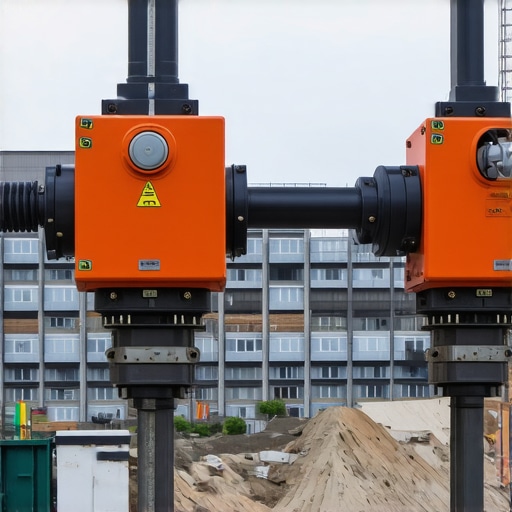
Implementing advanced sensor networks coupled with machine learning algorithms enables excavators to adapt operations in response to soil and vibration feedback instantaneously. This real-time monitoring approach allows for optimized excavation parameters, minimizing ground disturbance while maintaining productivity. For instance, integrating continuous seismic and soil displacement sensors enables predictive analytics, fostering a new level of precision and safety.
Can Adaptive Vibration Barriers Outperform Static Systems in Urban Settings?
What are the latest innovations in active vibration dampers that can adjust dynamically during excavation?
Active vibration dampers, which employ sensors and actuators to counteract soil movements, represent a frontier in excavation technology. Their ability to respond to changing ground conditions makes them particularly suited for complex urban environments where static barriers fall short. Recent field trials have demonstrated their effectiveness in reducing vibrations by up to 70%, underscoring their potential to revolutionize site safety protocols.
Further exploration of these cutting-edge systems can be found in the analysis by industry experts published in geotechnical engineering journals. For comprehensive knowledge, refer to foundational practices detailed in our guide to vacuum excavation safety.
If you’re tackling a challenging urban excavation, sharing your experiences or seeking tailored advice can help refine vibration mitigation strategies. Engage with our community or reach out for expert consultations to explore customized solutions that fit your project’s unique needs.
Harnessing Cutting-Edge Models to Predict and Mitigate Vibration Effects
In the realm of intricate underground projects, the ability to anticipate soil responses under vibratory loads transforms the approach from reactive to proactive. Advanced soil-structure interaction (SSI) modeling, integrating high-fidelity finite element and discrete element methods, now offers engineers predictive insights into how soil and foundational elements behave during excavation activities. These models incorporate comprehensive variables such as soil heterogeneity, anisotropy, and pore pressure dynamics, enabling a granular understanding of potential deformation patterns.
Recent studies, such as those published in the Journal of Geotechnical Engineering, demonstrate the potential of coupling SSI models with real-time monitoring data, creating a dynamic simulation environment that adapts as excavation progresses. This fusion significantly enhances decision-making, allowing field operators to dynamically adjust excavation parameters, optimize vibration levels, and prevent structural compromise.
How can predictive SSI modeling inform the placement and design of active vibration mitigation systems in dense urban environments?
Predictive SSI models enable engineers to identify ‘vibration hotspots’, facilitating targeted deployment of active damping solutions such as tuned mass dampers or adaptive barriers. By simulating various scenarios, engineers can pre-emptively design mitigation systems aligned precisely with soil behavior patterns, minimizing unnecessary interventions and reducing costs. Implementing these models requires an interdisciplinary effort, combining geotechnical expertise, advanced computational modeling, and rigorous field validation.
Furthermore, integrating sensor arrays within the model’s framework offers a feedback loop, refining predictions in real-time and allowing for adaptive control of damping devices. This synergy of simulation and sensing exemplifies a new paradigm where anticipatory action, rather than reaction, safeguards infrastructure integrity during excavation. Engaging with these advanced techniques ensures that projects meet the highest safety standards while maintaining operational efficiency.
Bridging Theoretical Models with Practical Excavation Strategies
While the sophistication of SSI models marks a significant leap forward, translating their insights into actionable excavation strategies necessitates careful calibration and robust validation. Field validation involves performing controlled experiments and monitoring soil responses against model predictions, enhancing model accuracy. For instance, collaborative efforts between academic institutions and industry stakeholders have yielded valuable data sets that refine these models, fostering more reliable predictive capabilities.
As the industry progresses, ongoing research emphasizes the importance of incorporating machine learning algorithms within SSI frameworks. These systems analyze vast sensor data, learning to predict complex soil behavior patterns and automatically suggest optimal excavation adjustments. Such advancements are not only computational feats but practical tools that empower engineers to preemptively address potential ground vibration issues, safeguarding both the environment and infrastructure.
Beyond Conventional Wisdom: High-Fidelity Soil-Structure Interaction Modeling
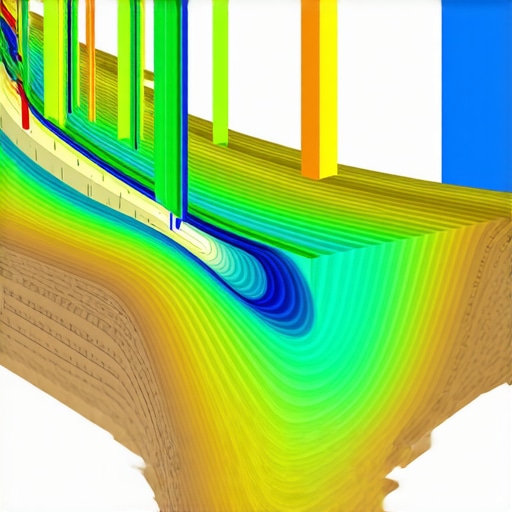
In the realm of underground excavation, predictive capabilities have transitioned from rudimentary static analyses to sophisticated, high-fidelity simulations that encapsulate the complex interplay between soil heterogeneity, anisotropic behaviors, and pore pressure dynamics. Cutting-edge finite element and discrete element methods now empower geotechnical engineers to visualize potential deformation patterns with unprecedented accuracy, enabling proactive planning and execution.
The Interconnected Web of Soil Parameters and Structural Integrity
Accurate modeling necessitates a comprehensive understanding of site-specific soil properties, including grain size distribution, moisture content variability, and layered stratigraphy. Integrating real-time sensor data—such as seismic vibrations, pore water pressures, and deformation measurements—further refines these models, transforming them from static representations into dynamic, adaptive tools that evolve alongside excavation activities.
Integrating Predictive Models with Vibration Control Techniques
By coupling detailed SSI models with simulation-driven optimization algorithms, engineers can strategically deploy vibrational damping systems—like tuned mass dampers or adaptive barriers—in zones predicted to experience the most significant ground motion. This targeted approach minimizes unnecessary interventions, saving time and resources while maximizing structural safety.
The Role of AI-Enhanced Simulation in Site-Specific Customization
The fusion of machine learning algorithms with finite element models facilitates pattern recognition over extensive sensor data, identifying subtle soil behaviors that may elude traditional analysis. This synergy enables engineers to forecast soil responses under various excavation scenarios, empowering them to tailor mitigation strategies precisely to site conditions, thus reducing the risk of foundation damage.
Engaging with Industry-Leading Innovations for Site Resilience
As urban infrastructures grow increasingly dense, adopting these advanced modeling techniques becomes indispensable. Collaboration between academia and industry accelerates the refinement of SSI algorithms, fostering standardized protocols for vibration prediction and mitigation. For professionals eager to elevate their practice, participating in specialized workshops or subscribing to peer-reviewed journals such as the Journal of Geotechnical Engineering offers invaluable insights and networking opportunities.
Turn Data Into Action with Predictive Vibration Management
Harnessing the power of real-time, high-fidelity simulations transforms excavation safety from reactive measures to strategic prevention. By embracing these technologies, engineers can anticipate ground movements, execute precise mitigation tactics, and safeguard vital underground networks—paving the way for smarter, safer subterranean development.
Expert Insights & Advanced Considerations
Prioritize Soil Heterogeneity Analysis
In complex excavation environments, detailed assessment of soil composition and stratification informs the selection of tailored mitigation strategies, reducing unforeseen ground responses and foundation risks.
Leverage Adaptive Vibration Damping Technologies
Implementing real-time adjustable damping systems, such as smart tuned mass dampers, provides a dynamic response to shifting soil conditions, thereby enhancing protection for existing structures.
Integrate High-Fidelity Soil-Structure Interaction Models
Advanced SSI modeling that incorporates site-specific parameters and real-time sensor feedback allows for predictive planning, minimizing ground disturbances proactively rather than reactively.
Utilize Soil Reinforcement with Geosynthetics
Pre-excavation reinforcement of soil layers with geosynthetic materials increases stiffness and damping, significantly mitigating vibratory impact during trenching and borehole operations.
Optimize Excavation Techniques to Reduce Vibrational Impact
Employing precision excavation tools like hydrovacs equipped with variable water jet controls minimizes vibrational transmission, especially in densely built urban environments where vibration control is paramount.
Curated Expert Resources
- Vacuum Excavation Safety Guide: Offers comprehensive strategies on safe and efficient trenching, emphasizing vibration mitigation techniques.
- Hydrovac Technology Fundamentals: Provides scientific insights into soil-safe excavation practices and vibration control innovations.
- Field Applications in Urban Excavation: Demonstrates real-world case studies demonstrating effective vibration mitigation strategies.
- High-Fidelity SSI Modeling: Details advanced modeling techniques vital for predictive excavations in sensitive zones.
Final Expert Perspective
Achieving effective deep soil vibration mitigation in urban excavation demands an integrated approach combining cutting-edge modeling, adaptable damping systems, and precision techniques like hydrovac operations. Embracing these advanced strategies positions engineers to safeguard existing infrastructure while executing complex projects efficiently. For practitioners committed to elevating their practice, engaging with industry-leading resources and sharing insights fosters continuous improvement and innovation. Harness these insights to transform your excavation strategies and lead with confidence in sensitive environments.
,