The Science Behind Effective Vacuum Excavation in Challenging Soil Conditions
In modern civil and utility projects, precision soil removal techniques such as vacuum excavation and hydrovac operations have revolutionized site preparation and subsurface exploration. These methods leverage high-pressure water or air jets combined with vacuum technology to achieve minimal disturbance and enhanced safety. Understanding the soil mechanics and the properties of different substrate types allows operators to optimize trenching and borehole procedures, especially in sensitive urban environments.
Innovative Approaches to Pulling Dry Soil in Hydrovac Operations
One critical aspect of successful trenching and borehole installation involves managing dry and difficult soil types that resist conventional excavation. Advanced hydrovac systems employ tailored techniques, including variable pressure settings and soil conditioning, to improve soil flow and reduce equipment strain. For instance, applying controlled water volumes can loosen compacted soils, facilitating cleaner cuts without overloading the vacuum system. Equipment calibration based on soil moisture levels and particle composition significantly enhances efficiency and safety.
Reshaping Trenching Strategies with Soil-Specific Considerations
Traditional trenching techniques often fall short when faced with heterogeneous soil conditions, such as those comprising clay, silt, or sand. Incorporating soil analysis data into the planning phase allows for the selection of appropriate hydrovac configurations and tools, thereby minimizing trench wall collapse and slurry generation. The use of trench shoring and real-time soil stability monitoring ensures structural integrity during excavation, especially in zones prone to water infiltration or seismic activity.
What Are the Risks of Soil Liquefaction During Vacuum Excavation, and How Can They Be Mitigated?
Soil liquefaction poses a significant hazard during high-pressure excavation in saturated zones, potentially leading to trench collapses and equipment loss. Experts recommend pre-project geotechnical assessments combined with real-time soil moisture sensors to identify vulnerable areas. Applying soil stabilization techniques such as grouting or dewatering can significantly mitigate these risks, ensuring safer and more predictable excavation workflows. Continuous monitoring and adaptive operational protocols are essential for managing these complex scenarios effectively.
Enhancing Soil Safety and Project Outcomes Through Expert Knowledge Sharing
Operators and engineers are encouraged to engage with dedicated resources and peer exchanges to stay abreast of emerging best practices. Contributing insights on handling heterogeneous soils or challenging moisture conditions enriches the collective knowledge base. For comprehensive technical guidance, professionals can consult authoritative sources like the American Society of Civil Engineers’ standards on trenching safety and soil analysis (ASCE technical standards).
Harnessing Soil Property Insights for Precision Excavation
Effective vacuum excavation hinges on a deep understanding of soil mechanics and how different substrates interact with high-pressure water and air jets. By analyzing soil composition—be it clay, silt, sand, or a heterogeneous mix—operators can tailor their approach to maximize efficiency and safety. Incorporating geotechnical data early in project planning enables the selection of optimal equipment settings, such as pressure adjustments and soil conditioning techniques, to prevent issues like trench wall collapse or slurry overproduction. For example, employing real-time soil moisture sensors helps in adjusting water volumes dynamically, ensuring minimal disturbance and enhanced soil stability. For a comprehensive approach, consult advanced soil analysis methodologies detailed in resources like the American Society of Civil Engineers’ standards on soil identification and stabilization (ASCE standards).
Innovative Soil Conditioning: Elevating Hydrovac Efficiency
Emerging techniques involve the use of environmentally friendly soil conditioners or minimal chemical agents to loosen compacted soils without compromising environmental standards. These conditioners improve soil flow into the vacuum system, reduce equipment strain, and shorten excavation times, especially in challenging urban sites. Integrating such methods requires a strategic assessment of soil moisture content and particle size distribution, ensuring the conditioning process enhances rather than impairs soil stability. Additionally, sophisticated soil stabilization methods like gel-based agents or biodegradable foams are gaining traction for their efficacy and eco-friendliness.
Can Real-Time Data Transforms Soil Management in Urban Excavation?
Advanced data acquisition systems, including real-time sensors and augmented reality tools, are radically changing how excavation teams monitor soil conditions. These technologies provide instant feedback on parameters like moisture levels, soil pressure, and structural integrity, enabling immediate adjustments to excavation protocols. Implementing such systems improves safety margins, reduces downtime, and minimizes environmental impact. Combining live data feeds with machine learning algorithms further refines soil behavior prediction, leading to more precise and adaptive trenching strategies. For deeper insights, explore the latest innovations in soil monitoring at our comprehensive guide.
To stay ahead in the dynamic field of excavation technology, sharing experiences and best practices is invaluable. Join industry forums, attend webinars, or subscribe to peer-reviewed publications to continually elevate your expertise.
Unlocking the Secrets of Subsurface Soil Dynamics in Excavation Projects
Accurate prediction of soil response under high-pressure water and air jets is a cornerstone of successful vacuum excavation. Advanced geotechnical modeling techniques, such as finite element analysis and discrete element modeling, allow engineers to simulate soil behavior under various loading and moisture conditions, leading to more informed operational decisions. By understanding the interaction between particle cohesion, internal friction angles, and pore water pressures, professionals can anticipate challenges like unexpected collapses or slurry overflows, and tailor their techniques accordingly.
Integrating soil stratigraphy data obtained from cone penetration tests (CPT) or standard penetration tests (SPT) helps in constructing a detailed subsurface profile. This profile guides modifications in pressure regimes, water application, and vacuum settings, aligning operational parameters with soil specificities and reducing trial-and-error approaches. For example, in cohesive clay zones prone to swelling, pre-treatment with specialized moisture control agents can stabilize responses, ensuring trench integrity throughout the excavation process.
How can emerging technologies revolutionize early soil assessment for high-stakes excavation?
Recent innovations such as drone-based remote sensing, ground-penetrating radar (GPR), and machine learning algorithms are transforming subsurface investigations, enabling rapid, non-destructive soil characterization at unprecedented resolutions. These tools facilitate continuous real-time monitoring of soil conditions during excavation, providing critical data for immediate adjustments in pressure and flow parameters. The integration of AI-driven predictive analytics enhances anticipation of problematic zones, thereby minimizing delays and safety hazards. For authoritative guidelines on implementing such technologies, referencing ASTM standards on geophysical survey methods can ensure adherence to industry best practices (ASTM International standards).

Innovating Soil Stabilization with Eco-Friendly Agents for Safer Excavations
Incorporating environmentally sustainable soil conditioners not only promotes compliance with green standards but also enhances operational efficiency. Eco-surfactants, biodegradable foams, and nanotechnology-based stabilizers facilitate soil loosening and facilitate flow, especially in tightly compacted or waterlogged substrates. These agents, when applied judiciously, can extend equipment lifespan and decrease energy consumption by reducing the need for excessive pressure or repeated passes.
The challenge lies in selecting the right stabilizing agent tailored to specific soil compositions and project environmental constraints. For instance, in urban settings where water runoff is a concern, gel-based conditioners offer controlled soil moisture release and minimize contamination risks. Continuous research and field testing are imperative to refine application rates and ensure the long-term stability of stabilized soils, preventing future subsidence or erosion issues.
Could integrated soil stabilization systems set new standards for sustainable excavation?
Indeed, the future points toward smart stabilization networks that combine real-time soil monitoring with adaptive chemical delivery systems. These decentralized systems would dynamically respond to changing soil conditions, ensuring optimal stabilization while minimizing chemical usage. Pilot programs integrating IoT sensors with automated dispersal units have demonstrated promising results in reducing environmental impact and enhancing operational safety.
To explore these innovations further, professional engineers should engage with industry consortia focused on green construction technologies and contribute to the development of universally accepted standards for sustainable soil stabilization.
Building on these insights, continuous education and technology adoption are essential for professionals aiming to lead in advanced vacuum excavation practices. Subscribing to specialized journals, participating in technical workshops, and collaborating with academic research initiatives will position practitioners at the forefront of this evolving field.
Innovative Integration of Soil Behavior Models Enhances Excavation Precision
Recent advances in geotechnical modeling, particularly the application of coupled finite element and discrete element methods, enable engineers to simulate complex soil responses under high-pressure water and air jets with unprecedented accuracy. This integration provides insights into particle cohesion, internal friction, and pore water pressures, facilitating the design of tailored excavation strategies that minimize risks such as trench collapses or slurry accumulation.
Can Predictive Analytics Transform Site Preparation Strategies?
Employing machine learning algorithms trained on extensive soil and excavation datasets offers the potential to forecast subsurface challenges proactively. By analyzing parameters like soil stratigraphy, moisture content, and historical excavation outcomes, predictive models can inform real-time adjustments, leading to safer, faster, and more cost-effective operations.
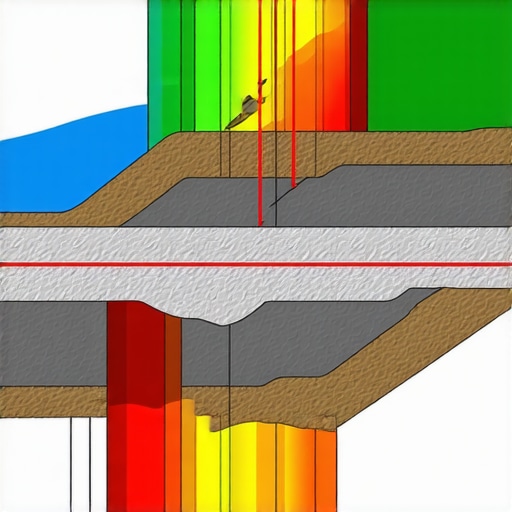
Illustration showing a geotechnical model with simulated soil response during high-pressure hydro excavation, highlighting stress distribution and failure zones.
Harnessing Remote Sensing for Subsurface Soil Profiling
Emerging remote sensing technologies, such as drone-mounted ground-penetrating radar (GPR) and multispectral imaging, facilitate rapid, non-destructive soil assessments across extensive urban sites. Integrating these tools into pre-excavation workflows enhances the detection of heterogeneities, groundwater infiltration zones, and zones susceptible to liquefaction, thereby refining project planning and risk mitigation.
What Are State-of-the-Art Soil Stabilization Methods Elevating Safety Standards?
Advancements include nano-engineered stabilizers and biodegradable foams that improve soil cohesion without environmental compromise. These agents can be precisely applied via automated injection systems, reacting instantaneously with soil particles to reinforce trench walls and prevent subsidence. Their eco-friendly nature aligns with sustainable construction mandates and regulatory frameworks increasingly emphasizing green practices.
Can Smart Monitoring Systems Provide Real-Time Soil Stability Feedback?
Integrating fiber optic sensors, acoustic emission detectors, and IoT networks into excavation sites offers continuous real-time surveillance of soil stress, moisture variations, and structural integrity. These systems enable immediate operational adjustments, reducing hazards associated with unanticipated soil movement or saturation. Advanced analytics underpin decision-making processes, ensuring proactive safety management and optimizing excavation timelines.
Engage with these cutting-edge techniques—your expertise can set new benchmarks in safe and efficient vacuum excavation. Interdisciplinary collaboration, ongoing training, and participation in industry forums will ensure you’re at the forefront of this technological evolution, driving innovation and excellence in geotechnical practices.
Expert Insights & Advanced Considerations
Invest in Geotechnical Data for Safer Excavations
Integrating detailed soil analysis early in project planning enables operators to tailor vacuum excavation parameters, minimizing risks such as trench wall collapse or slurry overproduction. Leveraging cone penetration tests (CPT) and standard penetration tests (SPT) can reveal critical stratigraphy information, allowing for precise equipment calibration and soil stabilization strategies.
Embrace Emerging Technologies for Predictive Soil Behavior
The adoption of drone-based remote sensing, ground-penetrating radar (GPR), and AI-driven analytics revolutionizes subsurface assessment. These tools facilitate real-time monitoring and predictive modeling, leading to proactive adjustments that enhance safety and efficiency during hydrovac operations.
Eco-Friendly Soil Conditioning Has a Place in Modern Excavation
Utilizing environmentally sustainable soil conditioners like biodegradable foams and nanotechnologies not only meets green standards but also improves soil flow, reduces equipment strain, and accelerates project timelines. Continuous research ensures optimal compatibility with diverse soil types and project conditions.
Prioritize Continuous Skill Development and Knowledge Sharing
Active engagement with industry standards, peer forums, and specialist resources fosters expertise. Sharing successful techniques for handling challenging moistures, heterogeneous soils, or tricky site constraints contributes to collective advancement and safety in vacuum excavation practices.
Curated Expert Resources
- American Society of Civil Engineers (ASCE) Soil Management Guidelines: Offers comprehensive standards on soil analysis, stabilization, and safety protocols critical for advanced excavations.
- ASTM International geophysical survey standards: Provides authoritative protocols for remote sensing and subsurface imaging technologies, vital for modern site assessments.
- Research on Eco-Friendly Soil Conditioners: Journals and technical reports exploring biodegradable and nanotech solutions for sustainable soil management.
- Industry peer-reviewed publications and webinars: Platforms enabling the exchange of innovative strategies for handling complex soil conditions and emerging tech adoption.
Reflecting on Soil Mastery in Excavation
Deep expertise in vacuum excavation hinges on a blend of precise geotechnical understanding, technological innovation, and environmental responsibility. Recognizing the nuances of soil mechanics and integrating advanced tools can significantly elevate project safety and efficiency. For professionals committed to excellence, embracing continuous learning and sharing insights remains paramount. Engage with cutting-edge resources and contribute your expertise to shape the future of safe, sustainable trenching and borehole operations. Visit our detailed guide on vacuum excavator innovations to deepen your mastery and stay at the forefront of industry progress.