Trenching and Borehole Drilling: Effective Techniques for Safe Underground Work
Elevating Underground Work: The Critical Role of Precision in Trenching and Borehole Drilling
In the realm of underground infrastructure development, the precision and safety of excavation techniques are paramount. As experts in trenching, borehole, hydrovac, and vacuum excavation methods, we recognize that these processes form the backbone of reliable, efficient, and minimally disruptive construction projects. The evolution of these techniques reflects a deepening understanding of subsurface complexities and the necessity for innovations that prioritize safety and accuracy.
Synergizing Traditional and Modern Excavation Strategies for Optimal Outcomes
Traditional trenching methods, while effective, often face challenges related to safety risks and ground stability. Modern trenching solutions integrate sophisticated machinery and real-time monitoring systems to mitigate these issues. For instance, hydrovac excavation employs high-pressure water and vacuum systems to precisely remove soil without damaging underground utilities, thereby enhancing site safety and reducing project delays. This synergy between established techniques and cutting-edge technology ensures the integrity of underground infrastructure during installation or maintenance.
Unveiling the Nuances of Vacuum Excavation for Subsurface Safety
Vacuum excavation, particularly hydrovac technology, offers an unparalleled advantage in minimizing ground disturbance and protecting critical utilities. Its application extends across utility potholing, trenching, and precise borehole creation, especially in congested urban settings where subsurface utility mapping is complex. The ability to perform non-destructive excavation underpins safer sites and more accurate data collection, which is crucial for infrastructure reliability. Notably, recent innovations leverage AI and sensor integration for smarter excavation processes, further elevating safety standards.
What are the latest advancements in hydrovac technology that improve accuracy and reduce environmental impact?
To stay ahead in underground construction, professionals must continuously evaluate emerging solutions that enhance precision and sustainability. For example, newer hydrovac systems incorporate eco-friendly water recycling and energy-efficient components, aligning with sustainable development goals. Additionally, advancements in remote operation and automation enable safer, more controlled excavation processes, especially in hazardous or hard-to-reach areas. Staying informed through industry white papers and technical journals, such as those published by the American Society of Civil Engineers, is essential for integrating these innovations into practice.
For comprehensive insights on efficient borehole and trenching methods, explore our detailed guide on borehole trenching solutions. Engage with the community of engineers and contractors to contribute your expertise and discuss emerging challenges and solutions in underground excavation.
Harnessing Cutting-Edge Technologies for Superior Ground Excavation
As the demand for safer, more precise underground infrastructure grows, the industry is witnessing a surge in innovative vacuum excavation and borehole drilling techniques. These advancements not only enhance accuracy but also significantly reduce environmental impact, aligning with sustainable development goals. Modern systems now incorporate eco-friendly water recycling, energy-efficient components, and AI-driven automation, transforming traditional practices into smart, responsible solutions. For instance, remote operation capabilities enable experts to control excavation processes from a safe distance, minimizing site disturbances and improving precision in complex urban environments.
Redefining Safety Protocols with Advanced Equipment
Safety remains paramount in underground work, prompting the integration of sophisticated monitoring and control mechanisms. Real-time ground stability sensors and collision avoidance systems are now standard features in high-end hydrovac and borehole machinery. These tools provide instant feedback, allowing operators to adapt dynamically and prevent accidents. Furthermore, the development of lightweight, portable equipment facilitates access to challenging sites while maintaining safety and efficiency. Industry leaders emphasize that continuous training combined with these technological innovations is essential for maintaining safety standards and operational excellence.
Expert Insight: Why Is Precision More Critical Than Ever in Underground Excavation?
Precision in underground excavation is no longer optional; it is a necessity driven by the increasing density of underground utilities and the complexity of urban infrastructure. Miscalculations can lead to utility strikes, costly delays, or hazardous conditions. Advanced vacuum excavation techniques, especially those leveraging AI and sensor integration, offer unparalleled accuracy in mapping and trenching. According to a recent report by the American Society of Civil Engineers, adopting these innovations is crucial for meeting the demands of modern infrastructure projects while minimizing risks and disruptions. Continuous investment in technology and expertise ensures projects are completed safely, on time, and within budget.
Interested in exploring how these innovations can streamline your next project? Consider reviewing detailed case studies on ultimate hydrovac and borehole techniques and stay ahead of industry trends. Share your experiences or ask questions below—your insights could help shape the future of underground construction!
Why Smart Automation Transforms Borehole Drilling in Urban Settings
In densely populated urban environments, borehole drilling demands not only precision but also adaptability to complex underground utility networks. Recent advancements in automation technology, such as AI-driven control systems, have revolutionized how contractors approach these challenges. These systems utilize real-time data analytics to optimize drilling parameters, adjust pressure, and monitor equipment health, reducing the likelihood of utility strikes and improving overall efficiency. Moreover, remote operation capabilities allow technicians to oversee drilling processes from safe distances, minimizing exposure to hazardous conditions and enabling rapid response to unforeseen issues. According to a 2024 study published by the American Society of Civil Engineers, integrating automation into borehole operations significantly enhances site safety and project precision, especially in complex urban landscapes.
As industry leaders continue to embrace smart technology, the future of underground excavation points toward fully autonomous systems capable of executing highly complex tasks with minimal human intervention. This transition not only improves safety standards but also reduces project timelines and costs, making urban infrastructure upgrades more sustainable and less disruptive.
How Do Ground Stability Sensors and Collision Avoidance Systems Work Together to Prevent Accidents?
Advanced ground stability sensors continuously monitor subsurface conditions, providing instant feedback on soil movement, moisture content, and potential instability zones. When paired with collision avoidance systems, which utilize LIDAR and ultrasonic sensors to detect nearby utilities and structural obstacles, these technologies create a comprehensive safety net for operators. The sensors’ data is processed through sophisticated algorithms that alert operators to potential hazards, allowing for immediate adjustments or halting operations before damage occurs. This integrated approach is particularly vital in urban projects where underground utilities are densely packed and miscalculations can lead to costly service disruptions or safety hazards. Industry reports, such as those from the Journal of Construction Engineering and Management, emphasize that these combined systems are setting new standards for underground safety protocols.
To stay ahead in this rapidly evolving field, professionals should consider investing in training programs that focus on interpreting sensor data and operating collision avoidance technologies effectively. This proactive approach ensures that teams are prepared to implement these innovations seamlessly on-site, ultimately safeguarding personnel and infrastructure.
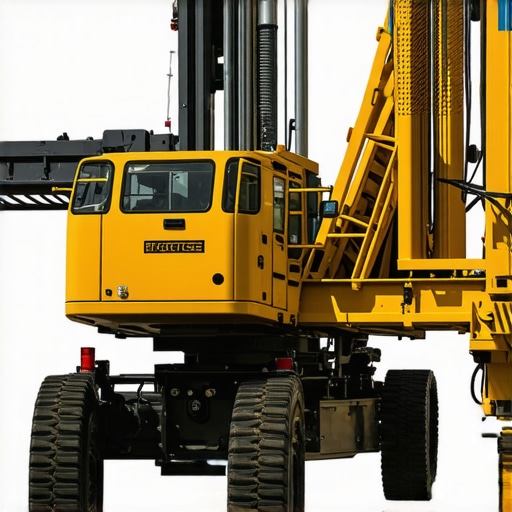
Picture a high-tech borehole drilling rig equipped with real-time sensors and automation interfaces, highlighting the integration of safety and precision technologies in underground construction.
Elevate Your Project with Cutting-Edge Excavation Techniques
Adopting the latest in vacuum excavation and borehole drilling technology isn’t just about staying current; it’s about transforming the way underground work is performed. From eco-friendly water recycling systems that dramatically reduce environmental impact to AI-powered automation that enhances accuracy, the industry is moving toward smarter, safer practices. Contractors who leverage these innovations position themselves at the forefront of sustainable infrastructure development, capable of tackling complex projects with confidence.
Are you ready to explore how these advancements can be integrated into your next project? Reach out to industry experts, review recent case studies, and participate in technical webinars to deepen your understanding. Staying informed is key to harnessing the full potential of modern excavation technology and ensuring your projects meet the highest safety and efficiency standards.
Harnessing Data Analytics for Subsurface Insights
Advanced data analytics now underpin the precision of underground excavation, enabling engineers to interpret vast datasets from soil sensors, utility maps, and geotechnical reports. By integrating Geographic Information Systems (GIS) with real-time sensor data, professionals can create highly accurate 3D models of subsurface conditions, drastically reducing the risk of utility strikes or ground instability. The use of predictive analytics forecasts potential issues before excavation begins, optimizing planning and resource allocation. According to the American Society of Civil Engineers, leveraging these technologies enhances both safety and project efficiency, especially in complex urban environments.
Smart Excavation Equipment Elevates Project Precision
Modern excavators equipped with AI-driven control systems can adapt dynamically to changing ground conditions, offering unprecedented accuracy. These machines utilize advanced sensors, including LIDAR and ultrasonic detection, to map surroundings instantaneously, adjusting operations in real-time. This automation minimizes human error and enhances utility protection. Furthermore, integrating IoT connectivity allows remote diagnostics and operation, which improves safety and reduces downtime. Industry leaders like Caterpillar and Komatsu are pioneering these innovations, setting new standards in underground construction.
What Role Do Ground-Penetrating Radar and Seismic Imaging Play in Modern Trenching?
Ground-penetrating radar (GPR) and seismic imaging technologies have become indispensable tools for pre-excavation site assessment. These non-invasive methods reveal hidden utility lines, voids, and soil heterogeneity, offering a comprehensive view of subsurface conditions. GPR, in particular, provides high-resolution imaging that guides trenching and borehole paths with precision, reducing the likelihood of utility disruption or soil collapse. The integration of these imaging modalities with AI-driven analysis enhances decision-making, allowing for safer, more efficient excavation strategies. For detailed insights, consult the latest publications in geotechnical engineering journals, such as those from the American Society of Civil Engineers.
Engage with industry experts and stay at the forefront by exploring advanced imaging techniques and their applications in your upcoming projects.
How Can Autonomous Drilling Systems Transform Urban Infrastructure Projects?
Autonomous drilling systems leverage AI, machine learning, and robotics to execute complex subsurface tasks with minimal human intervention. These systems operate based on real-time data inputs—adjusting drilling parameters, detecting utility lines, and avoiding obstacles dynamically. The benefits extend to increased safety, reduced project timelines, and lower operational costs. Urban areas, with their dense utility networks, particularly benefit from these innovations, which allow for precise, rapid installation of infrastructure such as water, gas, and telecommunications lines. The shift toward automation also minimizes risks associated with manual labor in hazardous environments, aligning with modern safety standards.
For a deeper understanding, review the latest case studies and technical reports from industry leaders like Atlas Copco and Sandvik, which showcase successful implementations of autonomous drilling solutions.
How do integration of AI and sensor technology mitigate risks during complex underground operations?
AI algorithms process data from ground stability sensors, utility locators, and environmental monitors to create a comprehensive operational picture. This synthesis enables immediate hazard detection—such as soil liquefaction or utility proximity—triggering automated safety responses like halting operations or adjusting drilling angles. Sensors constantly monitor ground conditions, providing live updates that feed into control systems, ensuring proactive risk mitigation. This integrated approach not only enhances safety but also improves decision-making speed and accuracy, especially crucial in densely built urban settings. As outlined in recent research by the American Society of Civil Engineers, adopting such technologies is essential for sustainable, risk-averse underground construction.
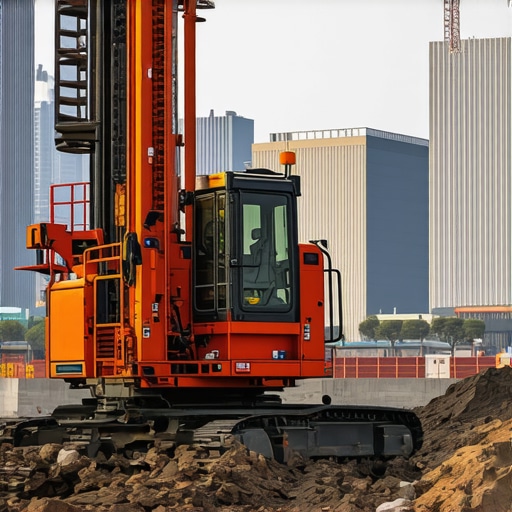
Visualize a state-of-the-art drilling rig integrated with AI sensors and real-time data interfaces, exemplifying the future of precision underground work.
Embrace Innovation to Lead the Future of Ground Excavation
Adopting cutting-edge technologies like AI-powered automation, advanced imaging, and predictive analytics signifies a strategic move toward safer, more efficient underground infrastructure development. These tools empower engineers to execute complex projects with confidence, minimizing disruptions while maximizing safety and accuracy. Staying informed about emerging trends and continuous technological investment ensures your projects are not only compliant but also at the forefront of sustainable construction practices.
Ready to elevate your underground excavation strategies? Connect with industry experts, participate in specialized training, and review innovative case studies to harness the full potential of these transformative technologies.
Expert Insights Elevate Underground Construction
Leading industry professionals emphasize the critical importance of integrating cutting-edge technology with traditional excavation methods. Utilizing real-time ground stability sensors, AI-driven automation, and advanced imaging techniques significantly enhances safety, accuracy, and efficiency. These innovations enable precise utility mapping and minimize ground disturbance, safeguarding underground infrastructure and reducing project delays.
Optimize Utility Detection and Mapping
Employing ground-penetrating radar and seismic imaging provides high-resolution subsurface insights, allowing for meticulous planning and execution. These technologies reveal hidden utilities and soil heterogeneity, preventing utility strikes and soil collapses. Integrating these tools with AI analysis further refines decision-making and enhances project safety.
Prioritize Safety with Smart Equipment
Modern excavation machinery equipped with collision avoidance systems and remote operation capabilities ensures safer work environments. Continuous monitoring and real-time data processing enable operators to make informed adjustments, reducing risks associated with underground utility congestion, especially in urban settings.
Curated Resources for Deep Expertise
- American Society of Civil Engineers (ASCE) Publications: Offers authoritative white papers and technical standards on excavation safety and technology advancements.
- Geotechnical Engineering Journals: Provides recent research on soil behavior and imaging techniques critical for underground work.
- Industry White Papers from Leading Equipment Manufacturers: Share insights on the latest automation and sensor integration in excavation machinery.
Reflecting on the Future of Underground Excavation
Harnessing advanced data analytics, AI, and sensor technology transforms underground trenching and borehole drilling from traditional practices to highly precise, safe, and sustainable operations. Staying informed and adopting these innovations positions professionals at the forefront of infrastructure development. Engage with industry peers, contribute insights, and explore emerging tools—your expertise drives the evolution of underground construction practices.
I found the insights on integrating real-time sensors with advanced AI controls particularly compelling. In my recent project in urban construction, we faced challenges with utility detection before using such technologies. Implementing sensor-driven systems significantly cut down unexpected utility strikes and improved our project timeline. It’s interesting to see how automation and sensor integration are becoming standard in underground work, especially for complex sites. I wonder, how do smaller companies, with limited budgets, navigate adopting these high-tech solutions? Are there scalable options that still offer substantial safety and accuracy benefits? I believe staying updated with the latest automation tools should be a priority, but it’s also crucial to find cost-effective ways to incorporate innovation without overextending resources. Would love to hear experiences or recommendations from others who have managed this transition effectively.