Innovative Utility Installation Methods for Preserving Urban Tree Heritage
In densely populated environments, the confluence of aging infrastructure and historical arboreal assets necessitates a nuanced approach to excavation. Expert practitioners recognize that classical trenching and borehole methods, while effective, pose risks to protected canopy zones. Leveraging vacuum excavation and hydrovac technology has revolutionized site preparation by enabling precision utility installation alongside fragile or historically significant trees.
Why Traditional Trenching Risks Compromising Ancient Canopies
Conventional trenching often involves extensive soil disturbance, vibration, and soil compaction, which can damage root structures and destabilize mature trees. Field data indicates that aggressive digging may lead to root zone desiccation, increased susceptibility to disease, and even tree mortality. As such, adopting low-impact techniques becomes critical in heritage preservation efforts.
Hydrovac Applications: A Precise Alternative for Sensitive Root Zones
Hydrovac excavation—using high-pressure water jets combined with vacuum removal—allows for narrow, accurately placed trenches or boreholes. Experts emphasize its effectiveness in minimizing soil disruption and maintaining the integrity of critical root systems. For example, strategic use of hydrovac has been documented to facilitate utility crossings over soil safety while safeguarding arboreal health. Additionally, this method reduces surface vibrations that could compromise root stability, an essential consideration for historic landscapes.
Integrating Borehole Techniques with Preservation Goals
When shallow utility connections or soil sampling are necessary near venerable trees, specialized borehole procedures significantly reduce excavation footprint and soil disturbance. Adaptive stratified strategies involve pre-thermal mapping and borehole drilling insight to prevent inadvertent root severance. Resolution to safeguard root zones depends on real-time soil and root network imaging, complemented by expert assessment of soil-moisture interactions.
How Do Trenching and Vacuum Excavation Converge for Ecological Benefit?
Technological convergence involves utilizing vacuum excavators that are fitted with precision-control systems. These systems allow operators to perform soft excavation in complex heritage sites, reducing soil displacement and preserving the microbial and mycorrhizal networks vital for tree vitality. The deployment of such equipment exemplifies an advanced understanding of soil-structure interactions and environmental stewardship.
What are the key considerations in avoiding root zone damage during urban utility installation activities?
Addressing this question requires understanding soil compaction thresholds, root distribution patterns, and trench orientation relative to root architecture. Experts recommend conducting comprehensive pre-excavation mapping and real-time soil disturbance monitoring. Employing flexible trenching strategies enhances the resilience of retained root systems, boosting urban sustainability.
For professionals committed to protecting urban forested landscapes, embracing these innovative excavation techniques translates into sustainable, aesthetic, and heritage-preserving outcomes. Continued research and shared field experiences contribute to evolving best practices, reinforcing the vital role of soil safety and root conservation in modern utility projects. Explore more about future hydrovac innovations and contribute your insights to a growing community of environmental stewardship experts.
Revolutionizing Soil Health Maintenance During Utility Work
As urban development pushes the boundaries of sustainable landscaping, experts emphasize that the integration of innovative vacuum excavation techniques not only safeguards tree roots but also promotes overall soil vitality. Utilizing scientific principles behind hydrovac technology enables the precise manipulation of soil layers, reducing compaction and preserving microbial ecosystems critical for urban greenery.
Can Precision Excavation Reduce Long-Term Soil Degradation?
Traditional trenching often leaves residual soil compaction or disturbance, which impairs aeration, water infiltration, and nutrient cycling. Advanced hydrovac methods, employing real-time soil sensing and adaptive pressure control, facilitate minimally invasive excavation, maintaining soil structure integrity. These practices ensure that urban soils remain resilient, supporting sustainable plant health beyond construction timelines.
Applying Layered Soil Mapping for Better Utility Placement
Employing detailed stratified soil mapping prior to excavation guides decision-making, allowing teams to identify zones of high organic matter or sensitive root systems. Combining this with borehole drilling insights enhances accuracy, greatly reducing the risk of unintentionally damaging soil layers that foster urban biodiversity. Techniques like low-impact soil removal contribute significantly to ecological health, ensuring that urban environments remain vibrant ecosystems.
How Does the Evolution of Excavation Equipment Support Green Urban Initiatives?
Modern hydrovac units incorporate low-emission engines, enhanced filtration, and automated controls, aligning with green building standards. This evolution demonstrates a shift towards environmentally conscious excavation practices, emphasizing resource efficiency, reduced carbon footprint, and soil conservation. Additionally, the integration of safety protocols ensures that ecological benefits do not compromise operational risk management, underpinning sustainable urban development.
What Are the Long-Term Benefits of Adoption of Eco-Friendly Excavation Methods in City Planning?
Adopting environmentally sensitive excavation strategies encourages the development of resilient urban soils that support not only existing vegetation but also future landscaping initiatives. It reduces cumulative soil degradation, maintains urban groundwater quality, and fosters healthier root systems—all vital components for their contribution to the city’s ecological network. For further insights, review strategies outlined in green utility solutions to understand their broader implications.
Engaging with these advanced techniques invites urban planners and utility professionals to innovate constructively. Share your experiences or explore more about the latest in hydrovac advancements through our contact page, fostering a community committed to soil health and sustainable infrastructure development.
,
Innovate or Compromise: Elevating Urban Utility Strategies with Precision Excavation
Amidst the intricate dance of modern city planning and heritage conservation, engineers face the daunting challenge of integrating essential utilities without compromising the integrity of historic landscapes. The evolution of excavation technology, particularly hydrovac systems, provides a robust pathway for achieving these dual objectives with unparalleled accuracy and minimal ecological footprint. Implementing these innovations isn’t merely about adopting new tools; it’s about redefining the standards of urban construction excellence.
Sequence of Precision: Mapping Soil and Root Networks for Strategic Planning
Prior to any excavation activity, an exhaustive soil and root mapping process becomes indispensable. Utilizing advanced geospatial imaging coupled with root architecture modeling offers a three-dimensional perspective into the subterranean matrix. Such comprehensive data informs strategic trench alignment, reducing the risk of inadvertent root severance and soil disturbance. Environmental sensors integrated into this process monitor real-time parameters like soil moisture and compaction, fueling adaptive decision-making during excavation.

This meticulous preparatory phase ensures that subsequent utility installation aligns with ecological preservation, exemplifying how data-driven approaches optimize sustainability outcomes.
Harnessing Adaptive Control Systems in Hydrovac Equipment for Complex Urban Environments
Modern hydrovac units are now equipped with sophisticated control algorithms, enabling intuitive operation amidst challenging urban terrains. Features like adaptive pressure modulation and depth sensing detect subsurface variations and adjust parameters instantaneously, preventing root damage and soil destabilization. For instance, when crossing over sprawling root zones, the system automatically reduces pressure and employs micro-jets, ensuring the microenvironment’s integrity remains intact. This level of control is pivotal in sensitive zones where traditional methods would pose unacceptable risks.
Moreover, integrating machine learning algorithms can further enhance predictive accuracy. By analyzing historical excavation data, these systems learn to identify patterns indicative of high-risk zones, preemptively adjusting their operations to mitigate potential impacts.
What are the implications of this technology for urban biodiversity conservation?
This question isn’t purely academic; it strikes at the core of sustainable urban development. Precision excavation techniques serve as guardians of biodiversity, safeguarding root systems that host complex microbial and fungal networks essential for soil health and plant resilience. Maintaining these underground ecosystems supports broader urban biodiversity initiatives by preserving habitat continuity for soil fauna and flora. As cited by the Urban Ecology Institute (2022), optimized subterranean management results in healthier green infrastructure, which is vital for air quality, stormwater management, and urban heat island mitigation.
Experts suggest that embracing such advancements fosters a paradigm shift—from mere utility placement to proactive ecological stewardship. Future urban projects could incorporate real-time ecological monitoring systems, providing continuous feedback and ensuring ongoing soil vitality.
Push Beyond the Limits: Incorporating AI-Driven Decision Support in Excavation Planning
Emerging AI-driven decision support tools are revolutionizing excavation planning, synthesizing multi-layered data streams into actionable insights. These systems can simulate potential excavation scenarios, evaluate risk profiles, and recommend optimal approaches aligned with ecological constraints. For example, AI models can predict soil disturbance zones caused by various trenching strategies, enabling planners to select the minimally invasive route with the highest success rate.
Adopting such intelligent systems accelerates project timelines, reduces costs, and enhances the precision of environmental protection measures. As this technology matures, it offers a proactive lens for risk management, transforming excavation sites into controlled ecosystems where human expertise and machine intelligence collaborate seamlessly.
What future developments could further enhance urban soil conservation during utility projects?
Looking ahead, innovations like real-time soil biosensors that transmit live data on microbial activity, moisture levels, and nutrient content could become standard practice. Coupled with autonomous hydrovac platforms, these tools would facilitate fully adaptable, self-regulating excavation processes. Additionally, developments in biodegradable trench liners and soil replenishment techniques could further restore and preserve soil structure post-excavation, ensuring long-term ecological resilience.
Engagement with these cutting-edge solutions demands a collaborative effort across engineering, ecology, and urban planning disciplines. Professionals are encouraged to participate in pilot programs, share insights, and contribute to a knowledge base that accelerates sustainable urban infrastructure development. Explore more about the potential of AI and sensor technologies in soil conservation at our dedicated resources page, and join the forefront of innovation in urban ecological stewardship.
Revolutionizing Soil Preservation with Precision Hydrovac Integration
In contemporary urban planning, the convergence of technological innovation and ecological stewardship demands a nuanced approach to underground utility installation. Hydrovac technology, with its capacity for targeted soil removal, has emerged as a game-changer, enabling precise excavation that respects the integrity of mature root systems and the surrounding soil matrix. Recent advancements in adaptive control systems, coupled with real-time soil analytics, propel this methodology beyond traditional practices, offering unparalleled opportunities for heritage landscape conservation.
Leveraging Geospatial Analytics for Strategic Trenching
Experts underscore the importance of integrating multilayered geospatial data—such as ground-penetrating radar, soil stratigraphy, and root architecture models—to inform trench placement. This multidimensional mapping ensures that excavation aligns with protected areas, minimizes root severance, and preserves soil functions vital for urban ecosystem health. Utilization of AI-enhanced predictive modeling further refines trench routes, reducing ecological footprint and enhancing project sustainability.
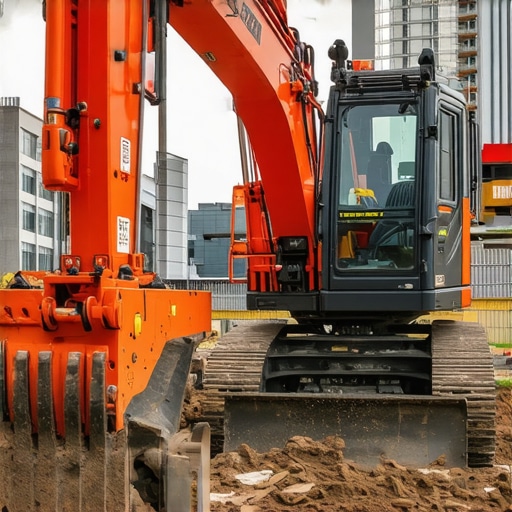
How Precision Control Systems Transform Complex Excavations
Modern hydrovac units equipped with sophisticated sensors and adaptive algorithms allow operators to modulate pressure output dynamically, accommodating soil variability and subterranean obstacles. This technology mitigates risks of surface disturbance and soil compaction, which are critical in archaeologically sensitive or heritage-rich environments. The integration of machine learning enables predictive adjustments, ensuring minimal impact during crossing over significant root zones or fragile soil layers.
Enhancing Soil Microbial Health During Utility Deployment
Conservation of microbial ecosystems hinges on minimizing physical disruption during excavation. Innovations such as low-pressure micro-jets and biodegradable soil sleeves serve to protect microbial communities and prevent long-term soil degradation. Maintaining microbial diversity supports nutrient cycling, plant health, and urban biodiversity, transforming utility work from potentially disruptive to ecologically harmonious.
Can adaptive hydrovac systems be tailored for subterranean root network preservation?
Indeed, configurable control modes that respond to soil moisture sensors, root density data, and real-time soil resistance measurements allow for customized excavation protocols. These systems can adjust operational parameters instantaneously, ensuring that root networks are minimally affected or entirely avoided. Such precision is vital when working in close proximity to endangered tree specimens or in historic landscapes where excavation errors could be irreversible.
For practitioners aiming to elevate their soil conservation practices, integrating these advanced hydrovac solutions offers a strategic edge. Engage with the latest research and advancements by visiting our platform dedicated to sustainable excavation innovations, and share your experiences to foster a community committed to ecological urban development.
Futuristic Soil Monitoring Devices and Autonomous Excavation Platforms
The future landscape of underground utility work is poised for disruption by autonomous hydrovac rigs embedded with multi-sensor arrays—capable of continuous soil health assessment and adaptive excavation control. Real-time data streams on soil compaction, microbial vitality, and moisture levels empower operators to execute excavation plans that actively maintain or enhance soil quality. This convergence of automation and environmental monitoring promises a new standard for sustainable city infrastructure projects.
Furthermore, biodegradable trench lining materials and in-situ soil enhancement agents can accelerate post-excavation soil healing, ensuring long-term ecological resilience. Combining these innovations with AI-driven decision support systems will enable urban planners to execute utility installations that synergize infrastructural necessity with ecological integrity, setting new benchmarks for responsible urban development.
Expert Strategies That Redefine Soil and Root Conservation
Prioritize Soil Integrity with Multi-Dimensional Mapping
Utilize cutting-edge geospatial and root architecture models to plan excavation paths that avoid critical zones, reducing ecological impact and ensuring the longevity of urban greenery.
Implement Adaptive Control Systems in Hydrovac Technologies
Leverage intelligent hydraulics and sensor feedback to dynamically adjust excavation parameters, safeguarding root systems and minimizing soil disturbance in complex cityscapes.
Integrate Real-Time Soil Health Monitoring
Deploy micro-sensors during excavation to continuously assess soil moisture, compaction, and microbial activity, enabling immediate adjustments that uphold soil vitality.
Leverage AI for Predictive Risk Management
Utilize machine learning algorithms trained on historical data to anticipate potential hazards, optimizing trench placement and excavation techniques for ecological preservation.
Harness Eco-Friendly Equipment Innovations
Adopt low-emission and biodegradable trenching solutions that align with sustainability goals, reducing environmental footprint while maintaining operational efficiency.
Authoritative Resources That Shape Best Practices
- Hydrovac Technology Science: Explore foundational principles and soil safety impacts in Hydrovac Science.
- Advanced Borehole Strategies: Gain insights into precision borehole techniques at Borehole Mastery.
- Sustainable Excavation Practices: Review environmental considerations in Green Utility Innovations.
A Synthesis of Insights for Tomorrow’s Utility Experts
Mastering urban utility installation today requires not only technological adoption but also a strategic approach that values soil and root preservation. Embracing advanced hydrovac systems, predictive analytics, and ecological awareness paves the way for infrastructure projects that are both resilient and environmentally conscious. As we stand at this crossroads of innovation, it’s essential for industry professionals to continually refine these practices, contributing to cities that thrive both above and below ground.
Engage further: Share your experiences or explore innovative techniques by reaching out through our contact page. Together, we can set new standards for sustainable urban development.
,