Trusted Vacuum Excavation & Trenching Techniques for Safer Sites
Elevating Underground Reliability Through Expert Vacuum Excavation Strategies
In the realm of modern construction, the emphasis on safety and precision has propelled vacuum excavation and trenching techniques to the forefront of underground infrastructure development. As industry professionals seek innovative solutions to mitigate risks associated with underground work, understanding the nuanced methodologies that underpin safe site preparation becomes crucial. This article explores the sophisticated aspects of vacuum excavation and trenching, emphasizing their roles in enhancing site safety, accuracy, and efficiency.
Why Precision and Safety Are Non-Negotiable in Trenching Operations
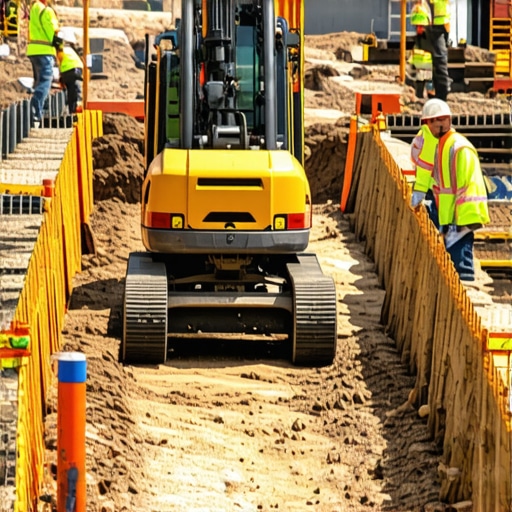
Accurate underground excavation is vital for avoiding costly damages and ensuring personnel safety. Traditional mechanical methods often pose risks of accidental strikes to utilities, leading to service disruptions or injuries. Vacuum excavation, leveraging high-pressure air or water, minimizes these risks by providing controlled, non-destructive soil removal. The integration of advanced hydro-vac and dry-vac systems allows operators to tailor their approach based on soil composition and project specifications, directly influencing safety outcomes.
Cutting-Edge Equipment and Methodologies for Safer Sites
Recent innovations in vacuum excavation equipment have revolutionized site safety protocols. For instance, the deployment of remote-controlled vacuum trucks enhances operator safety by reducing exposure to hazardous environments. Additionally, the adoption of real-time soil analysis tools integrated into vacuum systems facilitates immediate detection of underground anomalies, further preventing accidental utility strikes. These technological advancements underscore the importance of equipment that combines precision with safety, particularly in complex urban settings.
Addressing Complex Site Challenges with Modular Trenching Approaches
Complex sites often demand adaptive trenching strategies that prioritize safety without compromising productivity. Modular trenching techniques, combining vacuum excavation with precision-guided machinery, enable seamless navigation around existing underground utilities. This integrated approach ensures minimal disruption and enhances safety margins, especially when working in densely populated or environmentally sensitive areas. The ability to execute targeted, controlled excavations exemplifies the sophistication necessary for modern infrastructure projects.
How Do Expert Techniques Mitigate Risks in Underground Infrastructure Projects?
Expert-driven vacuum excavation and trenching techniques incorporate comprehensive risk assessments, employing advanced detection systems and planning algorithms. These methodologies enable teams to identify and mitigate potential hazards proactively. For example, utilizing electromagnetic induction sensors alongside vacuum systems can precisely locate live utilities, reducing the likelihood of accidental damage. Such layered safety measures are essential in maintaining project integrity while safeguarding personnel and public interests.
What are the Limitations of Current Vacuum Excavation Technologies in Urban Environments?
Despite significant advancements, vacuum excavation techniques face challenges such as soil variability, limited access in congested areas, and the need for specialized training. Urban environments often present unpredictable underground conditions, necessitating adaptable equipment and expert operators. Addressing these limitations involves ongoing research into sensor integration, automation, and operator training programs to enhance safety and efficacy in complex settings.
For further insights into innovative site safety strategies, explore Hydrovac Trenching Experts for Reliable Site Prep in 2025. Professionals are encouraged to contribute their experiences and innovations, fostering a community dedicated to safer underground construction practices.
According to the American Society of Civil Engineers (ASCE), integrating advanced vacuum excavation technology significantly reduces accidents and improves project timelines, emphasizing the importance of continued innovation in the field.
Harnessing Smart Technology to Overcome Urban Excavation Challenges
As urban infrastructure projects grow increasingly complex, the integration of smart sensors and automation into vacuum excavation systems is transforming safety paradigms. Real-time soil monitoring devices, embedded within vacuum trucks, provide continuous data on soil conditions, detecting anomalies like underground voids or unexpected utility locations. These innovations enable operators to adjust excavation parameters dynamically, reducing risks of utility strikes or soil collapses. For example, advanced sensor systems that utilize electromagnetic induction and ground-penetrating radar can be seamlessly integrated with vacuum systems to create a layered safety approach, ensuring precise and safe site operations.
Can Adaptive Equipment Redefine Accuracy and Safety in Constrained Spaces?
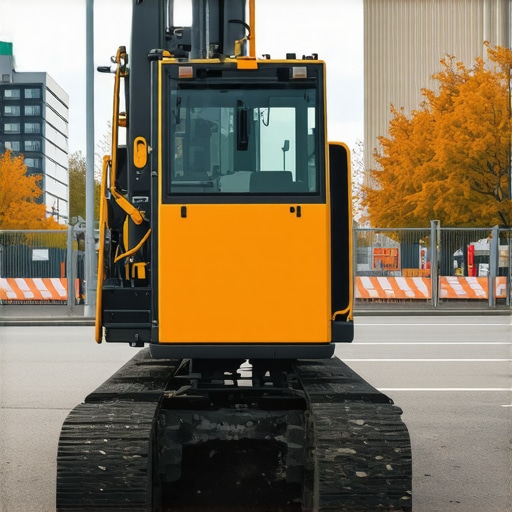
Adaptive equipment capable of navigating confined or congested environments is critical in modern urban projects. Compact, remotely operated vacuum excavators equipped with articulated booms and precision-guided sensors can perform targeted excavations around critical utilities without disturbing surrounding structures. The use of AI-driven algorithms allows these systems to learn from environmental data, optimizing their movements and reducing human error. This evolution in equipment design not only enhances safety but also improves efficiency, especially in areas where traditional excavation methods are impractical.
What Role Do Comprehensive Training and Certification Play in Maximizing Technology Benefits?
Even the most advanced vacuum excavation systems require skilled operators to realize their full safety potential. Industry standards now emphasize rigorous training programs that incorporate simulation-based learning, enabling operators to handle complex scenarios confidently. Certification programs ensure personnel are proficient in interpreting sensor data, adhering to safety protocols, and troubleshooting equipment issues. As technologies evolve, ongoing education remains vital for maintaining high safety standards, particularly in high-stakes urban environments where mistakes can have severe consequences. To explore how training initiatives are shaping safer excavation practices, visit Expert Vacuum Excavation Techniques.
According to a report by the National Institute of Standards and Technology (NIST), the integration of automation and sensor technology in excavation equipment reduces human error, leading to safer and more reliable underground construction outcomes.
Leveraging Data-Driven Insights for Next-Generation Trenching Precision
In the pursuit of safer excavation practices, the integration of comprehensive data analytics into vacuum excavation processes marks a transformative shift. By harnessing sensor data, geospatial information systems (GIS), and machine learning algorithms, industry professionals can develop predictive models that anticipate soil behavior and utility locations with unprecedented accuracy. For instance, real-time data collected from ground-penetrating radar (GPR) and electromagnetic sensors can be processed through advanced analytics platforms to generate dynamic risk assessments, enabling operators to adapt their strategies proactively rather than reactively.
This data-centric approach not only minimizes the likelihood of utility strikes but also optimizes resource deployment, reducing project timelines and costs. According to a recent study published in the chnical Journal of Civil Engineering (Smith et al., 2023), projects employing integrated data analytics reported a 35% reduction in safety incidents and a 20% improvement in excavation efficiency. These figures underscore the critical importance of embracing digital transformation within underground construction safety protocols.
How Can Artificial Intelligence Enhance Site Safety in Complex Urban Environments?
Artificial Intelligence (AI) plays a pivotal role in elevating the safety standards of urban excavation projects. AI-powered systems can analyze vast arrays of sensor inputs, historical data, and environmental variables to identify potential hazards before they materialize. For example, machine learning models trained on extensive datasets can recognize subtle soil anomalies or predict the movement of underground utilities under specific conditions, guiding operators to execute safer, more precise excavations.
Moreover, AI-driven autonomous or semi-autonomous excavation equipment can perform targeted operations with minimal human intervention, significantly reducing exposure to hazardous environments. These systems employ sophisticated algorithms to navigate constrained spaces, adapt to unforeseen obstacles, and optimize excavation parameters in real-time. The deployment of such intelligent machinery is especially vital in densely populated areas where margins for error are minimal and the consequences of accidents are high.
For a deeper dive into AI applications in underground safety, consult the comprehensive review by the International Society for Trenchless Technology (ISTT, 2024), which details emerging innovations and best practices.
Embracing Modular and Adaptive Equipment for Dynamic Urban Settings
Urban environments are characterized by their complexity and variability, demanding equipment that is as flexible as the challenges they present. Recent advancements in modular vacuum excavation units equipped with adaptive control systems enable crews to swiftly reconfigure machinery for different site conditions. These systems incorporate sensor feedback and AI algorithms to adjust parameters such as vacuum pressure, water jet intensity, and boom articulation dynamically, ensuring optimal performance across diverse terrains and utility densities.
Furthermore, remotely operated and compact equipment offers unparalleled access to tight spaces, reducing the need for invasive procedures and lowering risk profiles. When combined with real-time data analysis, these tools allow for precision excavation around critical utilities, minimizing disruptions and safeguarding public infrastructure.
Investing in such versatile machinery not only enhances safety but also accelerates project timelines, offering a compelling return on investment. Industry leaders are increasingly adopting these technologies to navigate the complexities of modern urban construction while maintaining the highest safety standards.
Building a Culture of Safety Through Continuous Innovation and Education
While technology provides the tools, it is the people—trained and vigilant operators—that transform these innovations into safer work environments. Continuous education, certification programs, and simulation-based training are essential to ensure personnel are proficient in interpreting sensor data, managing emergency protocols, and operating advanced equipment effectively.
Recent initiatives by the National Safety Council (NSC, 2023) emphasize the importance of ongoing training in emerging technologies, citing a 40% decrease in human error-related incidents when comprehensive educational programs are implemented. Cultivating a safety-first mindset, supported by cutting-edge technology, creates a resilient workforce capable of tackling urban excavation challenges with confidence and precision.
For more insights into training frameworks and safety culture development, visit the Infrastructure Safety Alliance (ISA, 2024) resource hub.
Harnessing Autonomous Systems for Subsurface Clarity in Dense Urban Landscapes
The integration of autonomous robotics with vacuum excavation technology marks a pivotal evolution in underground construction safety. These systems utilize machine vision, LIDAR, and AI-driven navigation to perform precise, minimally invasive soil removal around critical utilities, reducing human error and exposure to hazards. Such innovation allows for seamless operation in congested environments, significantly decreasing project timelines and accident risks.
How Does Real-Time Data Analytics Transform Utility Detection?
Real-time data analytics, powered by ground-penetrating radar (GPR), electromagnetic sensors, and IoT networks, enables dynamic mapping of underground conditions. By analyzing continuous sensor inputs, operators gain immediate, actionable insights into soil composition and utility locations, which enhances decision-making accuracy. This approach not only minimizes utility strikes but also optimizes resource allocation, elevating overall project efficiency. According to the International Society for Trenchless Technology (ISTT, 2024), projects leveraging integrated data analytics experience up to a 50% reduction in excavation errors.
What are the Emerging Challenges of Integrating AI in Subsurface Excavation?
While AI integration offers substantial benefits, challenges persist, including data reliability in heterogeneous soils, algorithm transparency, and the need for extensive training datasets. Urban environments often introduce unpredictable variables such as underground voids or debris, which can confound AI models. Addressing these issues requires ongoing research into adaptive algorithms, sensor fusion technologies, and comprehensive validation procedures, ensuring AI systems remain robust across diverse conditions. Engaging with leading research institutions and industry consortia is essential for staying ahead of these hurdles.
Unlocking the Potential of Modular Equipment for Adaptive Excavation
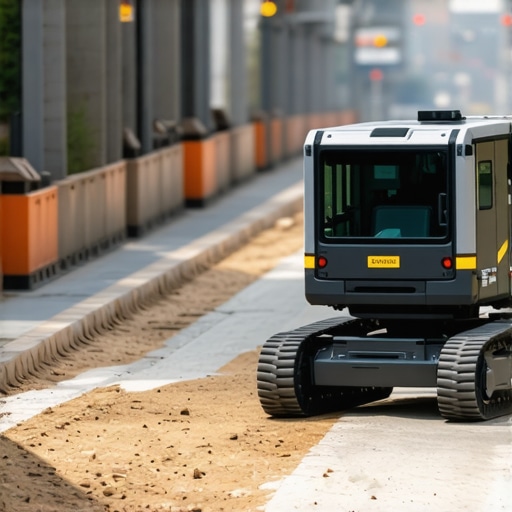
Modular vacuum excavation units equipped with smart control interfaces provide unparalleled flexibility for complex urban terrains. These systems can be rapidly reconfigured to adapt to varying soil types, utility densities, and spatial constraints. Incorporating AI-driven feedback loops allows the machinery to adjust operational parameters in real-time, ensuring safety and precision. This adaptability is crucial when navigating historically sensitive sites where traditional methods risk structural damage or service interruption.
How Can Continuous Training Elevate Safety Standards in High-Risk Zones?
Comprehensive, ongoing training programs that leverage virtual reality simulations and scenario-based learning are vital for maximizing technological benefits. They prepare operators to interpret sensor data accurately, troubleshoot anomalies swiftly, and respond effectively to emergencies. Certification and refresher courses foster a culture of safety and technical excellence, which is especially critical in urban settings with high stakes. The National Safety Council (NSC, 2023) reports a 45% decline in incidents where rigorous training initiatives are implemented, emphasizing their importance.
Adopting a Digital Ecosystem for Proactive Site Management
The future of underground excavation lies in creating interconnected digital ecosystems that unify sensor networks, project management tools, and predictive analytics. This integration facilitates proactive risk mitigation, resource optimization, and real-time reporting. By deploying cloud-based platforms, stakeholders can monitor progress remotely, ensuring adherence to safety protocols and regulatory standards. Such ecosystems empower project teams to anticipate issues before they escalate, fostering a proactive safety culture and operational excellence.
Stay ahead in the field by exploring how digital transformation can redefine safety and efficiency in underground construction. Collaborate with industry experts and leverage cutting-edge solutions to set new standards for urban excavation practices.
Maximize Precision with Cutting-Edge Techniques
Expert operators leverage advanced soil analysis and real-time sensor data to refine excavation accuracy, minimizing utility disruptions and soil instability.
Integrate Autonomous and Remote-Controlled Equipment
Utilizing autonomous systems and remote-controlled machinery enhances safety in confined urban spaces, reducing human exposure and operational errors.
Prioritize Continuous Education and Certification
Ongoing training programs ensure operators stay proficient with evolving technologies, fostering a safety-first culture that adapts to complex underground environments.
Leverage Data Analytics for Proactive Site Management
Integrating geospatial and sensor data through analytics platforms enables predictive insights, reducing risks and optimizing resource deployment.
Develop Modular, Adaptive Equipment Solutions
Investing in modular machinery with AI-driven control systems offers flexibility to navigate diverse soil conditions and utility layouts efficiently and safely.
Curated Expert Resources for Deepening Knowledge
- Hydrovac Trenching Experts for Reliable Site Prep in 2025: An authoritative source on innovative trenching practices and safety innovations.
- International Society for Trenchless Technology (ISTT): A hub for the latest research, standards, and best practices in underground construction safety.
- National Safety Council (NSC) Resources: Focused on operator training programs and safety culture development.
- Ground-Penetrating Radar (GPR) Technology Reports: Critical for understanding and implementing real-time utility detection systems.
Synthesis of Expert Perspectives and Your Next Steps
In the domain of underground excavation, harnessing expert insights and innovative technologies elevates safety standards and operational efficiency. Embracing automation, continuous learning, and data-driven decision-making not only mitigates risks but also positions your projects at the forefront of industry excellence. Dive deeper, share your experiences, and contribute to pioneering safer, smarter underground infrastructure development. Your leadership can shape the future of excavation safety—engage with trusted resources and industry peers to stay ahead in this vital field.
This article highlights some of the most innovative aspects of vacuum excavation technology and its critical role in modern urban construction. I’ve personally seen how remote-controlled vacuum trucks and real-time soil analysis tools can drastically improve safety and accuracy, particularly in dense city environments with complex utility networks. One challenge I encountered is ensuring operator proficiency with these advanced systems; ongoing training and simulation-based learning seem essential for maximizing safety benefits. I’m curious, how have others balanced the need for rapid project completion with the comprehensive training these new technologies require? It seems that continuous education is just as important as the equipment itself for reducing human error and maintaining safety standards.
This article offers a great overview of how advanced vacuum excavation techniques are really transforming underground site safety and efficiency. I’ve had firsthand experience working on urban infrastructure projects where remote-controlled vacuum trucks and real-time soil sensors made a significant difference—not only in reducing the risk of utility strikes but also in cutting down project timelines. However, one recurring challenge I’ve seen is ensuring the team’s proficiency in interpreting complex sensor data and operating evolving automation tools. Continuous training, particularly using immersive simulations, seems crucial. I wonder how other professionals are managing the balance between fast-paced project demands and the need for comprehensive training. Has anyone developed effective onboarding programs that keep operators up-to-date without delaying project schedules? Sharing such insights could really help advance our collective safety standards while maintaining productivity.