Hydrovac & Vacuum Excavation: Trusted Techniques for Safer Site Prep
Enhancing Construction Site Safety Through Advanced Excavation Methods
In the realm of construction and infrastructure development, the precision and safety of excavation processes are paramount. Hydrovac and vacuum excavation techniques have emerged as game-changers, offering safer alternatives to traditional excavation methods. These innovative approaches leverage high-pressure water or air combined with powerful vacuum systems to precisely and safely expose underground utilities and soil layers, significantly reducing the risk of damaging existing infrastructure and safeguarding workers.
The Science Behind Hydrovac and Vacuum Excavation
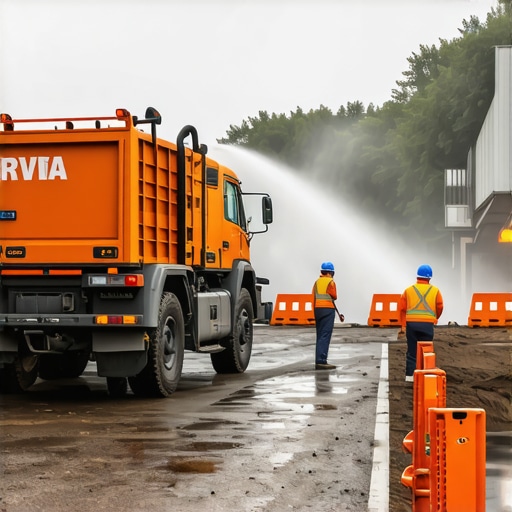
Hydrovac excavation employs pressurized water jets to loosen soil, which is then immediately removed by a vacuum system, creating a controlled and minimally invasive excavation process. This method excels in sensitive environments where precision is critical, such as near utilities or in congested urban settings. On the other hand, vacuum excavation often emphasizes dry or wet vacuum systems to remove soil and debris efficiently, making it suitable for trenching, potholing, and soil testing.
Why These Techniques Outperform Traditional Excavation
Compared to mechanical excavation, hydrovac and vacuum methods reduce the risk of accidental utility strikes, environmental damage, and worker injury. Their non-destructive nature allows for targeted excavation, facilitating safer site prep and reducing costly delays caused by utility damages. Moreover, these techniques support environmentally responsible practices by minimizing soil disturbance and preventing contamination.
Field Applications and Industry Insights
Field experts routinely deploy hydrovac systems for intricate tasks such as borehole drilling and trenching in urban environments. They also leverage vacuum excavation for soil sampling and utility locating, ensuring accurate data collection and risk mitigation. Industry leaders advocate for integrating these methods into comprehensive site management plans, citing studies from the ScienceDirect database that emphasize safety and efficiency gains.
Addressing Complex Challenges: How Can Expertise Optimize Excavation?
What are the best practices for integrating hydrovac solutions in densely congested sites?
Optimizing hydrovac deployment in complex environments involves strategic planning, including detailed utility mapping, real-time monitoring, and operator training. Combining these with advanced geotechnical analysis ensures precision and minimizes risks, making site prep more predictable and safer.
For professionals seeking to elevate their excavation strategies, exploring comprehensive guides on vacuum excavation best practices can provide valuable insights. Sharing your experiences and insights with industry peers further enhances collective safety standards.
In conclusion, adopting hydrovac and vacuum excavation techniques represents a strategic investment in safety, efficiency, and environmental stewardship. As infrastructure projects grow increasingly complex, these methods will become indispensable tools for responsible site preparation.
Elevating Excavation Precision with Cutting-Edge Hydrovac Strategies
As infrastructure demands grow more complex, the need for highly precise excavation methods becomes critical. Hydrovac techniques, when combined with emerging technologies like real-time utility mapping and advanced GPS-guided systems, can dramatically enhance accuracy and safety on site. These innovations facilitate meticulous excavation around underground utilities, reducing the likelihood of accidental strikes and improving overall project efficiency. Industry leaders emphasize that integrating these technologies into existing hydrovac workflows not only minimizes risks but also optimizes resource utilization, leading to significant long-term cost savings. For a comprehensive understanding of these advancements, consult resources on effective borehole hydrovac drilling strategies.
Challenging Assumptions About Soil and Utility Risks
Many practitioners assume that all underground conditions can be managed with standard hydrovac procedures. However, soil variability, groundwater presence, and utility density often require tailored strategies. For example, in highly congested urban areas, the use of multi-point sensor arrays can help detect unexpected underground anomalies in real-time, allowing for immediate adjustments. This proactive approach vastly improves safety margins and mitigates potential delays. Moreover, employing comprehensive vacuum excavation guides ensures operators are equipped with best practices to handle complex scenarios efficiently.
What are the most effective tools to predict and adapt to unpredictable underground conditions?
Utilizing advanced geotechnical analysis tools combined with 3D subsurface modeling can revolutionize site prep processes. These tools provide a detailed view of underground conditions, enabling operators to plan excavations more precisely and respond swiftly to unforeseen challenges. For instance, integrating geophysical surveys with real-time data analytics offers a dynamic approach to excavation planning. This synergy enhances safety, reduces project timelines, and ensures compliance with regulatory standards. To explore how these tools can be incorporated into your projects, review insights from streamlined hydrovac trenching techniques.
Are you interested in adopting innovative strategies to further improve your excavation safety? Sharing your experiences or requesting tailored consultation can help elevate industry standards and foster safer construction practices. Consider engaging with industry forums or reading more about vacuum excavation safety strategies.
By embracing these advanced tools and proactive planning, professionals can unlock new levels of safety, efficiency, and environmental responsibility in the field of underground excavation. As industry standards evolve, staying informed about these innovations ensures your projects remain at the forefront of safe, reliable infrastructure development.
Transforming Excavation Safety with Real-Time Data Analytics
In the high-stakes world of underground construction, mere reliance on static plans is no longer sufficient. The integration of real-time data analytics, combined with advanced geotechnical sensors, represents a paradigm shift in excavation safety. These technologies continuously monitor soil conditions, groundwater levels, and utility locations, providing immediate feedback that allows operators to adapt dynamically. For example, during complex urban utility crossings, sensors can detect subtle shifts in soil stability or unexpected utility presence, prompting instant adjustments to excavation parameters and preventing costly utility strikes or collapses.
This proactive approach minimizes risk exposure, enhances decision-making precision, and aligns with the highest safety standards. Industry leaders such as Safety in Construction emphasize that such innovations are essential for future-proofing excavation projects, especially as urban environments become increasingly congested and underground infrastructure demands escalate.
Leveraging 3D Subsurface Modeling to Predict and Prevent Hazards
Beyond real-time sensors, 3D subsurface modeling tools have become indispensable for sophisticated excavation planning. These models synthesize data from seismic surveys, borehole logs, and geophysical explorations into a comprehensive digital twin of the underground environment. By simulating various excavation scenarios, engineers can identify potential hazard zones, such as unstable soil pockets or hidden utility clusters, before any physical work begins.
Such predictive analytics enable the development of tailored excavation strategies that prioritize safety and efficiency. For instance, in areas with complex utility networks, 3D models can forecast potential utility conflicts, guiding the placement of protective barriers or alternative trench routes. This meticulous planning reduces project delays, minimizes environmental impact, and ensures compliance with stringent safety regulations.
What are the emerging challenges in integrating multiple data sources for underground hazard prediction?
Integrating diverse data streams—geophysical, sensor-based, and historical—poses significant challenges in data harmonization, resolution disparities, and real-time processing. Advanced algorithms and machine learning models are increasingly employed to synthesize this information, but issues such as data quality, sensor calibration, and computational load require expert management. Developing standardized protocols and investing in robust data infrastructure are critical steps toward overcoming these hurdles. For further insights, consult the comprehensive report from Geotech Journal on multi-source data integration in underground hazard management.
If you’re eager to elevate your excavation safety protocols, consider joining industry forums, participating in specialized training programs, or subscribing to leading publications like Construction Tech Insights. Sharing experiences and adopting proven strategies can significantly reduce risks and set new standards for responsible underground construction.
In conclusion, the fusion of real-time analytics and predictive modeling is revolutionizing underground excavation safety. Embracing these technological advancements not only safeguards workers and infrastructure but also enhances project efficiency and environmental stewardship. Staying ahead in this field requires continuous learning, innovation, and collaboration among industry experts.
Next-Level Precision: How Advanced Geophysical Surveys Transform Excavation Planning
In the pursuit of flawless underground excavation, sophisticated geophysical survey techniques—such as ground-penetrating radar and seismic tomography—have become indispensable. These methods deliver high-resolution subsurface images, enabling engineers to identify anomalies, voids, or utility networks with remarkable accuracy. Leveraging such data minimizes unforeseen hazards, reduces project delays, and enhances safety protocols.
Leveraging AI and Machine Learning for Proactive Risk Management
The integration of artificial intelligence (AI) and machine learning algorithms into excavation workflows is revolutionizing hazard prediction and decision-making. By analyzing vast datasets—ranging from soil conditions to utility layouts—these systems forecast potential issues before excavation commences. For instance, predictive models can flag zones prone to collapse or utility conflicts, guiding operators to adjust strategies proactively.
How Can Real-Time Data Analytics Elevate Safety During Excavation?
Real-time analytics, harnessed through IoT-enabled sensors embedded in soil and structural elements, facilitate dynamic monitoring of underground conditions. This continuous data stream allows immediate response to evolving risks, such as soil instability or utility shifts. Implementing these systems ensures that excavation adapts seamlessly to underground realities, significantly reducing accidents and operational disruptions.
What Are the Limitations of Current Subsurface Imaging Technologies?
While ground-penetrating radar and seismic surveys provide valuable insights, their effectiveness can be hampered by soil heterogeneity, moisture content, and depth limitations. False positives or missed anomalies pose ongoing challenges, necessitating complementary methods like borehole sampling or electromagnetic surveys. Continuous technological advancements aim to overcome these barriers, yet expert interpretation remains crucial for reliable results.
Integrating Multidisciplinary Data for Holistic Site Assessment
Combining geophysical data with historical records, utility maps, and soil sampling results creates a comprehensive underground profile. This multidisciplinary approach enhances predictive accuracy and informs tailored excavation methods. For example, integrating 3D modeling with sensor data can visualize potential hazard zones, guiding risk mitigation strategies with unprecedented precision.
What are the best practices for harmonizing diverse data sources in complex underground environments?
Effective data harmonization involves standardized protocols, robust data infrastructure, and advanced analytics platforms capable of synthesizing heterogeneous information streams. Employing cloud-based systems facilitates collaboration among geotechnical engineers, surveyors, and construction teams, ensuring timely and coherent decision-making. For further insights, consult the authoritative resource from Geotech Journal.
Are you prepared to implement these innovative strategies within your projects? Engaging with industry specialists, adopting emerging technologies, and fostering collaborative data sharing are pivotal steps toward safer, more efficient underground excavation.
Futuristic Approaches: Virtual Reality for Excavation Simulations
Emerging virtual reality (VR) applications enable immersive simulations of underground environments, allowing engineers to visualize complex scenarios before physical work begins. This proactive training and planning tool enhances hazard recognition, operational coordination, and emergency preparedness, ultimately elevating safety standards in subterranean construction.

Innovative Approaches Transforming Excavation Safety
In the complex world of underground construction, leveraging cutting-edge excavation methods like hydrovac and vacuum excavation is vital. These techniques not only improve precision but also significantly enhance safety standards, reducing risks associated with utility strikes and soil instability. Experts emphasize that integrating these methods into project workflows is a strategic move that pays dividends in safety and efficiency.
Precision as a Safety Multiplier
Utilizing real-time utility detection and advanced soil analysis during hydrovac operations allows for targeted excavation, minimizing accidental damage. Skilled operators trained in these technologies can adapt swiftly to underground anomalies, safeguarding infrastructure and personnel.
Environmental Stewardship Through Responsible Excavation
These methods support environmentally responsible practices by reducing soil disturbance and preventing contamination, aligning safety goals with sustainability initiatives. The non-destructive nature of hydrovac and vacuum excavation fosters a safer and greener work environment.
Technological Synergy for Future-Ready Sites
Combining hydrovac with emerging tools like 3D subsurface modeling, IoT sensors, and AI-driven analytics creates a comprehensive safety ecosystem. Such integration enables proactive hazard detection and risk mitigation, setting new industry benchmarks.
Authoritative Resources for Deepening Expertise
- Hydrovac Drilling Best Practices: Offers detailed guidelines and case studies on implementing advanced excavation techniques for maximum safety and precision.
- ScienceDirect Industry Reports: Provides peer-reviewed research on recent innovations and safety outcomes related to hydrovac and vacuum excavation.
- Geotech Journal Publications: Features expert analyses on geotechnical challenges and technological solutions in underground site management.
- Construction Safety Institute: Delivers comprehensive safety standards and training modules for underground excavation professionals.
Final Reflection from Industry Leaders
Harnessing the full potential of advanced excavation strategies like hydrovac and vacuum techniques is a game-changer for underground construction safety. The synergy of expert knowledge, innovative technology, and environmental consciousness defines the future of responsible site development. Engagement in continuous learning and collaboration remains essential for professionals aiming to lead in this evolving field. Dive deeper into these topics by exploring authoritative resources and sharing your insights with industry peers—together, we build safer, smarter infrastructure.