Reevaluating Site Safety: The Critical Need for Specialized Excavation Methods
In the realm of underground construction and utility installation, the complexities of working within saturated silt zones demand more than traditional shoring solutions. Conventional shoring frequently proves inadequate due to soil instability, water infiltration, and unpredictable pressure dynamics, thereby elevating risk profiles for workers and infrastructure alike.
Why Standard Shoring Fails Amid Saturated Soil Conditions
Traditional trench shoring relies heavily on mechanical supports that assume stable soil parameters. However, saturated silts compromise these assumptions, often leading to trench collapse, soil slumping, or inadvertent infrastructure damage. The interplay of water and fine-grained sediments reduces soil cohesion, rendering conventional methods not only inefficient but potentially hazardous.
Leveraging Hydrovac Technology for Enhanced Soil Management
Hydrovac excavation introduces a paradigm shift by utilizing high-pressure water jets combined with vacuum recovery systems to precisely remove soil without disturbing surrounding strata. This method is particularly effective in saturated silts where excessive water content weakens the soil matrix, making mechanical shoring insufficient.
How Can Vacuum Excavation Minimize Risks in Challenging Soil Conditions?
Vacuum excavation offers real-time soil removal control, significantly reducing the likelihood of trench collapse. Its non-mechanical approach means soil stability can be maintained dynamically, providing safer environments for workers and sensitive underground utilities. Incorporating targeted soil stabilization techniques further enhances safety, as supported by recent research published in the Journal of Geotechnical and Geoenvironmental Engineering.
Complex Interplay of Soil Moisture Content and Excavation Performance
Understanding soil moisture levels is essential for selecting appropriate excavation methods. In saturated silts, the water acts as a lubricant, increasing the risk of lateral soil movement. Here, hydrovac’s precision can prevent uncontrolled soil flow, unlike traditional shoring, which may exacerbate soil failure when water pressure exceeds support capacity.
Expert Insights on Optimizing Excavation in Saturated Soils
Field engineers with experience in high-moisture environments emphasize the importance of integrating soil conditioning agents and real-time monitoring. These practices, aligned with vacuum excavation’s adaptability, mitigate risks associated with soil movement and guarantee excavation integrity.
What Innovations Are Required to Further Increase Safety in Saturated Zone Excavations?
Emerging technologies such as IoT-enabled soil sensors and adaptive vacuum controls promise enhanced safety margins. Continuous data collection allows for proactive soil stabilization adjustments, reducing the potential for collapse and infrastructure disruption.
If you seek to deepen your expertise, explore our comprehensive guide to hydrovac innovations or contact our specialists for tailored solutions.
Innovating Soil Stabilization with Hydrovac Technologies
Traditional excavation methods often struggle to cope with unpredictable soil behaviors, especially in saturated, loose, or clay-heavy substrates. Hydrovac systems, through their combined use of high-pressure water and vacuum extraction, offer a nuanced approach by gently displacing soil particles without exerting excessive mechanical force. This precision minimizes ground disturbance and reduces the risk of trench wall collapse, which is critical when working near existing structures or sensitive underground utilities.
Why Precision Matters: Moving Beyond Conventional Support
While mechanical shoring provides immediate support, it often falls short in soils with fluctuating moisture content or unstable composition. Hydrovac’s ability to adapt to real-time ground conditions presents a significant advantage, especially in complex urban environments where space and safety are paramount. As highlighted by industry experts, integrating vacuum excavation with soil conditioning agents can further enhance soil stability and facilitate safer, faster trenching processes. For more insights on advanced excavation methods, see our Ultimate Guide to Borehole Drilling with Advanced Vacuum Excavation Equipment.
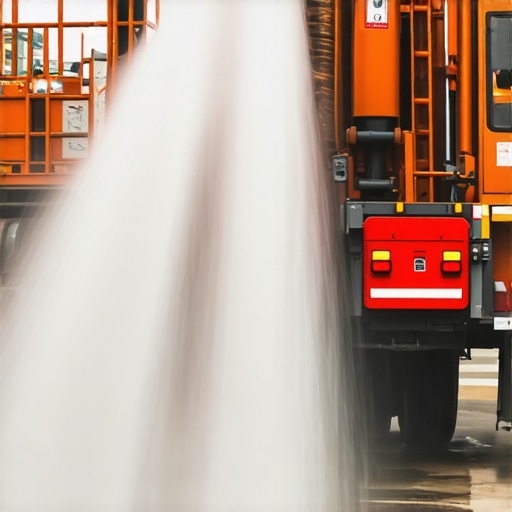
Can emerging sensor technologies revolutionize soil monitoring during on-site excavation?
Emerging advancements such as IoT-enabled soil sensors and real-time data analytics are pivotal in predicting soil behavior before and during excavation. These tools provide critical insights into moisture variation, compaction levels, and stability, allowing operators to adjust vacuum pressure or introduce stabilization agents preemptively. The integration of such technologies signifies a new era in excavation safety and efficiency, aligning with ongoing industry innovations discussed in our Future of Precise Borehole Drilling.
If you’re interested in implementing these advanced solutions in your projects, our team of specialists is ready to assist you—reach out through our Contact Page.
Integrating Real-Time Soil Data for Adaptive Excavation Control
Harnessing the power of cutting-edge sensor technology transforms traditional excavation protocols by enabling dynamic responses to shifting soil conditions. Deploying IoT-enabled moisture and pressure sensors allows site managers to receive continuous data streams, informing the adjustment of vacuum pressures and soil stabilization techniques in real time. This integration not only enhances safety margins but also optimizes operational efficiency, particularly in complex saturated silt environments where soil behavior can change rapidly.
Can Predictive Analytics Foresee Soil Movements Before They Happen?
Emerging predictive models, powered by machine learning algorithms trained on extensive geotechnical datasets, hold promise for proactively identifying potential failure zones. By analyzing patterns such as moisture fluctuation trends, historical soil stability data, and environmental variables, these models can forecast areas at heightened risk of collapse or slumping. Such foresight empowers excavation teams to implement preemptive measures—like targeted stabilization or real-time support adjustments—thereby mitigating hazards before they manifest physically. Referencing recent advancements published in the Geotechnical Advances Journal, underscores the feasibility and growing adoption of these technologies.
To explore how predictive analytics can be seamlessly integrated into your operational workflows, consult our team of geotechnical experts or access our detailed case studies on adaptive excavation management.
Enhancing Soil Stabilization Through Nano-Engineered Solutions
Moving beyond conventional soil amendments, current research points toward nano-engineered stabilizers that penetrate soil matrices at a molecular level, offering unparalleled reinforcement. These innovations enable tailored modifications catering to specific soil types—be it saturated silts, clay-heavy substrates, or loose sediments—resulting in markedly improved cohesion and resistance to water-induced instability.
For instance, nanomaterials like silica nanoparticles or polymeric nanocomposites can be applied through injection or mixing, instilling long-lasting stabilization effects without significantly altering soil permeability. Such precision engineering greatly reduces the risk of trench failure, especially in geotechnically challenging zones adjacent to critical infrastructure. Industry leaders’ pioneering studies, such as those documented in the Nano Safety Journal, demonstrate the transformative potential of these materials.
Engaging with specialists in nanogeotechnics will allow you to evaluate site-specific soil conditions and develop bespoke stabilization strategies that elevate safety standards and support sustainable excavation practices.
The Hidden Dynamics of Saturated Soils and Their Impact on Excavation Safety
Saturated soils, especially loose silts and clays, exhibit complex behaviors that challenge traditional excavation methods. Water content reduces soil cohesion, leading to increased risks of trench collapse and inadvertent utility damage. Advanced understanding of these hydrological and geotechnical interactions is crucial for designing safe excavation strategies. Leveraging recent studies, such as those published in the Journal of Geotechnical Engineering, can decode the fluid-soil interactions to optimize support schemes.
Replicating Natural Soil Behavior with Precision-Engineered Hydrovac Systems
Hydrovac technology excels in mimicking natural soil displacement by employing controlled high-pressure water jetting followed by vacuum extraction. This tandem approach respects the soil’s intrinsic moisture content, preventing over-excavation and maintaining the natural ground state where possible. Such precision reduces ground disturbances and conserves surrounding structures, especially in sensitive urban environments. Integrating simulation tools that model water flow and soil mechanics can further refine excavation plans, ensuring risk mitigation aligns with site-specific geotechnical conditions.
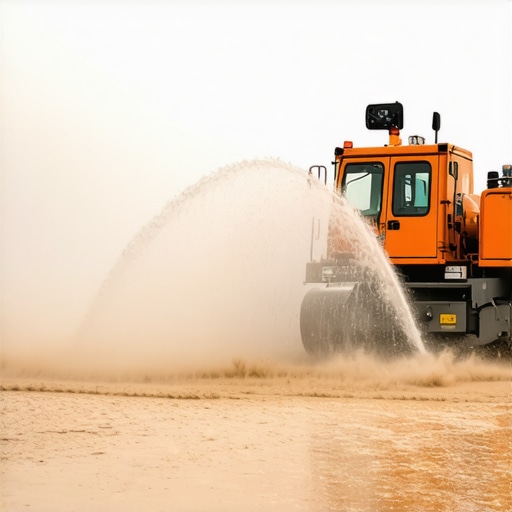
What Role Do Adaptive Vacuum Controls Play in Managing Unpredictable Soil Moisture?
Adaptive vacuum systems, equipped with real-time feedback mechanisms, dynamically adjust suction power based on sensed soil resistance, moisture levels, and particle size distributions. This responsiveness ensures the removal process maintains stability, avoids soil suspension, and minimizes trench wall collapse risk. Such intelligent control systems, supported by advances in sensors and machine learning algorithms, pave the way for proactive safety management in complex saturated zones, as detailed in the IEEE Transactions on Automation Science and Engineering.
Incorporating Cutting-Edge Soil Stabilization for Peak Safety
Emerging nanotechnologies and bio-stabilizers present new frontiers in ground support. Engineered nanomaterials can penetrate deep into saturated soils, reinforcing particle bonds and increasing shear strength without adding significant weight or altering permeability. Such innovations facilitate safer trenching operations near critical utilities and reduce the need for bulky support structures. Collaboration with geotechnical chemists enables bespoke stabilization formulations tailored to specific soil profiles, ensuring excavation integrity even under challenging moisture conditions.
In the ever-evolving landscape of underground construction, staying ahead requires more than just conventional techniques. The integration of advanced soil stabilization, real-time monitoring, and innovative excavation technologies empowers professionals to navigate the complexities of saturated silts with confidence.
Expert Insights & Advanced Considerations
Prioritize Suction Control to Maintain Trench Integrity
Harnessing adaptive vacuum systems equipped with real-time feedback ensures that soil stability is maintained dynamically, preventing wall collapse and associated hazards. This proactive approach is vital in environments where moisture content fluctuates unpredictably.
Leverage Nanotech for Long-Lasting Soil Reinforcement
Emerging nano-engineered stabilizers penetrate deeply into soil matrices, enhancing cohesion without compromising permeability. Such materials significantly reduce the likelihood of collapse, especially in sensitive zones adjacent to utilities or structures.
Integrate IoT Sensors for Smarter Soil Management
Incorporating IoT-enabled moisture and pressure sensors offers continuous, precise data, allowing on-the-fly adjustments. This technology unlocks new levels of safety and efficiency, transforming traditional excavation protocols.
Utilize Predictive Analytics for Preemptive Action
Employing machine learning models trained on geotechnical data enables early identification of potential failure zones, facilitating intervention before hazards occur. This foresight is a game-changer in complex saturated soil environments.
Combine Hydrovac and Soil Nanotechnology for Optimal Results
The synergy of precise hydrovac excavation and nano-scale stabilization creates a balanced approach—minimizing ground disturbance while maximizing trench stability—even in the most challenging conditions.
Curated Expert Resources
- Geotechnical and Geoenvironmental Engineering Journal – Offers cutting-edge research on soil behavior and stabilization techniques critical for saturated zone excavation.
- Nano Safety Journal – Details advancements in nano-engineered soil stabilizers, with promising applications in geotechnics.
- IEEE Transactions on Automation Science and Engineering – Features articles on smart sensor integration and adaptive control systems enhancing excavation safety.
- Hydrovac Innovations Portfolio – Showcases the latest developments in vacuum excavation technology and its applications in complex soils.
Final Perspective for the Forward-Thinking Excavator
The intersection of precise hydrovac methods, nanotechnology, and intelligent sensor networks marks a new era in saturated soil excavation. These innovations empower professionals to achieve safer, more efficient outcomes, reducing risk and fostering sustainable practices. Embracing these advancements requires a commitment to continuous learning and strategic implementation. To forge ahead confidently, consider engaging with industry experts or exploring our comprehensive guide to hydrovac innovations. Your expertise and proactive adoption of cutting-edge solutions will undoubtedly set new standards for safety and efficiency in underground excavation.