Mastering the Art of Trench Shoring in Complex Utility Environments
In the realm of underground construction and maintenance, safely excavating around live conduits demands a nuanced understanding of soil behavior, equipment capabilities, and innovative shoring techniques. The deployment of hydrovac and vacuum excavation methodologies has revolutionized traditional trenching, enabling professionals to achieve precision while minimizing risks to existing infrastructure.
Why Hydrovac Operations Are Indispensable in Sensitive Utility Zones
Hydrovac technology leverages pressurized water and powerful vacuum systems to expose utilities with minimal ground disturbance. Its adaptability in varying soil conditions—ranging from sandy substrates to high plasticity clay—allows operators to control soil removal meticulously. As detailed in expert analyses, hydrovac’s non-mechanical approach significantly reduces the chance of utility damage, especially when excavating in proximity to live conduits.
What Are the Critical Factors for Effective Trench Shoring During Vacuum Excavation?
Effective shoring in vacuum excavation hinges on understanding soil mechanics, employing dynamic bracing techniques, and utilizing suitable trench boxes. Proactive site assessment ensures that soil stability is maintained, preventing trench collapse. In loose, saturated, or high-water-table soils, advanced shoring systems—such as hydraulic struts and slide rail supports—offer enhanced stability. For instance, case studies reveal that combining hydrovac with innovative shoring reduces worksite incidents and accelerates project timelines.
Innovative Approaches to Shore a Trench in Challenging Soil Conditions
Field experts advocate integrating real-time soil moisture analysis with adaptive shoring strategies. Technologies like ground-penetrating radar (GPR) assist in mapping underground utilities and underlying soil layers, informing shoring design. Moreover, employing temporary casings or inflatable bladders can provide additional support when excavation depth or soil variability present heightened risks.
Challenges of Working Near Live Conduits and How to Overcome Them
Working in high-risk zones requires meticulous planning to prevent utility strikes. Vacuum excavation reduces direct contact with conduits, but the inherent soil pressure and existing soil conditions can trigger unforeseen movements. Expert recommendations include maintaining constant communication with utility companies, deploying advanced detection equipment, and implementing contingency shoring solutions to adapt swiftly to soil shifts or utility movements.
Is Manual Shoring Still Relevant When Using Modern Hydrovac Techniques?
While manual shoring offers traditional solutions, its relevance diminishes in environments where hydrovac provides a safer, more adaptable alternative. Nonetheless, in confined or highly saturated soils, combining manual shoring with hydrovac operations ensures maximum safety and efficiency. Continual advancements in shoring technologies are integrating with vacuum excavation systems to create cohesive, resilient solutions.
Understanding the intricate dynamics of trench shoring around live utilities requires an expert grasp of soil behaviors, innovative equipment, and safety protocols. For professionals aiming to refine their skills, exploring [this comprehensive guide](https://hydrovacdrilling.com/mastering-vacuum-excavation-expert-tips-for-safe-and-efficient-trenching) offers valuable insights. Continuous engagement with industry innovations and contributions from seasoned engineers are vital to advancing safe excavation practices.
For further guidance, consult authoritative sources such as the American Society of Civil Engineers (ASCE) on soil stability and excavation safety standards.
Pushing the Limits of Borehole Stability in Challenging Substrates
Deep borehole drilling presents unique challenges, particularly when encountering unpredictable soil strata and high water tables. Traditional methods often struggle to maintain borehole integrity, risking collapse or loss of drilling efficiency. However, integrating advanced vacuum excavation techniques with specialized shoring solutions offers a way to overcome these hurdles. Experts emphasize the importance of real-time geological data to dynamically adapt shoring strategies, ensuring borehole stability even in highly heterogeneous soils. For example, utilizing ground-penetrating radar (GPR) before drilling can inform the selection of casing and stabilization methods, reducing failure rates and enhancing safety.
Smart Soil Analysis: The Key to Preventing Casing Collapse
One significant factor affecting deep borehole health is soil variability. High plasticity clay or saturated granular soils demand tailored stabilization approaches. Emerging technologies now enable continuous monitoring of soil parameters during drilling, such as using downhole sensors that measure moisture content and pressure. Coupled with predictive modeling, these insights allow operators to preemptively modify casing designs or employ innovative stabilization agents. Incorporating these practices aligns with industry standards and reduces the risk of casing failure, ultimately saving time and costs on-site. For more details on soil stabilization techniques, visit this expert guide.
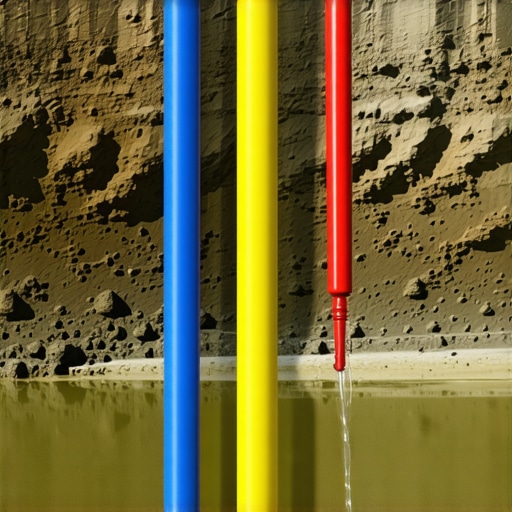
Can Adaptive Shoring Systems Revolutionize Deep Borehole Operations in Uncertain Soils?
Adaptive shoring systems—featuring inflatable supports and modular casing—offer remarkable flexibility, allowing rapid adjustments to soil conditions encountered during drilling. These systems enable drill crews to respond promptly to unexpected shifts in soil behavior, maintaining borehole integrity without lengthy downtime. As the industry advances, integrating automation and sensor feedback with these systems could lead to fully responsive stabilization mechanisms, transforming deep drilling practices. Industry leaders advocate for ongoing research into such adaptive technologies to improve safety and efficiency, highlighting the importance of continuous innovation in complex geotechnical environments.
Stay connected with professional communities and contribute your experience to help refine these emerging techniques. To explore more about best practices in borehole stabilization, consider consulting comprehensive industry resources and case studies.
Harnessing Modular Systems for Dynamic Soil Support
As trench depths and soil complexities escalate, the adoption of modular shoring systems emerges as a game-changer. These systems, composed of interlocking panels, hydraulic supports, and adjustable braces, allow engineers to tailor support configurations rapidly in response to real-time geotechnical data. The pivotal advantage lies in their versatility—creating stable environments in diverse soil types—from compacted clay to loose sandy substrates—while minimizing environmental disturbance. Moreover, modular systems facilitate swift assembly and disassembly, significantly reducing overall project timelines and costs, especially in urban settings where space constraints demand quick turnaround times.
How Do Real-Time Soil Monitoring Tools Enhance Shoring Safety?
Implementing sensors that measure parameters such as moisture content, displacement, and pore water pressure transforms traditional shoring strategies into dynamic processes. These tools provide continuous feedback, enabling operators to anticipate soil movements before they reach critical thresholds. For instance, integrating ground-penetrating radar (GPR) data with sensor outputs allows for adaptive modifications—like adjusting hydraulic supports—ensuring soil stability in high-risk zones. Evidence from recent case studies indicates that such proactive approaches significantly reduce incidents of trench collapse and utility strikes, setting new standards for excavation safety and efficiency.
Exploring the Future: Automation and Smart Shoring Technologies
The horizon of trench shoring is rapidly expanding with the advent of automation and IoT-enabled devices. Autonomous monitoring units can perform continuous assessments, relaying data to centralized control systems that automatically calibrate support mechanisms. For example, inflatable supports equipped with embedded pressure sensors can adjust their firmness in response to soil shifts, maintaining optimal support without manual intervention. This convergence of robotics, sensor technology, and data analytics predicates a future where trench safety mechanisms are not just reactive but predictive—forestalling failures before they manifest. Researchers are actively developing prototypes of such systems, which promise to enhance safety, reduce labor demands, and elevate operational precision.
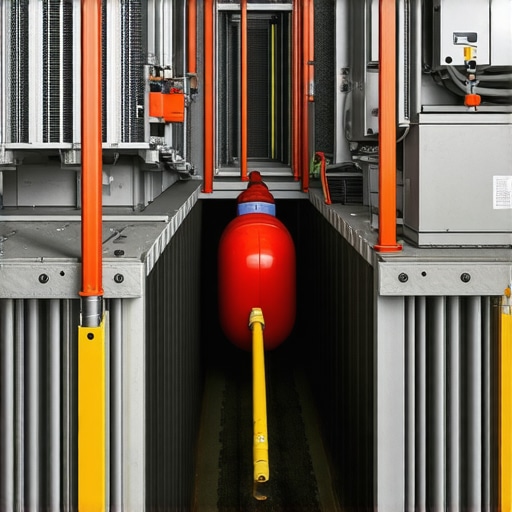
To visualize these advancements, consider an image illustrating an autonomous trench support system utilizing IoT sensors and inflatable supports, embedded within a complex urban excavation site. This image should help readers grasp the integration of cutting-edge technology into practical shoring solutions.
Innovative Modular Support Technologies Transforming Subsurface Excavation
Emerging modular shoring systems leverage interlocking components, hydraulic supports, and real-time sensing to provide adaptable solutions amidst unpredictable soil conditions. These systems not only enhance safety by dynamically responding to soil shifts but also significantly reduce setup times, especially in constrained urban sites. Their design facilitates rapid adjustments, making them invaluable in high-stakes scenarios like deep borehole drilling through heterogeneous strata.
Dynamic Soil Monitoring’s Role in Elevating Safety Standards
Real-time soil parameter measurement tools, such as embedded pressure and moisture sensors, empower operators to monitor ground behavior continuously. When integrated with advanced data analytics, these sensors can predict potential failures, allowing preemptive intervention. The synergy of ground-penetrating radar, downhole sensors, and AI-driven models culminates in a preemptive safety net, especially crucial during high-risk excavations near live utilities or unstable soils.
Can Integrating IoT with Shoring Systems Provide True Predictive Stability?
By embedding Internet of Things (IoT) technology within modular shoring components, operators can achieve real-time visualization of soil stresses and support integrity. Such integration facilitates automated adjustments—inflatable supports and hydraulic braces—responding instantaneously to soil movements. Industry pioneers are advocating for the development of interconnected support networks, promising a future where trench failures become a rarity thanks to proactive, sensor-informed stabilization measures.
Specialized Materials Elevating Borehole Support Resilience
Advancements in geotechnical materials, such as high-performance geosynthetics and phase-changing stabilization agents, enable tailored support strategies for challenging soil profiles. These materials improve borehole stability by reducing ground deformation and preventing casing collapse in saturation-prone or plastic soils. When combined with real-time geological data, these solutions facilitate adaptive casing designs, ensuring integrity even in the most unpredictable subsurface conditions.
Expert Strategies for Managing Utility-Proximate Excavations
Construction under existing utility corridors necessitates a multifaceted approach combining non-mechanical excavation, high-precision detection, and resilient shoring. Implementing adaptive support systems that can modify support stiffness on the fly, based on soil and utility movements, represents a leap forward in working safely near energized conduits. Strategic planning, including soil stabilization injections and contingency casing setups, further minimizes risk and enhances project timelines.
What Role Will Artificial Intelligence Play in Future Trench Support Design?
Artificial intelligence (AI) is poised to revolutionize shoring systems through predictive modeling and autonomous adjustment capabilities. Machine learning algorithms can analyze vast datasets from previous excavations, enabling support systems to preemptively adapt to complex soil behaviors and utility configurations. The integration of AI promises to minimize human error, optimize resource utilization, and significantly elevate safety standards—paving the way for genuinely smart excavation practices.
Expert Insights & Advanced Considerations
Embrace Adaptive Support Technologies to Respond Swiftly to Soil Variability
Utilizing real-time soil analysis tools, such as ground-penetrating radar and embedded sensors, enables excavation teams to tailor shoring configurations dynamically, reducing risks of trench collapse and utility damage.
Prioritize Integration of IoT Devices for Predictive Soil Stability Monitoring
Embedding IoT sensors within modular shoring systems provides continuous data streams, allowing proactive adjustments that improve safety standards and operational efficiency during complex utility excavations.
Adopt Modular Supports for Rapid Deployment in Challenging Environments
Modular shoring solutions offer flexibility and speed, facilitating quick modifications in response to unexpected soil conditions or site constraints, essential for urban trenching projects near sensitive infrastructure.
Leverage Advanced Material Technologies to Strengthen Borehole Integrity
High-performance geosynthetics and innovative stabilization agents enhance borehole resilience, especially in heterogeneous soils with high plasticity or high water tables, ensuring long-term stability and safety.
Combine Manual and Mechanical Shoring Strategically
In confined or saturated soils, blending traditional manual shoring techniques with modern vacuum excavation methods optimizes safety, providing redundancy and support where automated systems might have limitations.
Curated Expert Resources
- American Society of Civil Engineers (ASCE) – Offers comprehensive standards on soil stability and trench safety practices, essential for engineering professionals aiming to uphold highest safety protocols.
- Geotechnical Engineering Journals – Features cutting-edge research on soil behavior and innovative stabilization methods applicable in complex excavation scenarios.
- Hydrovac Drilling Industry Guidelines – Provides technical manuals and case studies on integrating vacuum excavation with advanced shoring in sensitive environments.
- IoT in Geotechnical Applications – Explores emerging technologies for real-time ground monitoring, supporting predictive maintenance and enhanced safety measures.
Final Expert Perspective
Mastering the art of trench shoring in complex utility environments hinges on embracing innovative support systems and leveraging real-time soil data. As advancements in modular supports, sensor integration, and material science converge, the potential to dramatically elevate excavation safety and efficiency becomes tangible. For professionals committed to excellence, staying at the forefront of these technologies—and openly sharing insights and experiences—will define the next era of subterranean construction mastery. We invite industry leaders and experts alike to contribute their perspectives to foster continuous improvement in safe excavation practices.