Understanding the Fundamentals of Trench Wall Integrity in Vacuum Excavation
Maintaining stable trench walls is vital for safe and efficient excavation, particularly when employing hydro-vac or vacuum excavation methods for borehole drilling. The subtle interplay between soil properties, water pressure, and trench design can lead to wall failures, especially during backfilling. Experienced professionals recognize the importance of precise control over excavation parameters to prevent crumbling, which can compromise structural stability and delay project timelines.
Why Conventional Backfilling Techniques Fail on Crumbling Walls
Many excavation experts encounter issues where trench walls disintegrate during backfill due to inadequate understanding of soil mechanics and pressure dynamics. Traditional methods often overlook soil cohesion and the influence of moisture content, leading to unforeseen collapses. Incorporating advanced geotechnical assessments and real-time monitoring systems can mitigate these risks, ensuring trench stability, especially when working with variable soil types like loose gravel or soft clay.
The Role of Water Pressure Control in Preserving Trench Walls
Optimizing water pressure, particularly in hydro-vac operations, is crucial to prevent wall failure. Literature from the hydrovac expertise emphasizes tailored water pressure protocols based on soil conditions, reducing inadvertent soil liquefaction or washing away of supporting materials. Skilled operators leverage pressure adjustments to maintain trench wall integrity, especially during delicate backfill phases.
Innovative Materials and Techniques to Reinforce Trench Walls
Advances in shoring systems, such as trench boxes and hydraulic supports, offer significant benefits when dealing with crumbling walls. Additionally, soil stabilization methods—like controlled soil compaction, chemical grouts, or geosynthetics—enhance cohesion and support. Employing such innovations, especially in urban environments, minimizes risks associated with vacuum excavation near vital infrastructure and sensitive environments.
How Can Experts Identify Vulnerable Zones Before Crumbling Occurs?
Can real-time electromagnetic and soil moisture sensing reliably predict trench wall failures in complex urban settings?
Expert detection methods, including electromagnetic locators and moisture sensors, enable proactive identification of potential collapse zones. These techniques provide critical insights into soil heterogeneity, allowing for preemptive stabilization measures. For instance, analyzing soil stratification and moisture variation patterns helps refine backfilling approaches, reducing the likelihood of wall collapse during subsequent stages.
To avoid repeating common pitfalls, ongoing education and field experience are indispensable for operators aiming to master trench stability. Continuous learning through specialized courses and peer-reviewed research enhances decision-making capabilities, especially as urban projects grow increasingly intricate.
Explore more on maintaining trench stability during high water tables at this expert guide.
Final Reflection: Integrating Expertise for Optimal Outcomes
The convergence of soil science, hydraulic control, and innovative shoring techniques underscores the complexity of preventing trench wall crumbling during backfill. A comprehensive approach, grounded in scientific principles and field-tested practices, empowers agencies to execute safer and more resilient excavation projects. For seasoned professionals, the challenge lies in continually refining strategies tailored to unique soil environments and project constraints.
Enhancing Soil Support: Beyond Traditional Shoring Methods
While trench boxes and hydraulic supports remain staples in maintaining wall integrity, integrating geosynthetics and chemical soil stabilization techniques can offer superior reinforcement, especially in challenging soil conditions like soft clay or loose gravel. These innovative materials effectively distribute stresses and prevent localized collapses, enabling safer backfilling processes. For example, geosynthetic reinforcement creates a composite structure that enhances cohesion without extensive excavation work, minimizing project delays.
Are We Overlooking the Impact of Soil Composition on Water Pressure Dynamics?
Understanding the nuanced influence of soil heterogeneity is crucial. Variations in soil composition, moisture content, and layering can significantly alter the optimal water pressure needed during hydro-vac operations. Too high pressure risks liquefaction, while insufficient pressure might lead to incomplete excavation, increasing the likelihood of trench wall failure. Advanced modeling software can simulate these interactions, guiding operators toward customized pressure protocols. For deeper insights, reviewing recent research on soil-water interaction models will broaden an expert’s toolkit.
Proactive Monitoring Techniques to Predict and Prevent Wall Collapse
Real-time geotechnical monitoring has revolutionized preventive maintenance in excavation projects. Deploying fiber-optic sensors, automated moisture sensors, and electromagnetic locators allows for continuous assessment of soil stability parameters. When integrated with AI-driven analytics, these systems can forecast potential failure zones hours or days before collapse, enabling timely intervention. Embracing such technology aligns with the evolving standards of safety and efficiency in modern hydro-vac operations.
Strategic Approaches to Detect Hidden Hazards Before They Cause Failures
Underground voids, ghost lines, and unpredictable soil layers pose significant risks. Experts utilize a combination of ground-penetrating radar, electromagnetic locators, and soil moisture profiling to uncover hidden hazards early. For instance, detailed mapping efforts, such as those discussed in this resource, help visualize subsurface anomalies, guiding safe excavation strategies. Continuing education in these techniques sharpens an operator’s ability to avoid pitfalls associated with unseen underground obstacles.
To deepen your understanding, consider exploring specialized courses on geophysical surveying tailored for urban hydro-vac applications.
Could the integration of predictive analytics redefine trench safety standards in complex urban environments?
Absolutely. With advancements in machine learning and big data analysis, predictive analytics could soon enable real-time hazard assessment, dramatically reducing trench failures. By analyzing historical soil data, environmental factors, and sensor inputs, these systems could flag high-risk zones proactively. As urban projects grow more intricate, adopting such predictive technologies will become essential for maintaining safety and operational efficiency.
For those interested in adaptive solutions, assessing the latest innovations in sensor technology and data integration is a worthwhile endeavor.
Explore more about managing conditions like high water tables to prevent trench failures at this expert guide.
Elevating Practice Through Continuous Innovation
Integrating scientific insights with practical innovations allows for a dynamic approach to trench stability. Whether it’s adopting new reinforcing materials or leveraging cutting-edge monitoring systems, staying at the forefront of technology is essential. As industry standards evolve, so should our strategies for managing soil behavior, pressure dynamics, and underground hazards—leading to safer, more predictable excavation outcomes.
Implementing Dynamic Soil Stabilization Protocols for Enhanced Trench Reliability
One of the most sophisticated approaches to preventing trench wall failures involves deploying adaptive soil stabilization protocols that respond in real-time to changing subsurface conditions. Modern geotechnical engineering emphasizes the importance of integrating sensor data with predictive models to adjust stabilization measures proactively. For instance, employing controlled injections of chemical grouts or evolving geosynthetic reinforcements tailored to live soil assessments can significantly improve trench wall resilience across diverse soil types.
How Can Variable Soil Composition Be Accounted for in Real-Time Stabilization?
Addressing heterogeneous soil compositions necessitates a nuanced application of adaptive technologies. Implementing multi-sensor arrays—such as electromagnetic inductance devices combined with moisture sensors—facilitates high-resolution mapping of subsurface variability. When integrated with machine learning algorithms trained on extensive geotechnical datasets, these systems can recommend specific stabilization interventions—like targeted soil grouting or reinforcement placement—before instability thresholds are surpassed. According to a 2022 report by the American Society of Civil Engineers, such predictive adaptations are key to achieving zero-failure benchmarks in complex excavation projects.
To stay ahead in this evolving landscape, practitioners are encouraged to develop expertise in geophysical survey design and data analytics, equipping teams to tailor stabilization strategies precisely to site-specific challenges.
Innovations in Subsurface Monitoring and Data-Driven Safety Enhancements
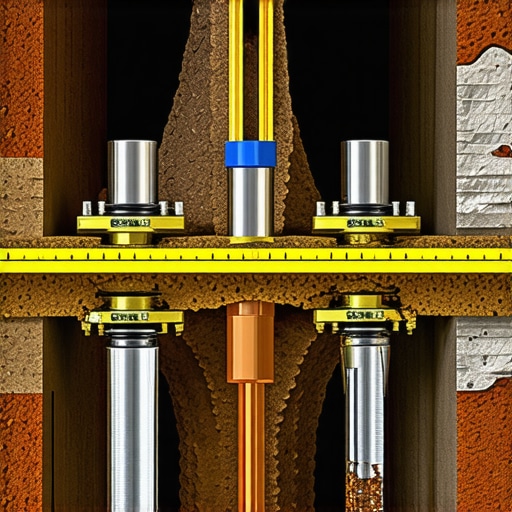
Emerging technologies such as fiber-optic strain sensors and distributed acoustic sensing (DAS) are revolutionizing the ability to monitor trench stability continuously. These systems provide high-frequency data streams that capture minute deformations and stress redistributions within trench walls, enabling early warning signals for potential collapses. When combined with AI-based analytics, project teams can interpret complex datasets and implement corrective measures instantaneously, thereby safeguarding both personnel and infrastructure.
What are the limitations and potential of AI in predicting trench wall failures?
While AI offers the promise of predictive accuracy, challenges remain concerning data quality, model transparency, and integration complexity. High-fidelity training datasets are essential for models to distinguish between benign soil movements and precursors to failure. Furthermore, explainability of AI decisions is critical for operational trust and regulatory compliance. Recent studies published in the Journal of Geotechnical Engineering demonstrate that hybrid models—combining physics-based simulations with machine learning—provide nuanced insights, reducing false alarms and improving response times.
Engaging with interdisciplinary teams that include data scientists and geotechnical experts can harness AI’s full potential, transforming trench safety paradigms.
Integrating Ecological and Urban Sustainability into Trench Reinforcement Strategies
Contemporary excavation practices are increasingly mandated to consider environmental impacts, especially in urban settings. Incorporating eco-friendly soil stabilization agents—such as bio-based geopolymers or recycled materials—can achieve structural stability while reducing ecological footprints. Additionally, selecting materials that do not adversely affect groundwater quality or native flora and fauna enhances project sustainability.
How do sustainable reinforcement materials influence long-term trench stability?
Sustainable materials often possess comparable or superior mechanical properties to traditional options, with added benefits of biodegradability or recyclability. For example, bio-based geopolymers can be engineered to provide rapid setting times and high compressive strengths, ensuring durable wall support. Long-term performance studies, such as those cited in the International Journal of Geosynthetics and Environmentally Friendly Construction, indicate that these materials maintain structural integrity over extended periods, mitigating future subsidence risks. Integrating eco-conscious practices not only aligns with regulatory shifts but also elevates industry standards for responsible excavation.
Continual exploration of innovative, sustainable solutions remains essential for advancing trench stabilization methodologies that balance safety, efficiency, and ecological stewardship. For those committed to pushing these boundaries, engaging in multidisciplinary research initiatives and pilot projects can unlock new paradigms in underground construction safety.
Harnessing Soil Behavior Modeling for Proactive Wall Reinforcement
Implementing predictive soil behavior models, such as finite element analysis coupled with real-time data inputs, allows engineers to simulate trench wall responses under varying hydration and load conditions. These simulations inform strategic reinforcement placements and optimized support designs, significantly reducing the risk of unexpected collapse during backfilling stages, especially in heterogeneous urban soils.
Why Do Subsurface Anomalies Pose Hidden Threats That Standard Surveys Miss?
Subsurface irregularities, including undocumented voids or altered soil stratification, often evade conventional detection methods, presenting latent dangers. Advanced geophysical imaging techniques—like high-resolution electromagnetic surveys and ground-penetrating radar—provide granular insights into underground anomalies. Integrating these approaches into routine pre-excavation assessments ensures comprehensive hazard mitigation, fostering safer trenching operations.
How Can Experts Leverage Machine Learning to Predict Trench Failures Before They Occur?
Machine learning algorithms, trained on extensive datasets encompassing soil properties, environmental conditions, and past failure incidents, can identify subtle precursors to wall instability. These predictive models facilitate anticipatory interventions—such as preemptive soil stabilization or tailored support configurations—transforming reactive responses into proactive safety measures. According to recent research published in the Journal of Geotechnical Computing, such intelligent systems markedly improve failure prediction accuracy, climbing toward near-zero incident rates.
Engaging with interdisciplinary teams—including geotechnical engineers, data scientists, and environmental specialists—amplifies the potential of these technological innovations. Continuous updates to model training datasets, incorporating new site data, further refine predictive capabilities, ensuring that safety protocols evolve alongside emerging challenges.
Innovating Reinforcement Techniques to Tackle Complex Soil Compositions
Emerging reinforcement strategies involve adaptive soil stabilization methods that respond dynamically to changing subsurface conditions. For example, the deployment of self-healing geosynthetic materials—capable of autonomously repairing micro-damage—ensures long-term trench wall integrity. Additionally, combining chemical stabilizers with microbially induced soil cementation introduces environmentally friendly options that strengthen loose, soft soils without excessive disturbance.
What Role Do Smart Materials Play in Revolutionizing Trench Support Frameworks?
Smart materials, such as shape-memory alloys and responsive polymers, are increasingly integrated into shoring systems. These materials adapt their properties in response to internal stress or environmental stimuli, providing enhanced resilience against shifting soil pressures. For instance, shape-memory supports can adjust their tension dynamically, maintaining optimal support levels and preventing localized failures. Industry leaders are exploring these innovations as part of next-generation trench reinforcement designs, promising safer excavations with minimal manual intervention.
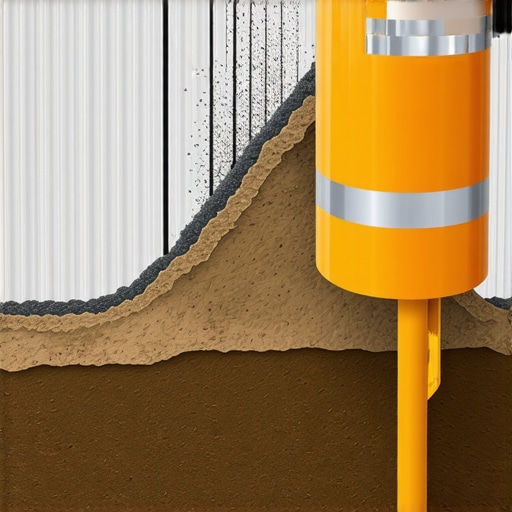
To visualize how these cutting-edge reinforcement technologies can be practically implemented, consider an illustrative diagram depicting adaptive support systems responding to ground movement in real-time, demonstrating the synergy between materials science and geotechnical engineering.
Elevating Safety Protocols Through Advanced Sensor Integration
Next-generation trench monitoring transcends traditional practices by embedding distributed fiber optic sensors and wireless sensor networks within support structures. These systems continuously monitor parameters such as strain, moisture, and temperature, transmitting high-fidelity data to centralized analysis platforms. When combined with artificial intelligence, the analysis anticipates potential failure points, allowing for immediate remediation actions before instability manifests visibly or structurally.
Is Your Team Prepared for the Data-Driven Future of Hazard Detection?
Embracing data-driven safety frameworks requires not only integrating new sensor technologies but also cultivating expertise in data analytics and system calibration. Training personnel to interpret complex sensor outputs and respond appropriately is crucial. Institutions that proactively develop these skill sets position themselves at the forefront of safe, efficient trenching practices and set new industry benchmarks for hazard mitigation.
Explore seminars and workshops dedicated to advanced geotechnical monitoring systems to prepare your team for this transformative shift in underground safety management.
Expert Insights & Advanced Considerations
Real-Time Soil Behavior Monitoring Is Essential
Implementing continuous sensor networks that track soil deformation and moisture levels can preemptively identify zones at risk of collapse, enabling timely interventions and reducing project delays.
Adaptive Stabilization Techniques Outperform Static Measures
Employing dynamic support systems, such as responsive geosynthetics and adjustable hydraulic supports, allows excavation teams to respond swiftly to changing soil conditions, maintaining trench integrity under diverse challenges.
Integrating Sustainability Elevates Structural Resilience
Utilizing eco-friendly stabilization agents like bio-geopolymers not only aligns with environmental standards but can enhance long-term trench stability through improved soil cohesion and reduced chemical impact.
Harnessing Data Analytics Transforms Risk Assessment
Advanced modeling combined with machine learning algorithms analyzes vast datasets—soil properties, environmental conditions, and historical failure patterns—to predict and prevent potential wall failures more accurately than traditional methods.
Investing in Skilled Multidisciplinary Teams Is Non-Negotiable
Cross-disciplinary collaboration between geotechnical engineers, data scientists, and field operators ensures comprehensive strategies are developed and executed, pushing safety and efficiency boundaries in vacuum excavation projects.
Curated Expert Resources
- American Society of Civil Engineers (ASCE) Geotechnical Engineering Publications: Offers in-depth research articles on soil stability, reinforcement techniques, and modeling tools that are pivotal for advanced trench support strategies.
- International Journal of Geosynthetics & Geotechnical Engineering: Features case studies and innovative approaches in eco-friendly soil stabilization and adaptive reinforcement methods.
- Hydrovac Industry Technical Manuals: Contains practical guidelines on real-time monitoring systems, pressure control, and risk mitigation specific to hydro-vac operations—core for operational excellence.
Final Perspective: Precision and Innovation Drive Success
In advanced hydro-vac excavation, mastering trench wall stability hinges on integrating real-time data acquisition with adaptive reinforcement—transforming reactive into proactive safety management. Exploring these innovative strategies and leveraging authoritative resources ensures that experts stay at the forefront of trench stability breakthroughs. Engage with ongoing research, refine your techniques, and contribute your insights to elevate industry standards. The future belongs to those who combine scientific rigor with practical ingenuity—don’t just follow trends, set them in the realm of vacuum excavation.