Unveiling Subsurface Mysteries Through Soil Moisture Anomalies
In the realm of hydro-vacuum excavation, the ability to interpret soil moisture signals transcends basic detection, offering a window into concealed underground infrastructures. Recognizing subtle moisture variations enables professionals to identify anomalies such as hidden sewer mains, uncharted utility lines, or unstable geological pockets, thereby optimizing safety and efficiency during excavation processes.
The Significance of Soil Moisture Dynamics in Modern Trenching Strategies
Advanced trenching techniques leverage soil moisture analytics to adapt real-time approaches. For instance, detecting moisture shifts in layered soils can inform the selection of appropriate vacuum pressures or hydrovac nozzle configurations. Understanding these dynamics reduces risks like trench collapse, enhances precision near delicate structures, and minimizes environmental impact, exemplifying the integration of soil physics with excavation technology.
Innovative Sensor Technologies: Pushing the Boundaries of Subsurface Imaging
Emerging sensor systems employ electromagnetic induction and resistivity measurements to complement soil moisture signals, providing high-resolution subsurface maps. These innovations allow operators to distinguish between soil types, identify underground voids, or locate obstructions with minimal surface disturbance. Combining sensor data with soil moisture analysis crafts a comprehensive subterranean model, elevating hydro-vac excavation accuracy.
Expert Inquiry: How Can Soil Moisture Signal Analysis Be Standardized for Complex Urban Environments?
Urban settings introduce multifaceted challenges—heterogeneous soils, dense utility networks, and electromagnetic interference—that complicate soil moisture interpretation. Developing standardized protocols and machine learning algorithms to filter noise and improve signal fidelity remains a frontier. Such advancements promise a new level of predictability and safety in utility mapping and utility crossing operations.
How Do Soil Composition and Moisture Content Interact to Affect Borehole Precision in Layered Terrains?
Soil heterogeneity profoundly influences borehole stability and trajectory. Variations in soil composition—sand, clay, gravel—alter moisture retention and permeability, impacting drill bit behavior and mud circulation. Analyzing these interactions allows engineers to calibrate drilling parameters dynamically, mitigating risks of borehole deviation or collapse. This nuanced understanding elevates the quality of borehole investigations and reduces troubleshooting costs.
Investing in sophisticated soil moisture analysis aligns with industry best practices outlined in recent research published by the Geosphere Journal, reinforcing the scientific validity of these methods.
For professionals aiming to refine their expertise, exploring comprehensive case studies on urban utility detection and trenching in challenging soils can provide actionable insights. Share your field experiences or inquire about emerging soil sensing technologies to foster innovation in subsurface detection.
Climate Effects on Soil Moisture and Trenching Accuracy
External environmental factors, such as seasonal rainfall, drought conditions, and temperature fluctuations, have a significant impact on soil moisture levels, influencing trench stability and borehole precision. In regions prone to heavy rain, saturated soils can weaken trench walls and lead to unexpected collapses, necessitating real-time moisture monitoring to adapt excavation strategies accordingly. Conversely, dry conditions can increase soil cohesion, but may also cause trench walls to dry and crack, risking structural integrity.
Leveraging Data Analytics to Predict Soil Changes Before Digging
Advanced data analytics, combined with sensor technology, enable excavation teams to forecast soil moisture trends days or even weeks ahead. By integrating historical weather data with on-site moisture readings, predictive models can identify potential risks, allowing proactive adjustments in excavation timing or support structures. Using such analytics not only reduces unexpected delays but also minimizes safety hazards, aligning with the industry’s move toward predictive maintenance and proactive risk management.
Mastering the Subtle Interplay Between Soil Types and Moisture
Different soil compositions respond uniquely to moisture variations. For instance, silty soils tend to retain water longer, leading to prolonged weakening periods, while sandy soils drain quickly, causing rapid changes in their support capacity. An experienced hydro-vac operator recognizes that understanding these nuanced interactions is critical for optimizing water pressure, selecting appropriate shoring, and preventing borehole drift or collapse. These insights underscore the importance of tailored strategies for diverse soil environments, including layered formations where moisture gradients can be unpredictable and challenging to interpret accurately.
Can Machine Learning Revolutionize Soil Moisture Mapping in Urban Settings?
Emerging machine learning models trained on comprehensive soil and weather datasets hold promise for transforming utility detection and trenching planning, especially in complex urban environments. These models can filter out electromagnetic noise and surface anomalies, offering more reliable underground maps and reducing the risk of utility strikes. As integration of sophisticated algorithms becomes more accessible, industry professionals can leverage this technology to improve accuracy, safety, and operational efficiency. Exploring the latest developments in this sphere can be particularly valuable for projects where traditional soil sensing techniques fall short.
To stay ahead in the evolving landscape of hydro-vacuum excavation, consider exploring innovative training programs that emphasize data-driven decision-making and sensor integration. Sharing your experiences and insights can contribute to developing best practices that enhance safety and effectiveness across the industry. For more on cutting-edge soil sensing methods, visit this resource on electromagnetic locators.
,
Refining Subsurface Diagnostics with Multi-Layered Soil Moisture Profiling
Understanding soil moisture distribution isn’t merely about surface detection; it involves dissecting the vertical and lateral variances across diverse soil strata. Advanced moisture profiling techniques integrate time-domain reflectometry (TDR) and spectral induced polarization (SIP), providing granular insights into moisture content at different depths. Such depth-resolved data enable engineers to craft adaptive excavation strategies—adjusting vacuum pressures, nozzle configurations, and probing techniques—to accommodate layered soil behavior. By tailoring interventions to precise moisture profiles, operators can significantly reduce soil disturbance, prevent trench collapses, and minimize environmental impact, especially in heterogenous urban landscapes.
Adapting Vacuum Excavation Parameters in Dynamic Soil Environments
The real-time modulation of vacuum pressures, guided by continuous soil moisture feedback, represents a leap toward intelligent excavation. Integrating sensor arrays with machine learning algorithms allows for dynamic adjustments—ramping up or down vacuum strength, modifying water spray parameters, or altering nozzle angles—to respond promptly to moisture fluctuations. This agile approach ensures a refined balance: maintaining adequate soil removal efficiency while safeguarding subterranean utilities and existing structures. As industry standards evolve, deploying such adaptive systems will become pivotal in complex projects where soil moisture variability poses substantial risks.
What Next-Generation Sensing Technologies Are Shaping the Future?
Emerging sensors utilizing ultrawideband (UWB) radar and distributed fiber optic sensing are on the horizon, promising unprecedented spatial resolution and durability. UWB radar detectors can penetrate layered soils without contact, delivering instant moisture readings across extensive areas, thereby accelerating site assessments. Fiber optic sensors embedded within boreholes or trenches enable continuous monitoring over extended durations, capturing subtle shifts in moisture due to weather events or underground activities. These innovations not only enhance the accuracy of moisture mapping but also facilitate predictive analytics—anticipating soil stability issues before they manifest—thus elevating the safety quotient in hydro-vacuum excavation operations.
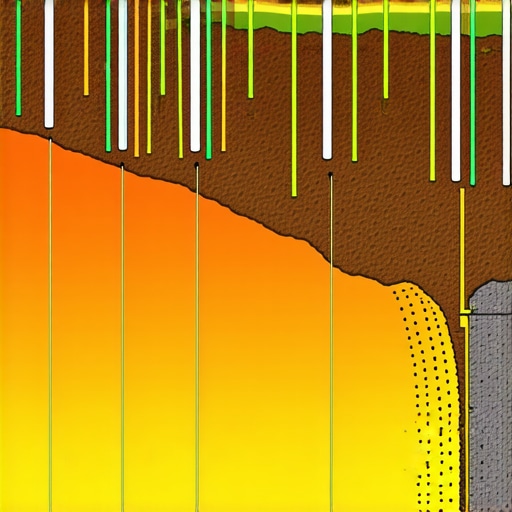
Incorporate an illustration showing layered soil profiles with embedded sensors, highlighting depth-specific moisture detection capabilities.
Leveraging Artificial Intelligence to Decipher Complex Soil-Moisture Interactions
The complexity of soil-moisture interactions in urban habitats calls for sophisticated analytical tools. AI-driven models trained on vast datasets encompassing soil types, historical moisture levels, weather patterns, and excavation outcomes can identify subtle patterns and anomalies that escape conventional analysis. These models facilitate predictive maintenance schedules, optimize resource allocation, and reduce unforeseen complications during excavation. Moreover, integrating AI with drone-based remote sensing offers rapid, comprehensive site assessments, enabling operators to visualize subterranean conditions in three dimensions with remarkable accuracy. As these technologies mature, their adoption will become indispensable for projects demanding high precision amidst challenging soil environments.
Industry leaders and innovation hubs are actively publishing on this convergence—consult recent findings in the Geosphere journal’s latest special issue, which explores AI applications in subsurface geophysics. Staying abreast of such developments is crucial for practitioners aiming to push the boundaries of soil sensing and artificial intelligence integration.
Harnessing Multidimensional Soil Profiles to Elevate Excavation Accuracy
Achieving unparalleled precision in hydro-vac excavation hinges on not merely measuring surface moisture but dissecting the intricate gradient of soil moisture across various depths and lateral extents. Employing combined techniques such as time-domain reflectometry (TDR) and spectral induced polarization (SIP) allows engineers to generate a comprehensive three-dimensional map of subsurface moisture distribution. Such depth-resolved insights facilitate tailored excavation strategies—adjusting vacuum pressures, water sprays, and nozzle orientations—to accommodate the distinct behaviors of layered soils, thereby drastically reducing soil disturbance and preventing structural failures in sensitive urban landscapes.
Transforming Dynamic Soil Conditions into Actionable Data
Real-time adaptation of excavation parameters is crucial in complex environments characterized by fluctuating moisture levels due to weather changes or underground utility interactions. Integrating sensor arrays with advanced machine learning algorithms enables continuous analysis of moisture fluctuations, allowing for instantaneous modifications—ramping up vacuum strength during wetter conditions or reducing it when soils dry out. This adaptive approach ensures optimized soil removal while safeguarding existing utilities and infrastructure, shifting the industry standard toward a proactive, intelligent excavation paradigm.
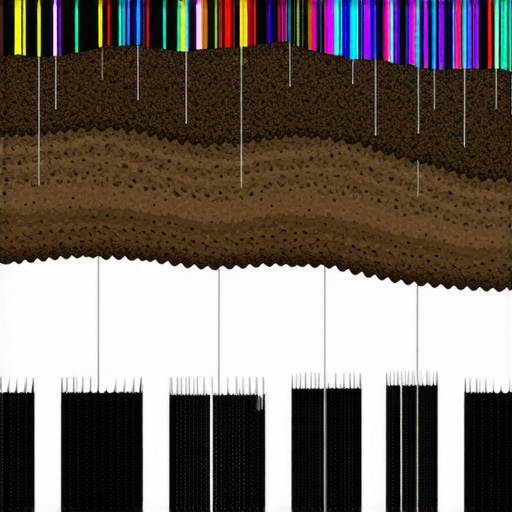
Illustration of layered soil profiles with integrated moisture sensors, depicting depth-specific readings guiding excavation adjustments.
Future Horizons with Next-Gen Sensor Technologies
Emerging trends in soil sensing are set to revolutionize subterranean mapping. Ultrawideband (UWB) radar sensors can penetrate complex soil strata, offering rapid, contactless moisture measurements across extensive areas. Concurrently, distributed fiber optic sensors embedded within boreholes provide continuous, long-term monitoring of soil moisture, capturing temporal variations due to environmental factors or underground activities. These innovations promise unprecedented spatial resolution and data richness, enabling predictive assessments of soil stability, and preluding potential hazards before they manifest.
Could Machine Learning Unlock the Secrets of Urban Subsoil?
By training sophisticated AI models on large datasets encompassing soil types, historical moisture levels, and site-specific weather patterns, experts are uncovering subtle correlations that traditional analysis might overlook. These models can filter electromagnetic interference, distinguish utility-related anomalies, and generate highly reliable underground maps. As their deployment becomes more accessible, practitioners can expect a significant boost in accuracy and safety during complex utility crossings or trenching in urban environments. Keeping abreast of innovations in this domain is vital for a new generation of precision excavation professionals.
Expert Insights & Advanced Considerations
Integrate Multi-Sensor Data for Greater Accuracy
Combining electromagnetic induction with resistivity measurements enhances underground mapping precision, reducing utility strikes and excavation failures.
Prioritize Adaptive Technologies in Dynamic Environments
Real-time soil moisture feedback loops allow for automated adjustments in vacuum pressure and water application, optimizing efficiency amid changing subsurface conditions.
Leverage AI to Decode Complex Soil Interactions
Artificial intelligence models trained on diverse datasets can predict soil behavior, enabling safer and more predictable hydro-vacuum operations, especially in urban zones with heterogeneous soils.
Focus on Depth-Resolved Moisture Profiling
Depth-specific measurements via TDR and SIP techniques provide granular insights, informing tailored excavation strategies that minimize disturbance and structural risk.
Implement Predictive Analytics for Proactive Planning
Historical data combined with weather forecasts facilitate anticipatory adjustments in excavation schedules, mitigating risks related to moisture fluctuations from seasonal variations.
Curated Expert Resources
- Geosphere Journal’s Special Issue on Geophysical Sensing Techniques – Offers cutting-edge research on electromagnetic and resistivity sensors enhancing subsurface detection capabilities.
- Hydro-Vacuum Industry Standards Documentation – Provides consensus guidelines for integrating soil moisture analysis into routine excavation practices.
- AI Applications in Geotechnical Engineering Journals – Explores machine learning models tailored for soil-structure interaction predictions in complex urban settings.
- Advances in Depth-Resolved Soil Moisture Measurement Tools – Describes the latest sensor innovations for vertical profiling in layered soils.
- Urban Utility Detection Webinars and Workshops – Practical sessions on deploying emerging sensor technologies within high-density environments.
Final Expert Perspective
Mastering the nuances of soil moisture dynamics represents a transformative step in hydro-vacuum excavation, especially amid intricate urban landscapes. By integrating multi-sensor data, adopting adaptive systems, and leveraging predictive analytics, professionals can significantly elevate operational safety, precision, and efficiency. Embracing these advanced insights ensures that the future of trenching and utility detection remains robust against the challenges of complex underground environments. Engage with leading-edge research and share your field experiences to foster continuous industry innovation and excellence.