The Hidden Complexities of Trenching in Soft Peat Environments
Effective trenching and borehole operations in soft peat and saturated soils demand a nuanced understanding of geotechnical behaviors and equipment capabilities. These unique conditions often lead to unexpected site challenges, such as trench box sinking or borehole stability issues, which, if overlooked, can compromise project safety and integrity.
How Saturated Soil Dynamics Influence Vacuum Excavation and Hydrovac Operations
Saturated soils, particularly in peat-rich zones, significantly alter the mechanical and hydraulic responses during excavation. The elevated pore water pressure reduces soil cohesion, elevating the risk of trench wall collapse and equipment subsidence. Experts emphasize the importance of monitoring hydraulic pressures and employing adaptive shoring solutions to mitigate these risks (source).
Assessing Borehole Stability When Drilling Through Peaty and Organic Substrates
In borehole drilling, saturated peat presents unique challenges such as borehole wall fracturing and casing collapse. Innovative mud-mix strategies and casing design modifications are critical for maintaining borehole integrity. Utilizing dynamic monitoring and soil stabilization techniques enhances success rates, especially in complex subterranean environments.
What Advanced Techniques Can Prevent Borehole Fracturing in Saturated Organic Soils?
Addressing borehole fracturing involves optimizing mud weight and viscosity to counteract pore pressure while preventing over-compaction. Additionally, employing circumferential casing reinforcement and real-time pressure sensing can enhance stability. For comprehensive insights, consult expert recommendations.
Optimizing Equipment Selection and Site Preparation for Soft Soil Conditions
Choosing suited hydrovac and vacuum excavation equipment tailored for saturated terrains is essential. High-torque drills with adaptive pressure controls help manage soil liquefaction risks. Moreover, pre-conditioning soils through drainage and dewatering techniques reduces the likelihood of trench or borehole failure, ensuring safety and efficiency.
Innovative Solutions for Issue Prevention in Saturated Soil Contexts
Emerging methods include the use of geotextiles and soil stabilization agents that enhance cohesive properties in loose peat. Advanced soil moisture sensors allow proactive management, reducing site incidents and enhancing operational control.
How Can Real-Time Soil Monitoring Revolutionize Excavation Safety in Saturated Environments?
Real-time monitoring delivers continuous data on soil moisture, pore pressure, and ground movement, facilitating immediate adjustments to excavation techniques. This proactive approach minimizes collapses and equipment failures, transforming site safety protocols.
For professionals seeking to elevate their understanding of soil behavior, explore advanced ground stabilization methods.
Emphasizing field expertise and adaptive strategies, mastering borehole and trenching operations in challenging soil conditions is crucial for project success. Including geotechnical assessments and innovative stabilization techniques mitigates risk, ensuring compliance with safety standards and prolonging equipment lifespan.
Adaptive Shoring Techniques to Combat Soil Liquefaction
In saturated peat zones, traditional trench shoring often falls short against the dynamic forces of soil liquefaction. Engineers are increasingly adopting geotechnical innovations like inclusion of geotextiles and controlled dewatering systems that stabilize soil structure, reducing risks of trench failure (see advanced ground stabilization methods). Implementing modular, adaptive shoring frameworks allows for rapid response to changing soil conditions, safeguarding personnel and equipment.
Harnessing Soil Moisture Sensors for Proactive Site Management
The integration of real-time soil moisture and pore pressure sensors transforms how operators oversee saturated zones. These sensors provide continuous data streams, enabling operators to detect potential instabilities before catastrophic collapse occurs. When combined with automated control systems, such insights facilitate immediate adjustments in excavation pressure and support structures, dramatically improving safety culture and operational efficiency. This proactive approach aligns with expert recommendations on excavation safety and soil stabilization (expert insights on soil monitoring).
What New Technologies Are Shaping the Future of Utility Excavation in Challenging Soils?
Emerging solutions include advanced geotechnical modeling powered by AI, which predicts soil behavior under varying moisture and load conditions. Additionally, the development of smart casing materials that adapt their stiffness in response to soil movement promises to revolutionize borehole stability strategies. Adoption of such innovations requires a nuanced understanding of soil-structure interactions and expert calibration, emphasizing continuous learning and adaptation among field teams.
For those interested in elevating their site safety protocols and operational precision, exploring effective trench box solutions for wet soils can provide valuable insights.
By incorporating dynamic stabilization methods and leveraging real-time data analytics, professionals can drastically reduce the risks associated with saturated and organic soils, leading to safer, more predictable excavation outcomes. Staying abreast of technological trends and understanding their practical applications ensures that field teams remain at the forefront of safe excavation practices.
Leveraging Biotechnical Solutions for Organic Soil Reinforcement
Recently, biotechnical methods have gained traction in enhancing the cohesion and load-bearing capacity of organic soils, particularly peat. The integration of microbial-induced carbonate precipitation (MICP) is emerging as a promising technique. This process employs specific bacteria to produce minerals that act as natural cement, effectively stabilizing loose soils and reducing liquefaction risks.
Can Bioengineering Revolutionize Peat Stabilization in Critical Infrastructure Projects?
Research indicates that bioengineering not only accelerates soil stabilization but also offers environmentally sustainable solutions by minimizing chemical usage. Implementing MICP in-field, however, requires sophisticated control over microbial activity and an understanding of local soil chemistry. For instance, studies published in the Soil Biology & Biochemistry journal highlight successful case studies demonstrating increased soil strength post-treatment (source).
Innovative Materials Enhancing Soil-Structure Interaction
Advanced polymeric and geosynthetic materials are playing a vital role in improving trench and borehole stability. Engineered soil reinforcement fabrics, such as high-modulus geotextiles, provide a flexible yet robust barrier against soil movement and structural deformation, especially within saturated peat matrices.
The deployment of these materials, combined with traditional shoring systems, creates an integrated stabilization network that can adapt to shifting ground conditions. Moreover, the development of smart geosynthetics embedded with micro-sensors offers real-time monitoring of strain and moisture levels, facilitating proactive maintenance and safety interventions ( ).
).
What Are the Practical Advantages of Smart Geosynthetics in Subterranean Excavation?
These intelligent materials enhance safety by immediately signaling buckling or excessive deformation, reducing the incidence of catastrophic failure. Their adaptability ensures that excavation operations can continue with minimal disruption, even under unpredictable soil dynamics. For more insights into cutting-edge geosynthetic innovations, refer to recent industry reports by the Geosynthetic Institute (source).
Data-Driven Decision Making with Geotechnical Modeling and AI
Integrating geotechnical modeling software with artificial intelligence algorithms empowers engineers to simulate complex soil behaviors under various moisture scenarios. These models incorporate parameters such as pore water pressure, soil stiffness, and organic content, providing a comprehensive risk profile prior to actual excavation.
Advanced modeling platforms like GeoStudio and PLAXIS 3D are now capable of real-time updates based on sensor feedback, enabling dynamic adjustments to excavation parameters. This fusion of predictive analytics and active monitoring fosters a proactive safety culture and optimizes resource allocation.
How Can AI-Enhanced Simulations Minimize Unexpected Soil Failures?
By analyzing vast datasets from site sensors and historical case studies, AI-driven simulations identify potential failure zones and recommend targeted mitigation measures. This precision reduces unnecessary reinforcement costs and accelerates project timelines. Consequently, embracing these technologies is imperative for complex sites where organic soils present ongoing challenges.
For professionals eager to deepen their understanding, consult the latest reports from the International Journal of Geotechnical Engineering on AI applications in soil mechanics (source).
To stay ahead in underground construction, continually exploring emerging materials and analytical tools—combine traditional geotechnical wisdom with technological innovation. This synergy is the cornerstone of advancing safe, sustainable, and efficient excavation practices amidst challenging organic terrains.
Leveraging Multi-Modal Soil Stabilization for Organic Environments
Innovative soil stabilization techniques that integrate biological, chemical, and physical methods offer robust solutions for organic soils. Microbial-induced carbonate precipitation (MICP), combined with geotechnical reinforcement materials, can create resilient ground conditions that withstand excavation stresses. Such multifaceted approaches not only enhance safety but also reduce environmental impact, aligning with sustainability goals in complex subterranean projects.
How Can Adaptive Drilling Technologies Overcome Organic Soil Obstacles?
Utilizing adaptive drilling systems equipped with real-time feedback mechanisms enables operators to modify parameters dynamically. Variables such as drill bit rotation speed, mud viscosity, and casing deployment can be calibrated to respond to changing soil properties, minimizing borehole fracturing and collapse risks in peat-rich zones. This state-of-the-art approach exemplifies precision engineering tailored for organic substrate challenges.
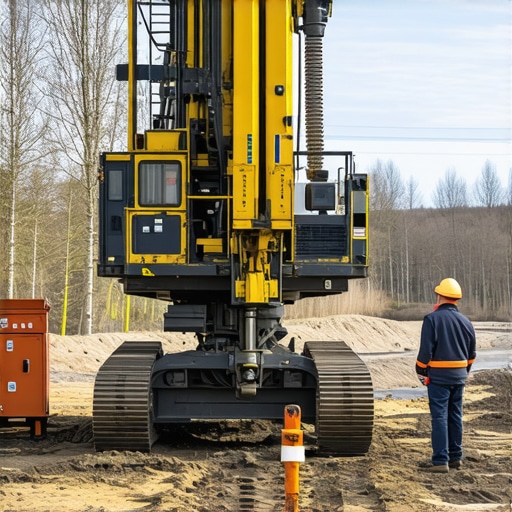
High-resolution image of adaptive drilling rig operating in peatland with real-time monitoring interfaces, highlighting technological sophistication in complex soils.
The Role of Soil Microstructure Analysis in Predicting Excavation Outcomes
Advanced soil microstructure analysis, employing tools like nano-indentation and scanning electron microscopy (SEM), provides granular insights into the bonding, porosity, and mineral composition of organic soils. This data informs predictive models that can forecast failure points, optimize stabilization strategies, and tailor excavation techniques with heightened accuracy. Incorporating microstructural insights elevates site management from reactive to proactive, bolstering safety and efficiency.
Innovating with Smart Support Systems to Prevent Ground Collapse
Emerging support technologies utilize sensor-laden structural elements that adapt in response to soil movement and moisture fluctuations. For instance, flexible support frames embedded with strain gauges and moisture sensors can adjust tensioned supports in real-time, maintaining trench integrity amidst dynamic conditions. Such intelligent systems exemplify how cyber-physical integration revolutionizes stabilization protocols in organic terrains.
What Are the Benefits of Integrating IoT Devices in Saturated Soil Management?
Integration of Internet of Things (IoT) sensors enables continuous, remote monitoring of critical ground parameters, facilitating immediate response to destabilization signals. This interconnected network enhances decision-making precision, reduces downtime, and mitigates safety hazards. For professionals committed to cutting-edge trench management, embracing IoT solutions is no longer optional but essential for operational excellence.
Expert Insights & Advanced Considerations
Stay Ahead with Geotechnical Innovations
Integrating real-time soil moisture sensors and AI-driven modeling transforms traditional excavation practices, enabling proactive responses to unstable conditions and minimizing risks in saturated peat zones.
Prioritize Adaptive Equipment Choices
The selection of high-torque drills with dynamic pressure controls coupled with pre-conditioning through drainage techniques ensures stability and safety when operating in challenging organic terrains.
Leverage Biological Stabilization Techniques
Employing microbial-induced carbonate precipitation (MICP) offers eco-friendly and effective ground reinforcement, significantly reducing liquefaction risks in critical infrastructure projects beneath organic soils.
Optimize Support Systems with Smart Technologies
Embedding IoT-enabled support structures that adapt tension based on soil movement enhances trench integrity, especially during rapid ground shifts inherent in saturated environments.
Employ Combined Stabilization Methods
Blending biological, chemical, and physical stabilization strategies yields resilient ground conditions, facilitating safer and more efficient excavation processes in complex organic substrates.
Curated Expert Resources
- Soil Biology & Biochemistry Journal: Features cutting-edge research on microbial soil stabilization techniques like MICP, providing scientific validation and case studies.
- Geosynthetic Institute Publications: Offers comprehensive insights into advanced geosynthetic materials and their applications in saturated soil environments, promoting innovative reinforcement methods.
- International Journal of Geotechnical Engineering: Publishes studies on AI-integrated geotechnical modeling, critical for predictive soil behavior analysis and risk assessment.
Final Expert Perspective
Mastering trenching and borehole operations in organic soils demands a synthesis of innovative technologies, biological insights, and adaptive equipment strategies. These advanced approaches not only elevate safety standards but also streamline project execution in some of the most challenging subterranean conditions. For professionals committed to excellence, continued exploration of emerging tools and methods is essential—embrace these innovations and contribute your expertise to push the boundaries of traditional excavation safety and efficiency.