Harnessing Water Temperature Control to Elevate Trenching and Borehole Precision in Vacuum Excavation
In the realm of modern underground digging, particularly within vacuum excavation and hydrovac operations, the meticulous management of water temperature has emerged as a pivotal factor influencing both efficiency and safety. Lowering water temperature not only enhances soil stabilization but also mitigates risks associated with high-velocity water jetting, especially when navigating complex urban utility grids or fragile fiber optic conduits. By adopting advanced cooling techniques, operators can markedly reduce pipe and casing stress, leading to fewer collapses and improved borehole integrity.
Integrating Temperature Strategies into Hydrovac Water Pressure Protocols for Superior Soil Displacement
Effective water pressure management is crucial for preventing substrate liquefaction and ensuring precise trenching. Cold water, when combined with optimized pressure settings, facilitates controlled soil removal while maintaining the structural cohesion of surrounding strata. This dual approach minimizes fuel consumption and curbs excessive soil disturbance. Advanced borehole temperature regulation techniques can adapt to varying geological conditions, ensuring stability in porous or saturated soils traversed during excavation.
How Does Water Temperature Impact Fiber Optic Line Preservation During Hydrovac Operations?
What are the best practices for maintaining low water temperatures to prevent fiber optic damage, and how can equipment be adapted accordingly?
Maintaining optimal water temperature is instrumental in safeguarding fiber optic cable installations. High-temperature water accelerates the degradation of protective jackets, increasing vulnerability to cracks and eventual failure. Experts recommend integrating nozzle cooling systems and real-time temperature monitoring to sustain safe operational thresholds. Additionally, equipment modifications—such as insulated hoses and temperature-regulating valves—further reduce the risk of line damage, especially in projects where subterranean fibers run through saturated or frozen ground.
Adaptive Water Management Techniques for Porous and Variable Soil Conditions
Soil heterogeneity poses significant challenges to maintaining consistent water temperature and pressure during excavation. In porous soils, water tends to absorb heat rapidly, leading to unintended thermal expansion or contraction that affects stability. Implementing dynamic cooling strategies, including the use of chilled water sources and graduated pressure controls, allows operators to adapt swiftly. These adaptations also prevent sidewall collapse and soil liquefaction, crucial for maintaining the integrity of mapping accuracy during utility locates.
Expert Insights and Industry Best Practices for 2026 and Beyond
Field data accentuates that integrating water temperature controls with pressure modulation reduces equipment wear and improves borehole consistency. As mud weight adjustments are optimized in conjunction with temperature management, operators see enhanced penetration rates and reduced rework. Industry-leading operators advocate for comprehensive training on thermal management and the use of digital sensors to anticipate and respond to thermal dynamics in real-time.
For further strategic advancements, consulting with experts and referencing the latest research from journals such as the Geotechnical Journal can inform best practices and emergent technologies to future-proof excavation projects.
As water management continues to evolve in underground excavation, it is imperative for professionals to adopt an integrated approach, emphasizing precise control of water temperature to unlock operational excellence and protect critical underground infrastructure in 2026 and beyond.
,
Refining Soil Stability with Precision Water Temperature Management
As underground excavation projects grow more complex, the importance of precise water temperature adjustments becomes paramount. Fine-tuning temperature levels not only enhances soil cohesion but also minimizes disturbance to adjacent utilities. Implementing adaptive cooling solutions, such as adjustable chillers and real-time monitoring systems, allows operators to tailor water temperature dynamically based on soil type and moisture content. This proactive approach reduces the likelihood of trench wall collapse and soil liquefaction, ensuring safer, more efficient projects.
Leveraging Digital Sensors to Predict Thermal Dynamics on Site
Emerging technologies now enable real-time thermal profiling during vacuum excavation. Integrating sensors capable of measuring temperature variations at various depths provides invaluable data, allowing for immediate adjustments to water temperature and pressure settings. These advancements foster a more responsive approach to underground conditions, preserving fragile infrastructure like fiber optic lines and preventing unintended damage. Such precision reduces rework and enhances project timelines, especially in sensitive urban environments.
Is Your Equipment Ready to Handle Rapid Water Temperature Fluctuations?
Preparation goes beyond sensor integration; it involves ensuring that hoses, valves, and pumps can withstand swift thermal shifts without failure. Upgrading to insulated components and incorporating thermal relief valves can prevent equipment stress and prolong service life. Proper maintenance of these systems is crucial, especially when operating under tight schedules requiring quick, repeated temperature adjustments. An effective thermal management strategy not only protects equipment but also sustains optimal cutting performance in challenging conditions.
For those looking to enhance their operational protocols, exploring pressure management techniques in tandem with temperature control can lead to significantly better outcomes. By aligning these parameters, operators achieve cleaner cuts, fewer line damages, and reduced overall costs, paving the way for more sustainable excavation practices in 2026 and beyond.
Adapting to Porous and Saturated Soil Environments with Thermal Strategies
Porous soils, including sandy or gravelly terrains, rapidly alter water temperature and pressure profiles due to their high permeability. To tackle this, industry professionals are now adopting pre-emptive cooling methods, such as circulating chilled water pre-treatment and deploying insulation barriers. These measures stabilize soil conditions before excavation, reducing the risk of sidewall collapse and groundwater infiltration. Such strategies are especially critical when working near high-voltage lines or submerged utilities, where precision and safety are non-negotiable.
Incorporating Insights from Leading Geotechnical Research
Staying ahead in this field requires continuous learning and application of cutting-edge research. According to recent findings published in the Geotechnical Journal, thermal control interventions, when combined with pressure modulation, have demonstrated substantial improvements in borehole stability. These insights empower operators to design more resilient excavation protocols that proactively address soil variability and unforeseen conditions, ultimately reducing project delays and hazards.
Building an effective thermal management plan entails integrating these scientific advancements with practical site operations. Regular training and equipment audits ensure that teams can respond swiftly to thermal fluctuations, maintaining both safety and efficiency in dynamic underground environments. As industry standards evolve, leveraging these expert insights will be vital for success in 2026 and beyond.
Feel free to share your experiences or questions about advanced temperature control methods in vacuum excavation—collaborative knowledge accelerates industry innovation!
Pushing the Boundaries: Innovative Cooling Solutions for Subsurface Precision
As excavation projects venture into increasingly complex subterranean environments, traditional water temperature regulation techniques are proving insufficient for safeguarding delicate underground infrastructures. Engineers are now exploring the integration of phase-change materials (PCMs)—substances that absorb or release thermal energy during state transitions—to modulate water temperature dynamically. By embedding PCM-infused hoses or inline modules, operators can achieve rapid thermal shifts that adapt seamlessly to fluctuating soil conditions, ensuring both excavation efficiency and utility preservation.
Harnessing Real-Time Data to Combat Thermal Variability Impact
Monitoring technological advances have empowered operators with granular thermal data via wireless sensor networks dispersed throughout the excavation zone. This influx of information enables predictive analytics models powered by machine learning algorithms, which forecast temperature trends and recommend preemptive adjustments. Implementing such systems reduces ambient thermal fluctuations’ adverse effects, minimizes soil destabilization, and prolongs equipment lifespan, especially under unpredictable urban utility interference.
How Can Adaptive Equipment Design Revolutionize Soil Stability Management?
What specific innovations in hose and pump engineering can accommodate rapid and extreme temperature shifts while maintaining operational integrity?
Emerging engineering designs are focusing on the development of self-regulating thermal hoses equipped with embedded thermoelectric devices. These hoses can actively control their internal temperature via Peltier elements, either cooling or warming water as needed. Additionally, pump systems are being integrated with smart drive controllers that auto-adjust pressure and flow based on real-time thermal feedback, ensuring consistent soil interaction without inducing stress fractures or liquefaction. Such advancements position digital and mechanical integration at the forefront of modern excavation safety protocols.
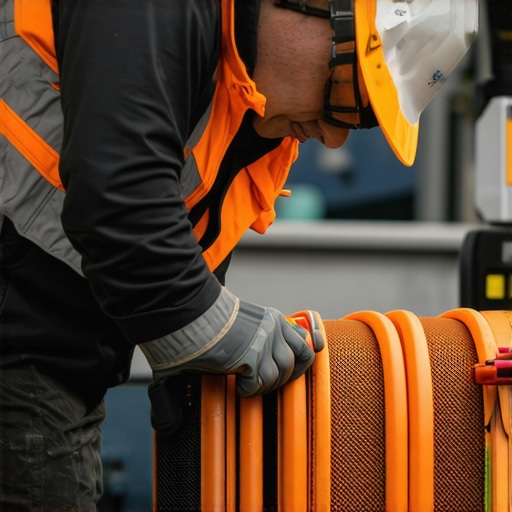
Visualization of a thermoelectric hose embedded with sensors and Peltier modules for adaptive thermal regulation during vacuum excavation operations.
Addressing Soil Porosity and Water Thermal Dynamics through Modular Strategies
Complexities arise when traversing heterogeneous soils where moisture content and permeability fluctuate dramatically, influencing thermal conduction and retention. To counteract these challenges, modular cooling units capable of localized temperature control are deployed, enabling on-the-fly adjustments at specific site segments. Coupled with mobile insulation barriers, these modules help establish thermal boundaries that preserve soil integrity. Such localized control is invaluable when working in particularly sensitive zones, such as near critical infrastructure or in frozen ground conditions.
Deep Learning for Anticipating Ground Response in Thermal Variability
By deploying deep learning models trained on extensive datasets—comprising soil composition, moisture levels, and historical temperature profiles—sites can develop predictive ground response systems. These systems alert operators to potential instabilities before they manifest, facilitating preemptive measure deployment. For instance, early warnings about impending thermal-induced liquefaction allow immediate adjustments in water flow, pressure, or cooling protocol, effectively mitigating risk and advancing excavation safety standards.
This is Only the Beginning: Key Expertise for Future-Ready Hydrovac Strategies
The integration of nanotechnology-based thermal coatings on hoses and equipment surfaces further opens new horizons for precision control. These coatings can respond to temperature deviations autonomously, providing a self-healing and adaptive protective layer that reduces wear and thermal fatigue. Simultaneously, advancements in biodegradable cooling agents promise environmentally sustainable cooling options without compromising effectiveness. As these cutting-edge innovations become mainstream, personnel training must evolve concurrently, emphasizing digital literacy and adaptive operational procedures to capitalize on these breakthroughs.
For seasoned practitioners eager to stay ahead, collaborating with researchers actively developing these technologies is crucial. Participating in pilot programs and industry consortia can accelerate adoption, ultimately leading to safer, more efficient, and environmentally conscious excavation workflows. The future of vacuum excavation increasingly hinges on mastering thermal dynamics at both macro and micro levels, ensuring infrastructure resilience and workforce safety amid the demands of urban expansion and technological evolution.
Do you have insights or questions about implementing these advanced thermal management tools in your projects? Sharing experiences accelerates industry progression and helps tailor innovations to real-world needs.
Unlocking Subsurface Stability with Sophisticated Thermal Management Techniques
In the evolving landscape of underground utility excavation, especially within vacuum excavation and hydrovac operations, the nuanced control of water temperature emerges as a critical lever for maximizing both safety and operational effectiveness. Recent advances in thermal regulation technologies facilitate a granular approach to soil interaction, enabling engineers to preempt soil liquefaction and preserve fragile infrastructure with unprecedented precision. These innovations—ranging from adaptive cooling systems to nanotech-enhanced piping—are pushing the frontier of subterranean stability management.
Adjusting Water Properties to Combat Variable Soil Conductivity
Soil heterogeneity, characterized by fluctuating porosity, moisture, and mineral content, directly influences thermal transfer and water’s efficacy during excavation. Adaptive cooling strategies, such as real-time modulating chillers and transient insulation barriers, allow operators to tailor water temperature dynamically, ensuring consistent soil cohesion and preventing adverse reactions like sudden collapses or utility damage. This approach not only protects underground assets but also reduces environmental impact by minimizing unnecessary thermal disturbances.
How Does the Integration of Smart Thermal Sensors Enhance Project Outcomes?
What are the latest sensor innovations that enable proactive thermal adjustments in complex subterranean settings?
State-of-the-art wireless sensors capable of high-resolution temperature profiling provide critical data that feed into machine learning models for predictive decision-making. Embedding these sensors within hoses, borehole casings, and soil matrices transforms thermal management into a proactive discipline. The resultant feedback loop allows for immediate adjustments to water temperature and flow rates, effectively navigating the unpredictable thermal dynamics within saturated or frozen ground conditions. As a result, operator interventions become not reactive but anticipatory, reducing risks and rework.
< >
>
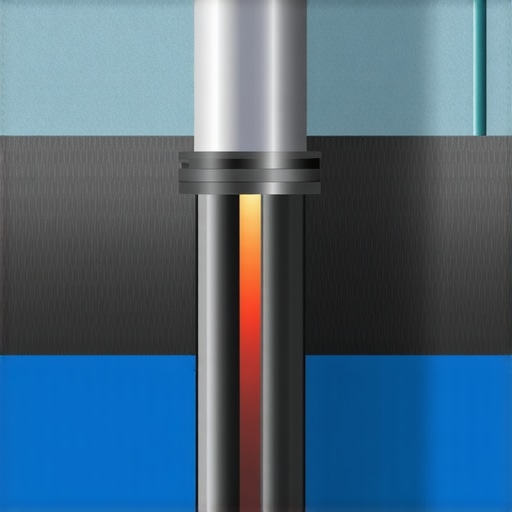
Illustration showing sensor nodes embedded in borehole casings and soil, transmitting real-time thermal data for dynamic control systems.
Innovative Equipment Design for Extreme Thermal Conditions
Advancements in hose material science and pump engineering are paving the way for equipment that withstands rapid and extreme temperature shifts without compromising integrity. Self-regulating thermoelectric hoses, integrated with embedded sensors and Peltier modules, can preemptively modulate internal water temperature, maintaining optimal thermal conditions. Similarly, digital-controlled pump systems offering seamless pressure and flow adjustments guard against thermal fatigue and mechanical stress, ensuring durable performance amidst fluctuating subterranean environments.
Strategic Mitigation of Thermal-Induced Soil Instability in Porous Terrains
Porous soils, such as sands and gravels, challenge thermal stability due to their high permeability and rapid heat exchange with ambient conditions. Pre-emptive cooling measures—like circulating chilled water in localized zones—and modular insulation platforms are increasingly employed to establish thermal barriers. This intervention stabilizes soil temperature profiles before excavation, significantly reducing the incidence of wall collapse, groundwater ingress, and utility disturbance. Implementing such targeted strategies requires sophisticated mapping and predictive analytics, underscoring the importance of integrated thermal modeling tools.
Drawing from Geotechnical Research to Enhance Thermal Control Protocols
Cutting-edge research published in respected journals like the Geotechnical Journal illustrates that combining thermal management with advanced pressure modulation considerably improves borehole stability. By harnessing scientific insights into soil behavior under thermal stress, practitioners can craft bespoke protocols that adapt to site-specific conditions, thus reducing delays and hazards. Regular engagement with such academic resources ensures that field practices stay aligned with technological advancements, fostering a culture of continuous improvement.
Adopting these evidence-based methodologies and emerging innovations positions industry leaders to navigate the complexities of underground excavation with confidence, safeguarding infrastructure and enhancing productivity in 2026 and beyond.
Innovative Approaches from Industry Leaders
Precision Temperature Management Elevates Soil Stability
Leading experts emphasize that integrating adaptive cooling systems with real-time monitoring enhances soil cohesion and minimizes utility damage, especially in complex urban environments. Leveraging advanced sensor networks and dynamic cooling solutions allows for tailored thermal control, resulting in safer, more efficient excavations.
Harnessing Data-Driven Techniques to Predict Ground Behavior
Utilizing machine learning algorithms trained on geological data enables proactive adjustments to water temperature and pressure. These predictive analytics improve borehole stability and reduce rework, pushing the boundaries of traditional excavation methods.
Revolutionizing Equipment Design for Extreme Conditions
Self-regulating hoses embedded with thermoelectric modules and智能控制的泵系统 are setting new standards. These innovations facilitate rapid thermal adjustments, ensuring equipment resilience and consistent performance amidst fluctuating underground thermal dynamics.
Strategic Soil Stabilization Through Modular Cooling
Deploying localized cooling units combined with insulation barriers addresses soil heterogeneity. Such targeted approaches stabilize thermal profiles in porous or saturated soils, significantly decreasing risks of wall collapse and utility intrusion.
Curated Resources to Expand Your Expertise
- Geotechnical Journal — Offers cutting-edge research on soil-thermal interactions and stability techniques.
- Vacuum Excavation International — Provides industry case studies, technical innovations, and best practices in thermal management.
- ASHRAE Journal — Features advancements in cooling technologies applicable to excavation equipment and site operations.
Reflections for the Future of Subsurface Excavation
Mastering water temperature control embodies the convergence of science, technology, and hands-on expertise in vacuum excavation. Embracing these insights enhances safety, project fidelity, and environmental stewardship. Professionals committed to pioneering these practices will lead the industry into a realm where precision and innovation define success. To stay at the forefront, consider engaging with industry networks, sharing your experiences, and continually exploring emerging technologies—your expertise drives the evolution of safe and sustainable underground work.
Comments are closed.