Optimizing Borehole Torque: The Gateway to Efficient Drilling in Challenging Cobble Layers
In the realm of advanced trenching and hydrovac excavation, the ability to navigate heterogeneous subsurface conditions such as cobble-rich soils hinges critically on precise borehole torque management. Expert practitioners understand that inappropriate torque settings can lead to increased equipment wear, borehole instability, and project delays, especially when confronting the abrasive and irregular nature of cobble formations.
Consistent field experience across urban infrastructure projects underscores that torque optimization isn’t merely a matter of machine calibration but a nuanced strategy that integrates borehole geology, drill bit design, and real-time feedback systems. For instance, employing adaptive torque control techniques can mitigate sidewall fracture and reduce bit overloading, thereby extending equipment lifespan and enhancing borehole accuracy.
The Interaction of Torque Dynamics and Soil Mechanics in Cobble Environments
Understanding the complex mechanics between drill torque and cobble heterogeneity requires a deep dive into geotechnical principles. Cobbles, characterized by angularity and stratification, impose variable resistance profiles that demand dynamic torque adjustments. Excessive torque accelerates drill pipe fatigue, while insufficient torque hampers penetration rates, increasing the risk of stuck drill strings and borehole collapse.
Recent advances in drilling automation incorporate real-time sensor feedback, enabling operators to fine-tune torque parameters dynamically. Such systems leverage data analytics to pre-emptively address potential issues, aligning with the findings presented by the Society of Petroleum Engineers on optimizing drilling parameters in abrasive formations (Society of Petroleum Engineers, 2022).
What are the nuanced balance points in borehole torque settings to prevent sidewall collapse when drilling through cobble layers?
Practitioners should consider factors such as drill bit design, rotation speed, and drill pipe weight, which interact with torque to influence borehole stability. Employing incremental torque increases while monitoring downhole sensor data can reveal the optimal threshold that avoids excessive stress transfer to the borehole walls.
Advanced software algorithms now assist in this calibration process, reducing reliance on operator intuition alone. For additional insights into sophisticated torque management techniques, exploring borehole tool optimization strategies is highly recommended.
Furthermore, understanding torque variations in dynamic conditions helps prevent equipment failure. For laboratories and field engineers, integrating torque sensors with data logging enables detailed analysis post-operation, fostering a cycle of continuous improvement.
Harnessing the Synergy of Torque Clinical Tuning and Soil Rehabilitation
Beyond immediate field applications, aligning borehole torque optimization with soil conditioning practices can significantly improve project outcomes. Techniques such as pre-treatment with soil stabilizers or vibration-assisted drilling may alter the resistance profile, thereby influencing torque requirements.
These approaches, supported by recent research on soil-fluid interactions, reinforce the importance of an integrated geomechanical perspective. Notably, when planning boreholes through cobble-strewn zones, collaborative planning with geotechnical specialists informs torque setting protocols that mitigate risks and expedite drilling progress.
For a comprehensive understanding of these advanced strategies, consult detailed case studies in underground infrastructure literature or professional workshops on geotechnical drilling innovations.
Interested industry professionals and researchers are encouraged to contribute to ongoing dialogues by sharing field data and insights, fostering a community of practice dedicated to tackling complex subsurface challenges.
In conclusion, mastering borehole torque settings in cobble environments exemplifies the intersection of engineering precision and geotechnical insight—an essential competency for modern trenching and hydrovac endeavors committed to excellence and safety.
Breaking Through the Myth: Is Higher Torque Always Better in Cobbled Substrates?
Common wisdom often suggests that increasing torque leads to faster penetration, but in cobble-laden soils, this approach can backfire, causing borehole instability or equipment fatigue. Instead, experts advocate for a nuanced understanding that aligns torque control with geotechnical conditions. Recent research emphasizes that dynamic torque adjustment combined with real-time soil resistance monitoring optimizes both safety and productivity. Implementing adaptive systems that respond to sensor data ensures that torque isn’t just maximized but precisely calibrated to prevent borehole wall failure, especially when drilling through angular and stratified cobbles.
Integrating Advanced Sensor Technologies for Better Torque Management
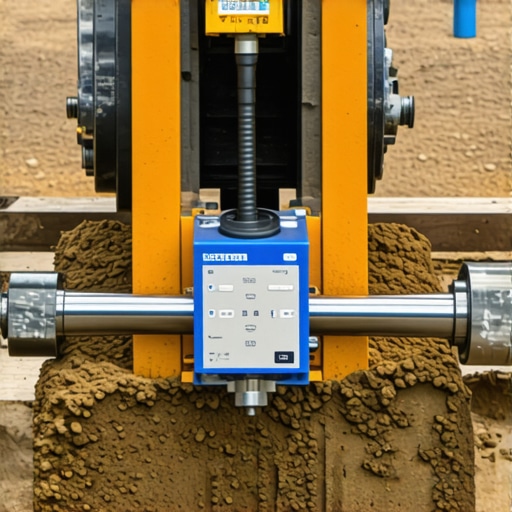
Progress in drilling automation has introduced sophisticated sensor arrays capable of capturing downhole torque, rotation speed, and drill string vibrations with high fidelity. These tools allow engineers to develop a detailed resistance profile of the formation, enabling alignment of the torque settings with real-time geological feedback. Such integration not only enhances borehole stability but also extends equipment lifespan, reducing downtime and operational costs. For comprehensive insights into deploying these systems effectively, consider exploring borehole tool optimization techniques that leverage sensor feedback for precision drilling.
< >
>
Enhancing Drill Longevity by Controlling Resonance Frequencies in Heterogeneous Soils
The intricate relationship between drill string vibrations and subsurface geology becomes particularly prominent when traversing cobble-dense layers. Vibrations transmitted along the drill pipe can induce resonance, amplifying stress concentrations and risking premature equipment failure. Consequently, understanding and mitigating these resonance phenomena stand as critical components of advanced trenching and hydrovac operations.
How can real-time vibration analysis prevent catastrophic drill failures in complex terrains?
Modern drilling systems incorporate high-fidelity accelerometers and strain gauges that deliver continuous data streams on vibration amplitudes and frequencies. By leveraging spectral analysis algorithms, operators can detect the onset of resonant conditions early, adjusting operational parameters such as rotation speed and weight-on-bit to shift the system away from dangerous resonance zones. According to a comprehensive review by the Society of Petroleum Engineers (SPE Journal, 2023), this proactive approach significantly reduces equipment downtime and extends the operational lifespan of drilling components.
Implementing adaptive control algorithms that interpret sensor data and automate parameter adjustments ensures that vibrations remain within safe thresholds, especially when encountering irregular cobble formations that provoke unpredictable stress waves.
In addition to technological solutions, conducting detailed pre-drilling numerical simulations that model the dynamic response of drill string components under various geological scenarios is invaluable. These simulations help in establishing optimal operational windows that minimize resonance risks before field deployment, fostering a culture of data-driven decision-making in complex subsurface environments.
By embracing integrated vibration mitigation strategies, operators transform potential failure points into opportunities for process optimization, ensuring sustained mechanical integrity through challenging geological conditions.
Revolutionize Your Drilling Approach by Mastering Torque-Soil Interactions in Cobble-Rich Zones
In advanced trenching and hydrovac operations, the nuanced management of borehole torque becomes imperative when confronting heterogeneous soils laden with angular cobbles. Precision in torque modulation not only mitigates borehole instability but also significantly prolongs equipment life and enhances overall project efficiency. An in-depth comprehension of geomechanical interactions and real-time adaptive control systems are the vanguards of innovative drilling strategies.
Deciphering the Subtle Geometry-Torque Crossroads in Cobbled Sediments
The interdependence between drill torque and soil resistance profiles in cobble environments hinges on multidimensional factors—including cobble size distribution, angularity, stratification, and the presence of embedded gravel layers. Excessive torque induces stress concentrations that compromise borehole walls, risking collapse, whereas insufficient torque results in suboptimal penetration and potential stuck pipe scenarios. Advanced understanding of these mechanics is vital for calibrating optimal torque windows.
Real-time sensor arrays equipped with high-resolution downhole telemetry facilitate dynamic feedback loops, enabling operators to adjust torque parameters instantaneously. Leveraging machine learning algorithms on collected data can predict resistance shifts, pre-emptively adjusting operational parameters to prevent borehole destabilization. For detailed methodologies, reference the thorough review in the International Journal of Geotechnical Engineering, 2023.
How can drilling engineers pinpoint the precise torque thresholds to safeguard borehole integrity amidst variable cobble distributions?
Employing incremental torque adjustments while monitoring downhole sensors allows for the identification of stability margins. Associating torque fluctuations with real-time geological feedback guides the calibration of safe operational limits. Implementing adaptive control systems that reconcile sensor data with predictive analytics minimizes human error and optimizes drilling efficiency.
Moreover, integrating geomechanical modeling pre-drilling—via finite element simulations—predicts stress distribution and potential failure zones, refining torque strategies before deployment. Collaboration with geotechnical specialists ensures that torque settings align with the geostructural realities of each site, significantly reducing risks associated with angular cobbles and stratified layers.
Consider adopting holistic soil treatment methods—such as pre-conditioning with stabilizers or vibration-assisted techniques—that alter the resistance profile, thereby reducing required torque and improving borehole stability.
Expert Strategies Elevate Drilling Precision
Leverage Real-Time Data for Dynamic Adjustment
Integrating advanced sensor arrays with adaptive control algorithms enables drilling operators to respond instantaneously to fluctuating resistance from cobble formations, significantly enhancing borehole stability and equipment longevity.
Balance Torque to Prevent Soil Collapse
Fine-tuning torque settings through incremental increases while monitoring downhole feedback minimizes sidewall failure risks, ensuring safer and more efficient drilling through angular and stratified cobbles.
Optimize Bit Design for Abrasive Environments
Utilizing drill bits engineered for high abrasion resistance improves penetration rates and reduces wear, which is crucial when navigating the irregular surfaces of cobble-rich layers.
Synergize Soil Conditioning with Torque Management
Pre-treatments like soil stabilizers or vibration techniques modify resistance profiles, allowing torque settings to be optimized further, resulting in smoother boreholes and reduced operational costs.
Embrace Continuous Learning from Field Data
Implementing post-operation data analysis fosters ongoing improvement in torque calibration protocols, aligning drilling practices with evolving geological conditions for sustained success.
Comments are closed.