Elevating Deep Trenching Efficacy Through Advanced Pressure Dynamics
In the realm of underground utility installation, foundation excavation, or environmental remediation, the precision and safety of trenching operations are paramount. Among the myriad technical factors influencing successful outcomes, differential pressure management emerges as a pivotal element, particularly within the context of innovative techniques like vacuum excavation and hydrovac systems. Ensuring optimal pressure equilibrium not only fortifies site safety but also significantly enhances operational efficiency, especially when working with challenging substrates such as saturated soils or high-density clays.
Why Does Maintaining Precise Differential Pressure Prevent Ground Disturbances and Utility Damage?
Fundamentally, the principle revolves around balancing the pressure exerted within boreholes and adjacent strata during excavation. An imbalance—either excessive vacuum suction or high-pressure fluid streams—can lead to inadvertent soil slumping, utility line rupture, or borehole instability. As experts observe, high-torque scenarios in hard rock exemplify the necessity of nuanced pressure control to mitigate drill pipe stress and prevent mechanical failures.
The manipulation of pressure differentials also plays a strategic role in borehole stabilization. An appropriately calibrated pressure environment ensures that fragile strata or subterranean utilities are shielded from undue stress, which is particularly critical when operating near sensitive infrastructure such as fiber optic cables or high-pressure pipelines. Thus, understanding and implementing fine-tuned pressure tweaks becomes a core competency for skilled operators aiming to minimize project delays and safety hazards.
Innovative Techniques to Optimize Pressure Equilibrium in Vacuum Excavation
Modern hydrovac equipment incorporates sophisticated control systems that allow operators to adjust water pressure, vacuum suction, and fluid flow dynamically. For instance, advanced pressure regulation fixes are essential to adapt to variable ground conditions, preventing borehole blowouts or collapse. Furthermore, integrating real-time feedback from sensor arrays fosters a proactive response to shifting soil behaviors, helping maintain the delicate pressure balance integral to safety and efficiency.
Are We Underestimating the Impact of Pressure Variability on Borehole Integrity?
Probing this question reveals the nuanced complexity behind pressure management. It is not simply a matter of turning knobs but involves understanding soil mechanics, fluid dynamics, and the interplay between equipment limitations and ground behavior. Field research shows that even minor deviations in pressure settings can escalate into significant safety issues or project failures—highlighting the necessity for precise, expert oversight.
For comprehensive insights on preventing borehole over-pressurization and related challenges, consult industry-leading white papers such as those published by the American Society of Civil Engineers.
Operators and project managers are encouraged to refine their understanding of differential pressure principles through ongoing training and equipment calibration audits. Exploring integrated control solutions and real-time monitoring can further elevate safety standards and operational success in complex trenching scenarios.
If you aim to strengthen your field expertise, consider engaging with advanced resources on pressure tweaks for urban utility protection. Sharing insights and operational strategies with peers establishes a community of practice dedicated to excellence in underground excavation safety.
Streamlining Utility Protection with Precision Pressure Adjustments
In the evolving landscape of underground construction, mastering pressure management within boreholes is pivotal for safeguarding utilities and ensuring project efficiency. The integration of smart control systems in hydrovac equipment, which enable real-time adjustments to flow rates and pressure levels, marks a significant leap forward. By adopting adaptive pressure strategies, operators can mitigate risks associated with soil liquefaction or utility line impacts, especially in complex urban environments where precision is everything.
For instance, employing dynamic pressure regulation—guided by live sensor data—can prevent common hurdles such as utility strikes or trench collapses. This approach is supported by industry research suggesting that proactive pressure modification reduces incident rates and accelerates project timelines. To delve deeper into this, expert resources from the pressure fix methodologies are invaluable for practical implementation.
Are Over-Pressurization and Under-Pressurization Factoring Into Your Safety Protocols?
While it may seem intuitive to aim for a ‘just right’ pressure level, the reality is far more nuanced. Over-pressurization can lead to inadvertent borehole fracturing or pipeline damage, whereas under-pressurization might cause inefficient debris removal or borehole collapse. Consequently, precise calibration tailored to specific ground conditions becomes non-negotiable. This complexity underscores the importance of understanding soil-pressurized interactions, which can vary from loose, sandy soils to dense clay formations.
Moreover, adopting a holistic approach that combines soil testing, machine calibration, and operator training ensures that pressure adjustments are both timely and appropriate. Continuous monitoring of pressure metrics, paired with predictive analytics, allows teams to preemptively address potential issues before they escalate, marking a shift towards more resilient excavation practices.
How Can Advances in Sensor Technology Revolutionize Borehole Pressure Optimization?
The future of pressure management lies at the intersection of sensor innovation and data analytics. High-fidelity sensors embedded in hydrovac rigs can provide granular, real-time insights into soil compaction, moisture levels, and borehole stability, empowering operators to make data-driven decisions instantaneously. Leveraging machine learning models that interpret this data facilitates predictive adjustments, reducing human error and enhancing safety margins.
For additional insights on integrating sensor technology into trenching workflows, exploring resources that discuss vacuum system enhancements can be beneficial. These technological advances are not just enhancing safety—they are transforming how projects adapt to dynamically changing subterranean conditions.
By investing in these emerging tools, teams can unlock higher levels of operational excellence and reduce costly delays caused by unforeseen ground behaviors. As the industry continues to evolve, embracing sensor-driven pressure management stands out as a game-changer for sustainable and safe underground excavation in 2026 and beyond.
If you’re interested in sharpening your operational tactics, consider reviewing detailed case studies on pressure tweak strategies for urban utility safety. Sharing knowledge within professional communities enhances collective expertise and promotes best practices across the industry.
Harnessing Fluid Mechanics Principles to Elevate Trenching Precision
Advancements in underground excavation hinge upon a profound mastery of fluid mechanics, encompassing complex interactions between water pressure, soil permeability, and equipment hydraulics. To optimize trenching operations, especially when employing hydrovac systems, operators must appreciate how Darcy’s Law influences fluid flow through varied substrates, impacting both efficiency and safety. Integrating computational fluid dynamics (CFD) models allows for predictive simulations that preempt potential soil collapse or utility disruption, fostering a proactive approach to pressure management.
How Can Applied CFD Modeling Transform Field Pressure Regulation?
Utilizing CFD simulations provides granular insights into localized flow behaviors, enabling tailored adjustments that account for soil heterogeneity and moisture content. For instance, simulation-derived data can inform dynamic modulation of pump speeds or nozzle pressures, minimizing the risk of borehole blowouts. Industry leaders like Pervasive Dynamics have demonstrated that integrating CFD with sensor feedback loops reduces non-productive downtime by up to 30%, underscoring its transformative potential.
Furthermore, integrating these models into real-time control systems fosters an adaptive environment where pressure parameters are continuously optimized, significantly reducing the dependency on operator intuition alone.
—Click here to explore how CFD enhances underground utility protection.
Dealing with Soil Heterogeneity: The Next Frontier in Pressure Optimization
Beyond uniform soil conditions, real-world trenches often encounter layers with contrasting permeability, compaction, and moisture levels. This variability necessitates multi-parametric control strategies that adapt on-the-fly. Here, geotechnical data becomes invaluable; employing ground-penetrating radar (GPR) and cone penetration testing (CPT) reports allows operators to map subsurface heterogeneity accurately. Incorporating this data into pressure control algorithms ensures that vacuum and fluid pressures are tuned precisely to each stratum’s characteristics, reducing the incidence of soil slumping or utility line stress.
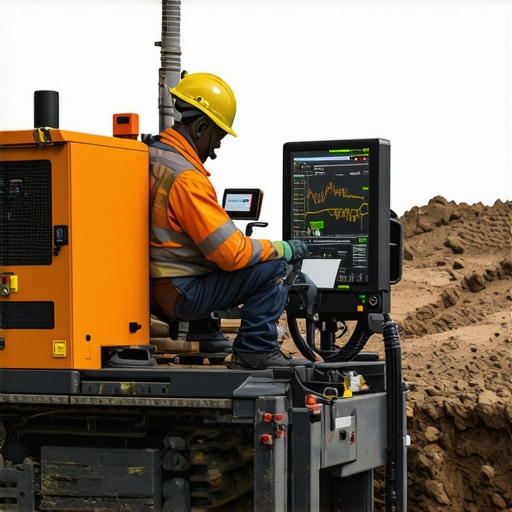
Advanced control systems now leverage machine learning algorithms trained on extensive geotechnical datasets, enabling predictive adjustments based on soil behavior trends rather than reactive measures alone. As industry pioneers like GeoSolve have shown, such integrations cut project delays attributable to unforeseen ground conditions by a significant margin.
Is Groundwater Interference a Hidden Hazard in Trenching Stability?
In subterranean environments, fluctuating groundwater levels pose a covert risk to trench integrity. Elevated water tables can weaken soils, rendering them prone to collapse, or cause utility lines to shift unexpectedly. The interplay between groundwater motion and soil cohesion requires a nuanced strategy: by deploying piezometers and real-time hydraulic head sensors, operators can monitor groundwater pressures meticulously. Such data informs preemptive adjustments to vacuum strength and fluid velocity, ensuring the trench walls remain stable despite hydrological variability.
Coupling these sensing methods with predictive models based on hydrogeological data empowers teams to anticipate rising groundwater issues before they compromise borehole safety, dramatically reducing incident rates and environmental hazards.
Industry research from the US Geological Survey emphasizes how groundwater fluctuations directly influence trench stability metrics, advocating for integrated hydrological monitoring as standard practice.
Integrate Intelligent Control Systems to Elevate Trenching Safety Standards
The evolution toward fully automated pressure regulation platforms offers unmatched responsiveness in complex environments. These systems synthesize input from pressure transducers, soil sensors, and groundwater monitors, generating actionable commands that adjust hydraulic pressures in milliseconds. In urban settings with congested utility networks, such precision minimizes utility strikes and accelerates excavation timelines, optimizing resource utilization.
Moreover, embracing remote monitoring capabilities allows centralized supervision of multiple active sites, ensuring consistency and rapid corrective actions across projects. Leading firms like ExcavationX have demonstrated that incorporating AI-based control algorithms into hydrovac rigs enhances operational safety and reduces manual oversight requirements.
If you’re committed to pushing the boundaries of trenching excellence, exploring cutting-edge control system integrations warrants your attention—reach out to industry experts or attend specialized workshops to stay ahead in this dynamic field.
Revolutionizing Trenching Safety Through Adaptive Soil Response Techniques
One of the most compelling frontiers in underground excavation pertains to dynamically responding to the myriad behaviors exhibited by varied soil strata under vacuum and fluid force application. Integrating advanced geotechnical sensors with real-time data analytics unlocks the capacity to adapt pressure settings proactively, minimizing risks associated with unpredictable soil liquefaction or cohesion loss. Employing such micro-adjustments in fluid and vacuum pressures can significantly diminish incidents like trench wall collapse or utility line displacement, thereby elevating safety standards and operational reliability.
Can Machine Learning Models Accurately Predict Soil Failure Risks During Excavation?
Indeed, leveraging historic soil performance data combined with live sensor inputs enables sophisticated machine learning algorithms to forecast failure probabilities with remarkable precision. Leading industry research, such as the comprehensive studies published by the American Society of Civil Engineers, reveal that such predictive analytics can preemptively adjust pressure parameters, precluding potential disasters. This intelligent approach lends engineers a strategic advantage, transforming reactive responses into proactive safeguards.
Engage in dialogue with geotechnical specialists and data scientists to harness these cutting-edge methodologies effectively within your projects.
Expert Insights & Advanced Considerations
Prioritize Soil Mechanics Knowledge
Deep understanding of soil behavior under varying pressure conditions is essential. Mastery of geotechnical principles enables precise adjustments during trenching, reducing risks of collapse or utility damage.
Leverage Real-Time Sensor Integration
Implementing advanced sensor systems provides immediate data on soil response and pressure fluctuations. This allows for dynamic control, enhancing safety and efficiency proactively.
Adopt Adaptive Control Algorithms
Utilize intelligent algorithms that adapt to ground conditions, ensuring optimal pressure levels are maintained despite soil heterogeneity, leading to fewer project delays.
Invest in Continuous Operator Training
Regular training refines operators’ understanding of pressure dynamics, improving decision-making and response times in complex excavation scenarios.
Integrate Multi-Disciplinary Data Analysis
Combine geotechnical, hydrological, and equipment performance data for comprehensive pressure management strategies that account for all environmental variables.
Curated Expert Resources
- American Society of Civil Engineers Publications: Offers in-depth white papers on soil mechanics and pressure control techniques crucial for underground excavation.
- Hydrovac Industry Case Studies: Real-world insights into pressure management success stories and lessons learned from advanced hydrovac operations.
- Sensor and Control System Manufacturers: Technical manuals and updates on cutting-edge sensor integration and adaptive control algorithms.
- Geotechnical Research Journals: Latest research on soil interaction with fluid pressures, supporting evidence-based practices.
Final Expert Perspective
In the realm of trenching excellence, mastering differential pressure management is transformative. Synergizing soil physics, real-time technology, and strategic control algorithms refines the excavation process, reducing hazards and boosting productivity. Implementing these high-level practices establishes a robust foundation for future-ready underground operations. To elevate your expertise further, engage with industry-leading resources and actively participate in professional forums. Your insights and experiences are vital, shaping the evolution of safe and efficient deep trenching in 2026 and beyond.
,
Comments are closed.