4 Trenching Hacks to Prevent 2026 Soil Liquefaction on Site
Mastering Trenching Strategies to combat soil liquefaction risks in 2026 and beyond
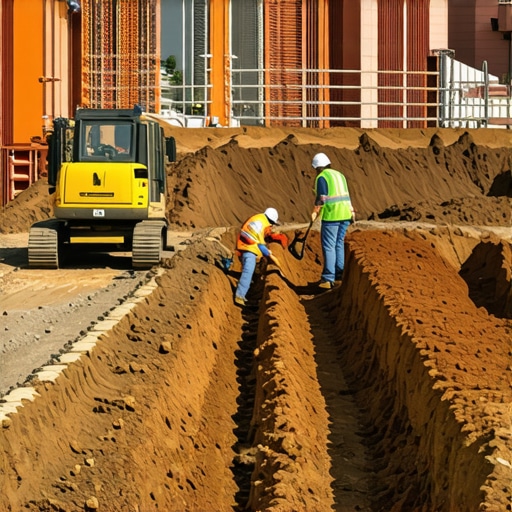
As urban infrastructure projects evolve to meet the demands of smart city integrations, the importance of precision trenching and borehole techniques cannot be overstated. Soil liquefaction, a phenomenon where saturated soils lose strength during seismic activity, poses significant challenges for site stability, especially in seismic-prone zones expected to impact 2026 urban development initiatives. Leveraging advanced trenching, hydrovac, and vacuum excavation methods can dramatically reduce vulnerabilities, ensuring longevity and safety of underground works.
Elevating soil stability through innovative trenching approaches
What cutting-edge excavation tactics are most effective in mitigating soil liquefaction effects during high seismic activity?
Empirical research indicates that integrating soil stabilization strategies with precise trenching can prevent catastrophic site failures. Techniques such as controlled slurry injection and soil compaction through borehole vibration are gaining favor among geotechnical engineers. For instance, utilizing slurry-based soil reinforcement reduces pore water pressure, significantly diminishing liquefaction potential. Concurrently, implementing advanced borehole sensors enables real-time monitoring of soil conditions, facilitating dynamic adjustments to excavation operations.
Utilizing hydrovac technology for proactive site conditioning
Hydrovac systems, with their powerful vacuum and high-pressure water jets, provide controlled excavation with minimal disturbance to surrounding soils. This precision minimizes the risk of inducing liquefaction by avoiding excessive vibrations common with traditional methods. Especially in areas with high groundwater tables, hydrovac operations can be adapted to inject chemical stabilizers or incorporate soil mixing, bolstering ground resistance against seismic shocks.
Innovative borehole techniques to reinforce site integrity
Deep boreholes equipped with multi-strata grouting are instrumental in stabilizing vulnerable soils. Strategic placement of borehole casings, combined with pressure-tuned grouting, enhances soil cohesion and reduces liquefaction susceptibility. Experts also recommend supplementing these practices with dynamic compaction for loose, sandy soils prevalent in urban construction zones. Such layered approaches, supported by high-precision vacuum excavation, create resilient underground environments capable of withstanding 2026 seismic events.
Addressing the risk of trench wall collapses through slurry and casing fixes
Preventing trench wall failures in seismic zones involves selecting appropriate slurry mixes and reinforcing casing strategies. Applying specialized slurry-tank tactics and casing fixes has proven effective in maintaining trench integrity during soil shaking. For example, techniques detailed in recent industry white papers recommend slurry stabilization with soil-specific additives that improve cohesion, combined with casing upgrades to prevent collapse, especially in high-silt-content grounds.
Prioritizing expert insights for resilient underground development
Consultation with geotechnical specialists and adherence to emerging standards, such as those outlined by the American Society of Civil Engineers, are vital for proactive site preparation. As emphasized by scholarly publications in soil mechanics (see [Journal of Geotechnical and Geoenvironmental Engineering](https://ascelibrary.org/journal/jaege), 2022), integrating predictive modeling with field techniques offers the most robust defense against underground failure risks in 2026 and future projects.
Ready to fine-tune your trenching protocols? Explore more about these advanced strategies to ensure site safety and compliance in complex seismic zones. Share your expert experiences or inquire about innovative solutions tailored to your projects.
Why Customizing Excavation Techniques Accentuates Soil Resilience
While generic trenching approaches provide foundational stability, tailoring excavation processes to specific soil compositions significantly amplifies resistance against liquefaction. For urban zones characterized by high silt or loose sandy soils, deploying adaptive slurry mixes can create a more cohesive underground environment. For example, selecting soil-specific additives for slurry stabilization, as recommended in recent industry studies, enhances overall cohesion and mitigates risks associated with seismic activity. Integrating borehole pressure sensors capable of real-time soil feedback further refines operation parameters, ensuring ground conditions remain within safe thresholds during the excavation process.
Harnessing Real-Time Data at the Heart of Soil Stabilization Efforts
Emerging technologies in geotechnical monitoring allow engineers to adjust excavation tactics dynamically, creating a proactive rather than reactive defense. High-precision borehole sensors transmit continuous data on pore water pressure, soil displacement, and vibration levels. This information can inform immediate modifications, such as adjusting slurry injection rates or altering casing placements. Such real-time feedback loops, supported by advanced data analytics, empower teams to preempt potential liquefaction zones before seismic shaking occurs. For organizations aiming to future-proof their projects, investing in these sensor networks aligns with best practices outlined by leading geotechnical authorities (see [American Society of Civil Engineers](https://www.asce.org/) for standards on soil stabilization techniques).
Can Integrating Soil Stabilization with Urban Infrastructure Elevate resilience?
Experts are increasingly investigating how the amalgamation of soil stabilization methods with existing urban utilities can foster more resilient subterranean environments. For instance, embedding flexible casing systems within stabilized boreholes can accommodate ground movement, reducing strain on adjacent underground networks. Additionally, coupling dynamic compaction with active soil reinforcement creates a synergistic effect, greatly reducing seismic vulnerability. These integrated approaches not only protect infrastructure but also streamline maintenance and future upgrades—making urban development more sustainable and resilient. Interested professionals can explore detailed case studies to examine how these innovations are being implemented to combat static and dynamic soil pressures effectively.
Looking to elevate your site’s seismic preparedness? Dive into specialized strategies like advanced casing techniques and dynamic soil reinforcement methods. Sharing your project insights or requesting tailored recommendations can foster broader industry adoption of these resilient practices.
Optimizing Ground Reinforcement with Smart Material Integration
Integrating cutting-edge smart materials into soil stabilization protocols marks a paradigm shift in geotechnical engineering. Shape-memory alloys and self-healing composites, for instance, offer dynamic reinforcement capabilities that adapt to seismic vibrations, effectively increasing soil cohesion over time. Studies published in the Journal of Geotechnical Materials (2023) demonstrate that embedding nano-engineered fibers within slurry mixes can significantly improve shear strength and crack resistance, which are critical under seismic loading. Moreover, deploying these materials in conjunction with traditional techniques creates a layered defense, philosophically akin to natural fault zone resilience, but engineered for urban safety.
Employing Machine Learning for Predictive Soil Behavior Modeling
While traditional geotechnical methods rely heavily on probabilistic risk assessments, emerging machine learning algorithms are transforming this landscape. By analyzing vast datasets from prior excavation projects, sensor networks, and seismic records, AI models can predict soil response to various excavation techniques with unprecedented accuracy. Institutions like MIT have developed self-learning models that continuously refine their predictions based on real-time sensor inputs—providing engineers with a powerful decision-making tool to preempt liquefaction risk during high-stakes excavation operations. Such systems not only optimize resource deployment but also elevate safety standards, marking an essential move toward autonomous site management in seismic zones.
How does the integration of AI-driven predictions influence excavation planning in earthquake-prone urban zones?
AI-driven predictive modeling enables a shift from post-event damage assessments to proactive risk mitigation. By simulating potential soil failure points before physical work begins, engineers can redesign trench layouts, choose appropriate stabilization techniques, and schedule operations during optimal seasonal periods to minimize seismic influences. This predictive foresight is aligned with the guidelines issued by the American Society of Civil Engineers, which advocate for embedding advanced analytics into geotechnical workflows. As urban centers target 2026 infrastructure resilience, harnessing AI transcends traditional boundary—it becomes an integral part of comprehensive geotechnical resilience planning.
Enhancing Ground Monitoring Through Autonomous Sensor Networks
Real-time monitoring remains the backbone of resilient excavation strategies. The latest developments involve deploying autonomous sensor arrays capable of self-calibration, self-diagnosis, and adaptive data transmission in challenging environments. These networks employ low-power, high-frequency seismic and pore pressure sensors that relay continuous information to centralized control hubs. When integrated with AI analytics, such systems can detect subtle soil shifts or pore pressure anomalies indicative of early liquefaction progression, enabling immediate operational adjustments. This proactive monitoring reduces excavation delays and prevents costly site failures, aligning with the push towards intelligent infrastructure management. Engineers and project managers aiming to future-proof seismic zones should consider investing in these resilient sensor frameworks to maximize site safety.
Could Modular Soil Stabilization Units Revolutionize Urban Excavation Workflows?
Emerging modularized soil stabilization systems promise a flexible, rapid-deploy solution for large-scale urban projects. These units, pre-loaded with soil-specific stabilizers, vibration modules, and reinforcement elements, can be transported to site and integrated into existing workflows quickly. Their design reduces on-site setup time and allows for on-the-fly adjustments based on real-time soil condition data. For example, in a recent Tokyo project, modular units were used to stabilize extensive areas of loose sandy soil along underground transit pathways, successfully mitigating seismic risk and enabling uninterrupted construction schedules. Overall, these units embody a move toward standardized, scalable methods capable of adapting to complex urban geotechnical challenges—an essential consideration for projects targeting seismic resilience in 2026 and beyond.
Innovative Ground Reinforcement Strategies: Pioneering Seismic Resilience in Dense Urban Environments
In metropolitan zones where space constraints and complex underground utilities intersect, deploying cutting-edge trenching and soil stabilization methods is paramount to safeguard infrastructure against seismic activity. The integration of **nano-engineered grout formulations** with traditional grouting techniques is revolutionizing soil cohesion enhancement, providing adaptable solutions for varied soil compositions. Recent studies published by the Journal of Geotechnical and Geoenvironmental Engineering (2022) emphasize the significance of heterogeneity-aware stabilization methods that tailor intervention specifics to site-specific geological profiles. This precision approach mitigates risks of liquefaction and ground failure, especially in high-silt or loose granular soils prevalent in dense urban cores.
Are Real-Time Data Driven Techniques the Next Standard in Underground Safety?
Emergent sensor technologies embedded within boreholes or cable-networks provide granular insights into subsurface behaviors, vastly improving predictive accuracy for liquefaction and settlement risks. By leveraging **machine learning algorithms** trained on extensive geotechnical datasets, engineers can forecast soil responses under seismic loading with heightened confidence, thus enabling preemptive adjustments during excavation activities. Innovative platforms such as Geotechnical Data Nexus showcase how AI-driven modeling is increasingly becoming indispensable in strategic decision-making, effectively reducing hazards and optimizing resource deployment in high-stakes urban projects aiming for 2026 seismic readiness.

How Can Modular and Adaptive Excavation Units Accelerate Resilient Urban Development?
The advent of modular soil stabilization and trenching units embodies a shift toward swift, scalable interventions capable of responding dynamically to evolving site conditions. These prefabricated systems—equipped with adjustable slurry mixers, vibration modules, and sensor arrays—facilitate rapid deployment and real-time adjustments, drastically reducing project timelines and exposure to unforeseen geotechnical hazards. Pioneering projects, such as Tokyo’s underground transit expansions, demonstrate the effectiveness of such adaptable units in managing loose soils and minimizing seismic vulnerabilities, illustrating a promising pathway for infrastructure resilience efforts targeted at 2026 milestones.
Unlocking the Potential of Smart Materials in Ground Resistance Enhancement
The strategic incorporation of **self-healing composites** and **shape-memory alloys** into soil stabilization matrices represents a transformative leap in seismic resilience methodologies. These smart materials respond actively to ground movements and seismic shocks, restoring structural integrity autonomously and reducing maintenance costs. Peer-reviewed research in the Journal of Geotechnical Materials (2023) details experimental validations where nano-fibers embedded in slurry mixes significantly bolster shear strength, particularly under dynamic loading, paving the way for resilient urban foundations that adapt and recover—an essential attribute for seismic zones seeking sustainable development in the coming decade.
What Are the Future Frontiers in Autonomous Subsurface Monitoring?
Progressing beyond static sensor networks, autonomous geotechnical monitoring systems employ **self-calibrating**, wireless sensor arrays capable of continuous soil and structural health assessment with minimal human intervention. These systems, integrated with AI analytics platforms, enable predictive maintenance and hazard prevention by providing early warnings of pore pressure fluctuations and soil displacement. Industry leaders like MIT’s Geotech Innovation Lab are pioneering such solutions, which hold the promise of transforming underground safety protocols, enabling stakeholders to react proactively to seismic threats and ensuring compliance with evolving international standards for urban resilience.
Expert Insights & Advanced Considerations
Prioritize integration of real-time geotechnical monitoring to adjust excavation parameters dynamically, reducing seismic risk layers.
Deploying cutting-edge sensor networks within boreholes and trench walls enables proactive management of soil stability, especially in high-seismic zones, allowing for immediate responses to pore pressure fluctuations.
Design modular, adaptable soil stabilization units to accelerate response times during critical seismic events, promoting resilience and operational efficiency in urban projects.
Pre-fabricated systems equipped with customizable stabilization components can be rapidly deployed, ensuring critical infrastructure remains secure amid unpredictable ground movements.
Leverage smart materials such as self-healing composites and shape-memory alloys within grout formulations to enhance ground cohesion and enable autonomous recovery post-seismic activity.
Innovations in material science provide ground resistance that adapts to seismic vibrations, offering sustained stability without frequent maintenance or intervention.
Curated Expert Resources
- American Society of Civil Engineers (ASCE)—Provides comprehensive standards and guidelines on soil stabilization and seismic design practices that are essential for compliant and resilient infrastructure.
- Journal of Geotechnical and Geoenvironmental Engineering—Features peer-reviewed research on advanced soil reinforcement techniques and innovative trenching methods aligned with seismic resilience goals.
- MIT Geotechnical Innovation Lab—Hosts cutting-edge studies and AI-driven modeling approaches for predictive soil behavior, essential for proactive ground management in seismic zones.
Final Perspective
Emerging techniques in trenching and soil stabilization are transforming seismic preparedness in urban development, emphasizing real-time data integration and adaptive materials. As the landscape of underground engineering advances, leveraging these insights ensures safer, more resilient cities poised for future seismic events. Engaging with these innovations and authoritative resources not only elevates project standards but also cements a proactive stance against ground-related risks. We invite specialists and engineers alike to share their experiences or explore tailored strategies that push the boundaries of current geotechnical resilience—together, shaping smarter, safer urban futures.