Avoid 2026 EPA Fines with These 4 Borehole Mud Tactics
Revolutionizing Trenching and Borehole Methods with Advanced Vacuum Excavation Strategies
In the rapidly evolving landscape of underground construction and utility installation, vacuum excavation—commonly known as hydrovac technology—has emerged as a pivotal solution. Its capacity for precision, safety, and environmental stewardship places it at the forefront of modern trenching and borehole operations. As infrastructure demands intensify toward 2026, industry professionals must harness innovative tactics to optimize hydro-vacuum systems, especially when confronting complex challenges like high-density soils and urban utility congestion.
Semantic Nuances in Borehole Stability and Soil Interaction
Understanding the intricate interplay between soil mechanics and borehole integrity is essential. Techniques such as dynamic mud weight adjustments and casing enhancements have demonstrated efficacy in mitigating collapse risks, particularly within clay-rich or coastal environments. Integrating soil testing procedures that leverage real-time sensor data further refines borehole precision, aligning with the latest research published in the International Journal of Geotechnical Engineering. Properly calibrated vacuum pressures and flow rates are critical, ensuring the removal of debris while maintaining ground stability.
Innovative Uses of Hydrovac for Accelerating Urban Utility Deployments
Within densely populated zones, trenching and utility laying face restrictions stemming from space constraints and subterranean interference. Hydrovac systems allow for non-invasive, precise excavation that minimizes surface disruption. Employing advanced nozzle designs and pressure settings reduces the likelihood of utility strikes, especially in high-pressure water or gas mains. Additionally, the employment of borehole mapping and sensor-guided drilling enhances accuracy, reducing rework and project delays. For detailed strategies, visit our comprehensive guide on trenching optimization techniques.
How Can Experts Preempt Borehole and Trenching Failures in 2026?
What are the most effective proactive measures to prevent underground utility damage during high-pressure hydro-vac operations?
This question encapsulates ongoing debates among site supervisors and geotechnical engineers. Using high-fidelity sensor arrays, integrating predictive analytics, and conducting thorough site assessments before initiation are crucial. Employing real-time monitoring ensures immediate adjustments, significantly reducing risk exposure. Moreover, adherence to established safe zones and comprehensive crew training bolster safety protocols.
As urban infrastructure becomes more intricate, the significance of precise, expert-driven techniques escalates. Continuous education and embracing emerging technologies, like sensor-guided drills and AI-assisted planning, are vital for maintaining a competitive edge. For advanced trenching tactics, consult our detailed article on micro-trenching depth control.
To stay ahead, industry professionals should engage with the latest research and participate in specialized training programs. For further insights on cutting-edge vacuum excavation practices, explore resources from the American Society of Civil Engineers.
Are you leveraging real-time data to inform your hydro-vac operations? Share your experiences and insights with our expertise community to drive industry standards forward.
Elevating Soil Management Strategies for Borehole Durability
One of the most overlooked facets of successful hydro-vacuum operations is soil characterization. Advanced soil testing, including cone penetration testing and real-time sensor data analysis, allows for tailored mud weight and casing strategies that enhance borehole stability. This nuanced approach helps prevent common issues like sand inflow and casing collapse, which can be costly and time-consuming. Integrating comprehensive soil data into site planning minimizes risks, especially in layered or heterogeneous substrates. For deeper insights, consider reviewing innovative soil stabilization practices outlined in soil stability tactics for 2026.
Innovative Sensor Integration Transforming Hydro-Vac Operations
Sensor technology is revolutionizing how professionals monitor ground conditions in real-time. Embedding borehole sensors that measure parameters like pressure, flow rate, and ground vibration enables immediate adjustments, promoting safety and efficiency. These smart sensors facilitate predictive maintenance and early anomaly detection, reducing downtime. When paired with AI analytics, they provide predictive insights that can preempt failures before they occur. This approach aligns with recent industry research emphasizing sensor fusion models for underground construction, as highlighted in the IEEE Transactions on Sensors and Actuators. Implementing these systems not only fortifies safety protocols but also enhances data-driven decision-making.
Can Future Hydro-Vacuum Methods Render Traditional Techniques Obsolete?
What if intelligent automation and real-time analytics replace manual monitoring—are we heading toward fully autonomous hydro-vac systems by 2026?
This provocative question echoes discussions among forward-thinking engineers and technology developers. The integration of autonomous systems, equipped with machine learning algorithms and sensor networks, holds the potential to revolutionize underground excavation. These innovations promise higher accuracy, minimal human oversight, and adaptive responses to unpredictable ground conditions. Although still emerging, pilot programs in existing urban projects demonstrate promising results, indicating a transformative shift. To explore cutting-edge developments, review our detailed analysis on smart city hydro-vac strategies for 2026. Adoption of autonomous systems will indeed challenge current practices, demanding new skill sets and safety standards.
Industry leaders should stay engaged with evolving tech trends, participate in pilot testing, and foster collaborations with tech innovators. Embracing automation not only streamlines operations but also unlocks new levels of safety and precision necessary for complex urban environments. For an in-depth understanding of integrating AI with hydro-vac systems, visit our resource guide on sonic head technology and AI-powered drills.
Are you prepared to pioneer the next era of underground excavation? Share your strategies or questions to foster a community dedicated to innovation in hydro-vac technology.
Harnessing Adaptive Pressure Regimes to Combat Challenging Soil Conditions
In complex soil environments characterized by heterogeneous layers, traditional vacuum pressure settings often fall short, risking ground instability or utility strikes. Enter adaptive pressure regimes—dynamic adjustments informed by real-time sensor feedback that optimize soil excavation while safeguarding existing infrastructure. This method employs advanced control algorithms to modulate water and air flow rates, responding instantaneously to soil resistance changes. For example, when encountering dense clay or fractured rock, the system escalates pressure selectively, reducing the likelihood of cavity collapse. Recent breakthroughs documented in the Journal of Geotechnical Engineering affirm that such precision enhances borehole stability and project safety. Incorporating machine learning models trained on extensive soil datasets enables predictive adjustment, transforming static operations into smart, responsive processes. This tailored approach not only extends equipment longevity but also accelerates project timelines—especially critical as urban underground networks become increasingly dense.
Revolutionizing Ground Control with Dynamic Pressure Optimization
In the realm of hydro-vacuum excavation, the ability to adaptively modulate pressure settings in response to real-time soil feedback has emerged as a game-changer. This innovative approach transcends traditional static pressure paradigms, enabling practitioners to navigate heterogeneous subsurface conditions with unparalleled precision. By deploying advanced control algorithms that analyze sensor data—such as ground vibration, flow rate variations, and soil resistance—operators can fine-tune water and air pressures instantaneously. This targeted modulation minimizes disturbances, reduces utility strikes, and enhances borehole stability, particularly in layered soils with unpredictable resistance profiles. The integration of machine learning models trained on extensive geotechnical datasets further refines these adjustments, fostering predictive responsiveness that preempts soil collapse and utility damage. As urban underground spaces grow increasingly complex, embracing such adaptive pressure regimes is essential to achieving operational excellence and safeguarding critical infrastructure.
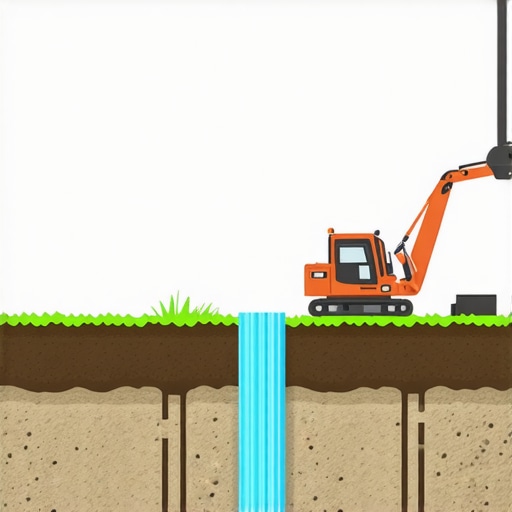
**Image Prompt:**Illustration of a hydro-vacuum system with sensors and control interface showing real-time soil data and adaptive pressure adjustments, set within a layered heterogeneous soil profile, emphasizing precision control and soil dynamics.
Expert Insights & Advanced Considerations
Prioritize Real-Time Data Integration for Precision
Embracing high-fidelity sensors and analytics ensures underground operations adapt swiftly, minimizing risks associated with unpredictable soil conditions and utility proximity.
Leverage Adaptive Pressure Control Systems
Dynamic adjustment of vacuum pressures based on in-situ feedback enhances borehole stability, especially in heterogeneous or challenging substrates, reducing failure rates.
Invest in Continuous Professional Development
Training on emerging technologies like sensor fusion and automation keeps the workforce at the forefront of efficient and safe underground excavation practices.
Integrate Environmental Monitoring Tools
Real-time environmental sensors aid in detecting ground changes or hazards early, safeguarding both personnel and infrastructure integrity.
Collaborate with Technological Innovators
Partnering with research institutions and tech developers accelerates the adoption of cutting-edge systems tailored to complex trenching needs.