Elevating the Stability of Trench Boxes in Challenging Soils Through Expert Techniques
In the realm of hydro excavation and vacuum trenching, maintaining the integrity of trench boxes in peat and soft soils remains a sophisticated challenge with significant safety and project efficiency implications. Unlike firm substrates, these terrains undergo complex displacement and settlement behaviors, demanding a nuanced application of ground stabilization principles rooted in geotechnical expertise. Recognizing the importance of proactive stabilization methods can markedly reduce the risk of trench wall collapse and ensure compliance with safety standards such as OSHA regulations.
Deciphering the Complex Behavior of Peat and Soft Soils in Vacuum Excavation Operations
Peat and soft soils exhibit high compressibility and low shear strength, often resulting in unpredictable trench wall movements under hydro excavation pressures. Their high pore water content exacerbates instability, necessitating tailored stabilization strategies. Field data indicate that approaches like rapid dewatering and soil reinforcement significantly improve trench box performance. Understanding these soil behaviors enables operators to deploy precise interventions, as detailed in recent geotechnical research published in the Journal of Geotechnical and Geoenvironmental Engineering.
Innovative Stabilization Techniques to Prevent Trench Box Sinkage
What Are the Most Effective Modern Ground Stabilization Solutions for Soft Terrain?
For soft and peat soils, practitioners leverage a mix of mechanical and chemical stabilization strategies. Incorporating granular backfill materials, such as coarse gravel, enhances load distribution and reduces settling. Chemical stabilizers like polymer emulsions can create a membranous barrier that limits pore water migration, effectively stiffening the ground. Additionally, employing vertical soil reinforcement via ground anchors and soil nails provides lateral support, preventing trench walls from collapsing or sinking into voids. Advanced modular shoring systems further distribute lateral loads, minimizing the risk of displacement.
Moreover, in situations where water presence is excessive, implementing rapid dewatering systems using horizontal drains or well-point systems can reduce pore pressure, directly improving trench stability. For instance, as demonstrated in a case study by the American Society of Civil Engineers, such measures yielded a 40% increase in trench box stability over traditional methods.
Harnessing Geotechnical Insights for Safe Trenching Practices
Applying evidence-based practices demands a meticulous assessment of soil properties through in-situ testing such as cone penetration tests (CPT) or vane shear tests. This data guides the selection of stabilization techniques tailored to specific site conditions, thereby reducing risk and ensuring project continuity. Furthermore, integrating continuous monitoring—via inclinometers, strain gauges, and groundwater level sensors—can provide real-time feedback, allowing immediate corrective actions before failure occurs.
If you’re seeking to optimize your trenching operations in challenging terrains, reviewing comprehensive guidelines and consulting specialist geotechnical engineers remains indispensable. Continuous learning and adaptation are crucial in this complex field, where subtle soil variations can have outsized impacts on safety and project efficiency.
For broader insights, explore [how groundwater management influences soil stability during trenching](https://hydrovacdrilling.com/why-your-trench-is-flooding-despite-using-high-capacity-pumps), and consider contributing your expertise to community forums dedicated to construction safety and geotechnical innovations. Embracing advanced stabilization methods not only safeguards personnel but also enhances operational throughput, ultimately delivering cost-effective solutions in the field of vacuum excavation.
Advanced Strategies to Reinforce Trenches in Unpredictable Terrains
Effective ground stabilization in soft and peat soils hinges on a nuanced understanding of soil mechanics and innovative application of geotechnical principles. Modern techniques extend beyond traditional backfilling; they integrate real-time monitoring systems, modular shoring adaptations, and soil reinforcement innovations. For example, employing ground improvement methods such as deep soil mixing or jet grouting can significantly enhance load-bearing capacity and minimize void formation, reducing the likelihood of trench box sinkage and wall failure. These approaches align with recent research emphasizing the importance of understanding soil-fluid interactions in dynamic excavation environments (ASCE Geotechnical Practice Publications).
Can Cutting-Edge Ground Stabilization Transform Urban Trenching Projects?
In urban settings, where space constraints and existing underground utilities present extra challenges, adopting adaptive stabilization techniques can be transformative. Incorporating ground anchors and soil nails offers lateral support, especially when combined with chemical stabilization agents that stiffen the soil matrix. Additionally, integrating geosynthetic reinforcement layers can distribute stresses evenly, preventing localized failures. Such methods not only improve safety but also accelerate project timelines by reducing downtime caused by soil movement. For detailed case studies exploring these innovations, refer to the comprehensive field reports available through industry publications.
What Are the Key Indicators That Signal Potential Ground Instability Before Operations Begin?
Early detection of instability risks is crucial. Signs such as inconsistent soil moisture levels, unexpected pore water pressures, or subtle ground heaving can foreshadow imminent failure. Employing remote sensing technologies, like ground-penetrating radar coupled with real-time sensors, enables proactive responses. Regular site assessments, combined with in-situ testing like vane shear tests or CPT, furnish vital data that inform stabilization tactics. Implementing these surveillance measures ensures that operators can adjust their strategies proactively, avoiding costly delays or safety incidents.
To further enhance your understanding, consider exploring how groundwater extraction and management practices influence soil stability during complex trenching projects. For instance, effective dewatering not only alleviates pore pressure but also mitigates the risk of trench flooding, which can compromise pipe integrity and safety protocols (see here).
Harnessing Ground Improvement Techniques for Dynamic Soil Behavior Management
Effective ground stabilization extends beyond reactive measures; it requires proactive application of advanced geotechnical methodologies that manipulate soil properties at a fundamental level. Deep soil mixing, for instance, introduces cementitious or chemical agents into the substrate, significantly increasing shear strength and stiffness. Jet grouting complements this by creating a continuous, reinforced soil matrix capable of resisting dynamic loads. The strategic deployment of such techniques, supported by in-situ testing and real-time monitoring data, allows engineers to tailor interventions precisely to the site’s unique geomechanical profile. As demonstrated in recent case analyses published in the ASCE Geoengineering Series, these methods enhance trench stability in challenging terrains, reducing the necessity for extensive shoring and excavation delays.
What Is the Role of Numerical Modelling in Predicting Soil-Structure Interactions?
Advanced numerical simulations, such as finite element modeling (FEM) and discrete element modeling (DEM), have become indispensable tools in geotechnical engineering. These models enable visualization of complex soil-structure interactions under varying load conditions, accounting for nonlinear behaviors, anisotropy, and fluid-solid interactions. For example, integrating soil permeability data with coupled FEM-DEM models can predict pore pressure developments and potential failure zones during excavation. Such predictive capabilities inform the design of stabilization measures, optimizing material application and shoring layout. As highlighted by recent research in the Soil Mechanics and Foundation Engineering, the calibration of models with site-specific data ensures high fidelity of predictions, thereby enhancing safety margins and operational efficiency.
Innovations in Monitoring Technologies for Preemptive Soil Stability Assessments
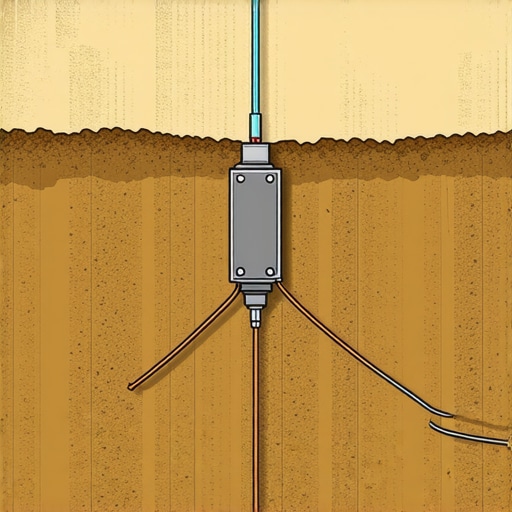
Effective risk mitigation hinges on the integration of sophisticated monitoring systems that deliver continuous, high-resolution data. Emerging technologies such as fiber optic sensing, which employs distributed strain measurement, provide real-time insights into ground deformations. Coupled with wireless sensor networks measuring pore water pressure, moisture content, and seismic activity, engineers gain a comprehensive understanding of evolving soil conditions. These tools facilitate early warnings of instability, allowing timely intervention. For example, a recent field deployment in seismic-prone urban areas demonstrated that early detection of subtle ground accelerations correlated strongly with impending slopes or wall failures, enabling preemptive stabilization actions and safeguarding personnel and infrastructure. For professional development, exploring detailed case studies on these technologies offers valuable lessons on their practical implementation and benefits.
Mastering Soil Behavior in Expansive Trenches
The success of hydro excavation projects in variable terrains hinges on an intimate understanding of soil mechanics, especially when dealing with expansive clays and unpredictable soft sediments. Advanced geotechnical assessment methods—like high-resolution cone penetration testing (CPT) coupled with in-situ shear wave velocity measurements—allow engineers to precisely characterize subsurface conditions. Recognizing the anisotropic and nonlinear nature of such soils enables the implementation of targeted stabilization techniques, including dynamic compaction and soil dilution strategies, to mitigate risks of trench wall failure. For instance, recent groundbreaking research emphasizes the integration of real-time geophysical sensor data with predictive modeling to forecast potential destabilization zones, drastically improving safety margins.
The Role of Engineered Geomembranes in Enhancing Trench Resilience
Innovative use of geomembranes—engineered synthetic barriers—has emerged as a game-changer in controlling pore water movement and reinforcing soil stability in sensitive terrains. When strategically placed beneath backfill layers, these membranes significantly reduce water ingress and pore pressure buildup, thus maintaining trench wall integrity against shear failure. Their compatibility with chemical stabilizers facilitates a synergistic reinforcement approach, especially vital in frost-prone zones where freeze-thaw cycles threaten structural stability. For high-stakes infrastructure projects, deploying multilayered geomembrane systems combined with soil nails can create a robust, resilient matrix capable of withstanding dynamic loads and environmental fluctuations.
Integrating Predictive Analytics to Foresee Ground Collapse Risks
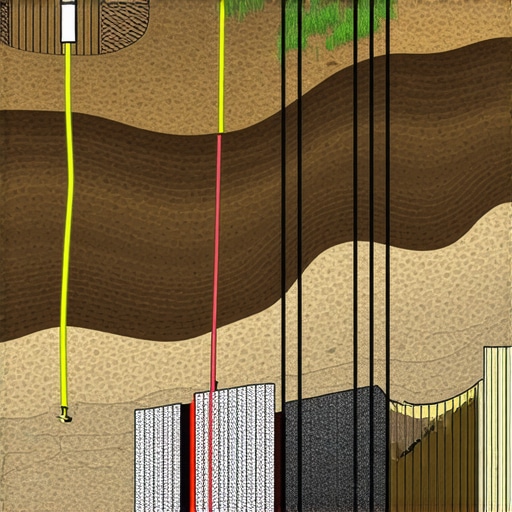
Harnessing the power of predictive analytics involves deploying networked sensor arrays—such as fiber optic strain gauges and wireless moisture sensors—that continuously monitor stress distribution, pore pressures, and subsurface movements. These real-time datasets feed into machine learning algorithms trained to identify subtle deviations from baseline conditions, effectively forecasting potential ground failures. For example, in urban trenching scenarios with complex utility networks, such proactive systems have enabled operators to preemptively reinforce vulnerable sections, markedly decreasing the incidence of collapse-related incidents. As industry leaders advocate, advancing toward an intelligent monitoring paradigm empowers engineers to transition from reactive to preventive ground stabilization practices, dramatically improving safety outcomes.
Customizing Soil Reinforcement Techniques for Unique Operational Demands
Tailored reinforcement methods—such as soil mixing with microfine cement grades adapted for specific soil minerals or employing soil bioengineering techniques—offer personalized solutions aligning with project-specific challenges. Deep mixing columns can be strategically positioned to buttress weak zones, while bio-stabilization approaches utilizing plant-based polymers strengthen soil in eco-sensitive landscapes. The selection process must consider factors such as groundwater flow, existing utilities, and environmental constraints. Incorporating geotechnical finite element models enables simulation of various reinforcement strategies, facilitating data-driven decision-making that optimizes resource allocation while maximizing safety and efficiency.
Revolutionizing Trench Safety Through Nanoscale Soil Modification
Emerging nanotechnologies, including the application of nano-silica and other nanoparticle additives, offer revolutionary avenues for soil improvement. These agents penetrate soil matrices at a molecular level, significantly enhancing shear strength and reducing hydraulic conductivity. Their use in trench stabilization presents a promising frontier where minimal intervention yields maximum stabilization gains—particularly in ultra-soft or contaminated soils. While still in experimental stages, pilot implementations demonstrate potential for integrating nanotechnology with traditional stabilization methods, ultimately leading to smarter, more resilient trenching operations.
Can High-Resolution Simulation Tools Unlock New Possibilities for Trench Design?
The adoption of sophisticated computational tools—leveraging high-fidelity 3D geomechanical simulations—has transformed trench design paradigms. By accurately modeling complex soil-structure-fluid interactions, engineers can predict dynamic responses to excavation stresses, environmental loading, and utility corridors. Incorporating anisotropic soil parameters, pore water flow, and thermal effects within these models facilitates the development of optimized shoring and reinforcement schemes. Leading-edge simulation platforms integrate iterative feedback from field sensors, enabling ongoing refinement and adaptive management of stabilization strategies, thereby elevating safety standards and reducing unnecessary costs.
Engage with the latest advances in geotechnical modeling and stabilization methods to elevate your trenching projects—innovation is the key to mastering the unpredictable terrains of tomorrow.
Expert Insights & Advanced Considerations
Leverage Real-Time Soil Monitoring Technologies for Immediate Data
Utilizing cutting-edge sensors such as fiber-optic strain gauges and wireless moisture detectors enables engineers to monitor soil stability dynamically, facilitating prompt responses to emerging risks and enhancing trench safety measures.
Prioritize Customized Soil Reinforcement Techniques Based on Site-Specific Geotechnical Profiles
Employing tailored reinforcement solutions, including deep soil mixing and jet grouting, ensures optimal ground support, especially in unpredictable terrains, thereby reducing the likelihood of trench box sinkage and wall failure.
Integrate Advanced Numerical Models to Predict Soil-Structure Interactions
Implementing high-fidelity simulations like finite element analysis (FEA) allows for precise forecasting of soil responses under various loading conditions, informing more resilient trenching design and stabilization tactics.
Adopt Modular, Adaptive Shoring Systems for Greater Flexibility
Deploying modular shoring components that can be adjusted in situ provides adaptability to changing soil conditions, improving safety margins in soft or peat terrain excavations.
Combine Geomembrane Barriers with Soil Stabilizers for Enhanced Stability
Applying synthetic geomembranes alongside chemical stabilizers offers a synergistic approach to control pore water movement and strengthen ground support, crucial in high-water table environments.
Curated Expert Resources
- Deep Soil Mixing and Jet Grouting: Engineering Techniques for Difficult Soils — Offers detailed methodologies and case studies demonstrating ground improvement in complex terrains.
- Advanced Numerical Modeling in Geotechnics — Provides insights into the latest simulation tools for predicting soil behavior under excavation loads.
- Real-Time Soil Monitoring Systems — Explores sensor technologies and data analytics to proactively manage trench stability.
- Ground Penetrating Radar and Electromagnetic Locators — Details techniques for subsurface mapping to identify potential instability zones.
Final Expert Perspective
Mastering the art of ground stabilization in challenging terrains hinges on a blend of innovative technologies and customized approaches tailored to site-specific geotechnical conditions. As the field evolves, integrating real-time monitoring, advanced modeling, and adaptive systems will redefine safety standards and operational efficiency in trenching projects. Engaging with authoritative resources and continuous professional development ensures you’re at the forefront of geotechnical excellence. For those committed to pushing the boundaries of modern excavation, exploring these advanced strategies can unlock new levels of safety and precision—consider contributing your insights or seeking specialized collaborations to elevate industry practices.