4 Trenching Tactics for Faster 2026 Site Preparation
Harnessing Scientific Precision for Enhanced Subsurface Engineering
In the rapidly evolving landscape of construction and infrastructure development, the mastery of excavation methods such as vacuum excavation, borehole drilling, and trenching is crucial for ensuring safety, reliability, and efficiency. With the advent of 2026’s technological innovations, professionals are now leveraging these techniques to minimize risks associated with underground utility strikes and soil instability. Understanding the nuanced applications and strategic integration of these methods equips specialists with a competitive edge in executing complex site preparation projects.
Strategic Integration of Vacuum Excavation with Borehole Techniques
Vacuum excavation has transitioned from a niche utility to a core element in modern underground operations, especially when combined with precise borehole drilling. These integrated approaches facilitate real-time utility mapping, soil analysis, and obstacle avoidance, thereby significantly reducing the likelihood of utility damage and environmental impact. Experts emphasize that adopting hydrovac technology enhances safety margins, particularly in congested urban zones where traditional digging methods risk costly utility strikes, as detailed in comprehensive white papers on utility mapping.
Emerging Trends in Trenching and Soil Stabilization
Contemporary trenching techniques are increasingly emphasizing soil stabilization and rapid deployment, driven by innovative machinery and granular soil assessment analytics. The focus shifts toward minimizing soil collapse, preventing trench cave-ins, and maintaining ground integrity during deep excavations. Advanced trenching solutions are now incorporating real-time monitoring systems, which rely on sensor technology to alert operators of impending soil instability, as explored in recent research on reliable trenching.
What are the most effective methods to prevent utility strikes during complex underground works?
Experts suggest a multi-layered strategy encompassing high-resolution imaging, strategic use of hydrovac technology for direct soil contact, and meticulous pre-construction utility surveys. These layered measures create an environment where underground hazards are identified and mitigated before physical excavation, aligning with guidelines from authoritative sources like the American Society of Civil Engineers.
For practitioners aiming to elevate their expertise, exploring hydrovac excavation strategies offers valuable insights into safety protocols, and adopting the latest trenching innovations can significantly improve project outcomes. Engaging with community forums and sharing field experiences contributes to a collective knowledge base that advances industry standards.
As the industry integrates these sophisticated techniques, continuous learning and adaptation remain imperative for sustainable growth and operational excellence in underground site preparation.
,
Why Traditional Trenching Falls Short in Complex Urban Environments
While conventional trenching techniques have served industries for decades, they often struggle to meet the demands of densely built urban settings where underground utilities are tightly packed and soil conditions vary unpredictably. Relying solely on mechanical digging increases the risk of utility strikes, soil collapse, and project delays. To address these challenges, integrating advanced trenching solutions like hydrovac technology is becoming essential, as highlighted in recent industry analyses on reliable trenching.
Adapting Soil Stabilization Tactics for Safer Excavations
Soil behavior significantly influences trench stability, especially in heterogeneous or wet conditions. Modern practices involve real-time soil assessment, granular stabilization, and moisture control techniques to prevent trench cave-ins. Applying sensor-driven soil monitoring systems can alert excavators to shifts in ground conditions, enabling immediate response measures. This proactive approach is detailed within comprehensive guides on soil stabilization strategies.
How can construction teams leverage emerging technologies to revolutionize underground safety?
Emerging innovations such as machine learning-enabled imaging diagnostics, drone-based site surveys, and automated soil analysis are transforming safety protocols. These tools not only improve accuracy in utility detection but also facilitate predictive modeling to anticipate soil instability before excavation begins. Incorporating these technologies into existing workflows enhances decision-making and minimizes risks, as supported by recent studies on hydrovac strategies.
If you’re interested in implementing cutting-edge trenching methods, consider exploring industry webinars and training sessions that focus on the integration of digital tools with traditional excavation techniques—these resources can elevate your project’s safety culture.
Harnessing Geotechnical Innovations to Minimize Ground Failures
In the realm of subsurface engineering, understanding soil behavior at a granular level is paramount for ensuring stable excavations, especially in heterogeneous terrains. Recent advances in geotechnical sensing technologies facilitate real-time monitoring of soil parameters, enabling engineers to predict and mitigate potential hazards proactively. For instance, integrating piezocone penetration testing (CPTu) data with machine learning algorithms allows for dynamic assessments of soil liquefaction potential, a critical factor in deep trench safety. These innovations are transforming traditional static soil analysis practices, leading to more adaptive and resilient excavation strategies.
Adopting High-Resolution Geographic Imaging for Precise Utility Mapping
Accurate underground utility mapping is a cornerstone of safe excavation. Emerging high-resolution ground-penetrating radar (GPR) systems, coupled with advanced data processing algorithms, now offer unprecedented clarity in subsurface imaging. These systems can differentiate between utility types, detect anomalies, and provide detailed three-dimensional models of underground infrastructure. Integrating such imaging techniques seamlessly into site planning phases ensures early detection of surprises, reducing unforeseen delays and costly utility strikes. Industry leader Geophysical Survey Systems highlights that leveraging these technologies can reduce utility interaction incidents by up to 70% compared to conventional methods.
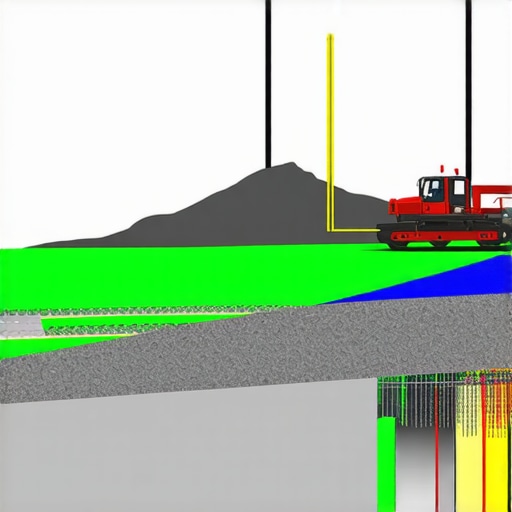
This image illustrates the integrated use of GPR data with GIS mapping to produce detailed underground utility models, facilitating informed decision-making in complex urban excavations.
Complex Soil-Utility Interactions: Navigating Confined Space Challenges
In densely built environments, the interaction between soil and underground utilities often presents confined space dilemmas that challenge even seasoned professionals. The intricate balancing act requires not only precise excavation techniques but also an understanding of soil mechanics’ dynamic response to external loads. Advanced finite element modeling (FEM) provides insight into how various soil types respond under excavation stresses, guiding the design of tailored shoring and stabilization systems. These methodologies minimize subsidence risks, preserve existing utilities, and optimize project timelines. Academic research published in the Journal of Geotechnical and Geoenvironmental Engineering underscores the importance of stress-strain analysis in pre-emptively addressing instability issues.
What role does predictive analytics play in contemporary underground infrastructure risk management?
Predictive analytics, driven by big data and AI, offers the ability to forecast potential failure points before they occur. By analyzing vast datasets from previous excavations, soil surveys, and utility responses, engineers can identify patterns indicative of impending issues. This foresight allows for the implementation of targeted preventative measures—like reinforcement of soil supports or strategic utility rerouting—thus elevating safety standards. The National Institute of Standards and Technology (NIST) has begun to pioneer frameworks that integrate predictive analytics into construction risk management protocols, promising a future of proactive rather than reactive excavation safety.
As these sophisticated tools and approaches continue to mature, practitioners are encouraged to participate in specialized training modules and collaborative forums. Engaging with cutting-edge research not only enhances individual expertise but propels the entire industry toward safer, more reliable underground operations.
,
Unveiling the Hidden Nexus of Soil Mechanics and Excavation Precision
Advancements in soil characterization, especially through sub-surface seismic refraction and electrical resistivity tomography, are enabling engineers to delineate soil heterogeneity with unprecedented granularity. By integrating geotechnical data into real-time excavation control systems, practitioners can dynamically adapt methods, thereby reducing soil disturbance and minimizing collapse risks. This convergence of geophysics and automation exemplifies a paradigm shift toward proactive hazard mitigation in complex subterranean environments.
Transforming Utility Detection with Multi-Sensor Integration
Emerging sensor fusion approaches combine ground-penetrating radar, electromagnetic induction, and acoustic methods to produce comprehensive, multidimensional utility maps. Such integrative techniques surpass traditional singular modalities by compensating for individual sensor limitations, offering higher certainty in utility location accuracy. Industries are now adopting AI-assisted processing algorithms that analyze combined datasets instantaneously, augmenting decision-making speed and precision during critical pre-excavation phases.
How Are Digital Twins Reshaping Urban Underground Infrastructure Planning?
In what ways do digital twin models facilitate safer and more efficient excavation strategies? By creating virtual replicas of underground environments, project teams can simulate excavation sequences, predict soil-utility interactions, and assess contingency plans under varying scenarios. Incorporating real-time sensor data into these digital twins enhances situational awareness, enabling preemptive interventions and optimized resource allocation. Leading organizations such as the European Space Agency’s ACT Project are pioneering these applications, demonstrating their potential to reduce costly errors and enhance sustainability.
Engaging with these sophisticated digital tools requires multidisciplinary expertise—combining geotechnical engineering, data science, and urban planning—to unlock their full potential. For industry professionals seeking to pioneer innovations, investing in cross-disciplinary training and collaborative research initiatives is essential.
Advanced Soil Stabilization Techniques to Support Deep Excavations
Implementation of deep soil mixing and controlled grouting techniques has shown remarkable efficacy in enhancing ground strength and cohesion in challenging terrains. When tailored with localized soil behavior data, these methods prevent trench instability and ground subsidence, especially in urban density zones where surface disruption must be minimized. Notably, the use of bio-mediated soil stabilization leveraging microbial activity presents an eco-friendly alternative, gaining traction in sustainable construction circles.
The Impact of Artificial Intelligence on Predictive Excavation Safety
How is AI transforming risk management in underground site operations? By analyzing historical excavation data, AI models can identify subtle patterns indicative of impending failures, enabling preemptive measures such as reinforcement or utility rerouting. Machine learning algorithms can also optimize excavation planning by predicting soil behavior under various load scenarios, leading to cost savings and enhanced safety margins. Institutions like NIST are developing standards to standardize AI validation in construction, promising more reliable deployment of these technologies.
Cyber-physical integration, encompassing wearable sensors and remote monitoring, furthers this predictive capability—empowering crews to react instantaneously to evolving underground conditions. For practitioners committed to forefront safety, embracing AI-driven tools and contributing to their iterative refinement is a strategic imperative.
Emerging Roles of Autonomous Vehicles in Subsurface Exploration
Autonomous robotic systems equipped with adaptive navigation algorithms are beginning to assay complex underground structures, minimizing human risk. These ground-based vehicles, capable of maneuvering confined spaces, gather high-resolution imaging and soil data, feeding into centralized analysis platforms. Their deployment accelerates site surveys, enhances data accuracy, and reduces logistical delays—capabilities that are pivotal in intricate urban excavations involving constrained access or hazardous conditions.
Future developments include hybrid systems that synergize aerial drones and subterranean robots, enabling comprehensive site mapping with minimal disruption. Industry leaders like Boston Dynamics are actively exploring these integrated solutions, signaling a transformative era in subsurface exploration and safety assurance.
Expert Insights & Advanced Considerations
The Future Is Data-Driven Excavation
Integrating real-time geotechnical monitoring with AI algorithms transforms traditional excavation by enabling predictive hazard detection, reducing unforeseen soil collapses and utility damages.
Harnessing Multi-Sensor Fusion for Accuracy
The fusion of electromagnetic, acoustic, and ground-penetrating radar sensors produces comprehensive underground utility maps, elevating detection precision beyond conventional single-method techniques.
Digital Twins – A Paradigm Shift
Creating dynamic virtual models of subsurface environments allows engineers to simulate excavation sequences, optimize strategies, and proactively identify potential issues, thus enhancing safety and efficiency.
Soil Characterization’s New Role
Advanced geophysical techniques, coupled with machine learning analysis, provide granular insight into soil heterogeneity, empowering customized stabilization approaches that prevent trench failures.
Autonomous Exploration and Site Assessment
Robotic systems equipped with adaptive navigation and high-resolution sensors are revolutionizing underground surveying, minimizing human risk and expediting data collection in complex urban settings.
Curated Expert Resources
- American Society of Civil Engineers (ASCE) Manuals: Provides authoritative guidelines on utility mapping and trenching safety protocols, fostering industry-standard practices.
- Geophysical Survey Systems: A leader in ground-penetrating radar technology, offering insights into high-resolution subterranean imaging solutions.
- NIST Construction Risk Management Frameworks: Pioneering standards integrating AI and predictive analytics to elevate underground safety measures.
- Journal of Geotechnical and Geoenvironmental Engineering: Publishes cutting-edge research on soil behavior prediction models and soil-utility interaction analyses.
- Hydrovac Drilling Resources: Industry reports and case studies demonstrating successful implementation of hydrovac techniques in complex underground environments.
The Critical Edge for Industry Leaders
Advancing groundwater exploration techniques and utilizing innovative digital modeling significantly enhance excavation precision, safety, and operational effectiveness in underground utility management. Embracing these emerging technologies and insights not only mitigates risks but positions professionals at the forefront of underground engineering excellence. Engage with specialized training programs, contribute to research collaborations, and continually evaluate new methodologies to maintain industry leadership and safeguard our underground infrastructure effectively.
This post highlights the importance of integrating advanced technologies like hydrovac and digital twin modeling for improving safety and efficiency in underground excavations. Having worked on several urban trenching projects, I’ve seen firsthand how combining high-resolution utility mapping with proactive soil stabilization techniques can drastically reduce project delays and prevent costly utility strikes. One challenge I’ve encountered is ensuring real-time data accuracy in noisy environments. Has anyone had success with specific sensor fusion methods or software tools that enhance data reliability during active excavation? I believe that as these technologies mature, the industry will move toward more autonomous decision-making systems, transforming traditional practices into a more predictive and preventive process, which is exciting for future project planning.