4 Tactics to Stop Borehole Deviation on 2026 Deep-Rock Sites
Revolutionizing Trenching and Vacuum Excavation: The Foundation of Accurate Borehole Deployment
As underground infrastructure projects grow increasingly complex, the integration of innovative hydrovac and trenching techniques becomes critical for maintaining borehole alignment and minimization of deviation. Expert practitioners recognize that meticulous planning and execution—coupled with real-time deviation monitoring—are paramount to successful outcomes in 2026’s challenging subsurface environments.
Leveraging Vacuum Excavation Technologies for Enhanced Control and Safety
The adoption of vacuum excavation not only improves safety but also offers superior control over soil removal, significantly reducing the risk of borehole deviation caused by soil heterogeneity or unforeseen underground obstructions. According to industry analyses, vacuum excavation’s precision significantly diminishes the probability of deviation, especially when integrated with advanced ground penetrating radar (GPR) systems.
Precision in Trenching: Aligning Techniques with Subsurface Anomaly Detection
Modern trenching methodologies employ sophisticated soil analysis and anomaly detection tools that anticipate and compensate for deviations. Combining these methods with detailed borehole mapping—accessible through effective utility mapping strategies—ensures more reliable alignment, preventing costly rework and project delays.
Addressing the Challenge of Deep-Rock Site Deviations in 2026
Deep-rock drilling introduces unique deviation risks linked to geological variability. Techniques such as real-time deviation correction systems and segmental stabilization have emerged as game-changers. Emulating field-tested methods, experts now employ a combination of high-precision directional drilling combined with continuous soil condition monitoring, thus curtailing deviation trajectories.
What Technological Innovations Will Dominate Borehole Precision in 2026?
Is Integration of AI-Powered Deviation Monitoring on the Horizon for Drilling Accuracy?
Emerging AI and machine learning solutions promise adaptive deviation control by analyzing geological and sensor data instantaneously. This integration could revolutionize borehole stability management, especially in complex urban or rocky environments, by enabling proactive adjustment and real-time correction.
For further insights into the latest advancements, consult the comprehensive overview available at Hydrovac Excavation and Safer Subsurface Work. Engaging with these cutting-edge discussions allows experienced operators to refine strategies and contribute to industry evolution.
To optimize your project outcomes, explore expert-level techniques such as those detailed in new hydrovac methods for utility detection and join the conversation on innovative solutions combating borehole deviation.
Elevating Borehole Precision Through Innovative Excavation Tactics
In the rapidly evolving landscape of underground infrastructure, precision in borehole placement is no longer a mere goal but an industry standard. Advanced vacuum excavation techniques play a pivotal role in achieving this, especially when combined with real-time ground anomaly detection systems. Technologies such as ground-penetrating radar (GPR) integrated with AI-driven deviation monitoring facilitate unparalleled accuracy, transforming how projects mitigate risk and reduce rework costs.
Overcoming Subsurface Variability with Segmented Stabilization
Geological heterogeneity poses significant challenges to maintaining borehole alignment, particularly in urban environments with mixed soil types and hidden obstructions. Segmental stabilization involves deploying soil reinforcement within specific borehole sections, effectively minimizing lateral deviation. This method, rooted in hydrovac excavation innovations, enhances control and reduces the need for costly corrective measures.
Parity Between Manual Techniques and Automated Systems
While automated precision drilling tools, such as directional drills equipped with gyroscopic guidance, offer remarkable control, the integration of manual oversight remains essential. Skilled operators utilize visual soil analysis and tactile feedback to adjust parameters dynamically, ensuring alignment remains true in unpredictable conditions. Combining human expertise with automated systems creates a hybrid approach that maximizes reliability and adapts seamlessly to changing subsurface conditions.
Are Existing Ground-penetrating Technologies Sufficient to Meet 2026 Accuracy Goals?
Can Emerging Sensor Fusion Offer an Edge in Deep Urban Terrains?
The amalgamation of multiple sensors—magnetic, seismic, and electromagnetic—into cohesive data streams may hold the key to unlocking next-generation accuracy. Sensor fusion technologies, supported by machine learning algorithms, can discern subtle geological variations, allowing for proactive adjustments during drilling operations. Leveraging these systems reduces the likelihood of deviation, even in complex, layered urban contexts.
For a detailed discussion on integrating these advanced systems, visit new hydrovac detection methods. Staying ahead in this domain involves adopting innovative tools and fostering interdisciplinary collaboration among geotechnical engineers, software developers, and field operators.
Interested in refining your strategy further? Read more about effective utility mapping strategies to reduce deviations and improve project timelines. Share your experiences or suggest new techniques—collective expertise accelerates industry progress.
Harnessing Cutting-Edge Sensor Technologies for Superior Borehole Accuracy
In the quest for impeccable borehole placement, the deployment of multi-sensor arrays—integrating electromagnetic, seismic, and acoustic sensors—stands out as a game-changer. These sensors facilitate comprehensive geological profiling, enabling real-time detection of subsurface anomalies that could compromise alignment. Implementing sensor fusion algorithms, supported by machine learning, allows operators to process vast data streams instantaneously, identifying subtle variations that traditional single-sensor systems might miss. This multi-faceted approach not only enhances accuracy but also minimizes the risk of costly deviations in complex terrains.
Real-Time Data Integration: The Backbone of Adaptive Drilling Strategies
Modern borehole drilling increasingly relies on integrated data management platforms that unify sensor outputs, ground-penetrating radar (GPR) imagery, and advance navigation systems. Such platforms provide a holistic view, empowering drill operators to make informed, immediate adjustments. For instance, when signals indicate a deviation from the planned trajectory due to an unforeseen subsurface feature, automated control systems can recalibrate drilling parameters within milliseconds. This level of responsiveness mitigates deviation, ensuring boreholes align precisely with design specifications—a critical factor in high-stakes urban infrastructure projects.
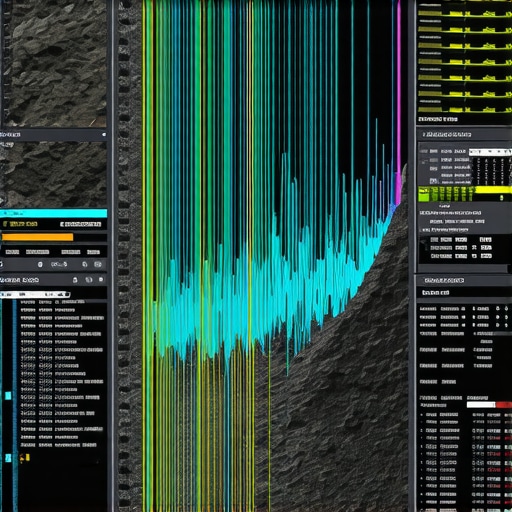
Visual representation of multi-sensor fusion system analyzing subsurface data in real-time, highlighting the integration of electromagnetic and seismic sensors for borehole accuracy.
Addressing Urban Obstructions with Dynamic Correction Techniques
Urban environments pose unique challenges—undetected utilities, variable soil conditions, and underground obstructions demand flexible yet precise correction methods. Dynamic correction techniques involve continuous monitoring of deviation metrics, coupled with adaptive control algorithms that modify drilling direction on-the-fly. For example, real-time adjustments to drill bit orientation based on sensor feedback can compensate for unexpected lateral forces, effectively ‘steering’ the borehole back on course. Such innovations are rooted in advanced control theory and predictive modeling, which anticipate drift before it manifests physically.
What Role Will Artificial Intelligence Play in Future Borehole Navigation? Step into the Future
The integration of artificial intelligence (AI) with drilling systems is poised to revolutionize borehole navigation. AI algorithms can analyze historical data and current sensor inputs to predict potential deviations proactively, enabling preemptive adjustments rather than reactive corrections. Furthermore, AI-powered systems can learn from each project, refining their models to improve accuracy over time. This symbiosis of machine learning and real-time control opens new frontiers in efficient, precise underground exploration—an essential advancement as urban underground spaces become increasingly crowded and complex.
For professionals eager to stay at the forefront, exploring collaborations with AI specialists and investing in adaptive drilling platforms is advisable. Engage with industry leaders who are pioneering these solutions and contribute to shaping standards that will define the next era of precision borehole drilling.
Harnessing Advanced Geotechnical Modeling to Preempt Borehole Deviations
Integrating sophisticated geotechnical simulations prior to drilling operations can dramatically improve accuracy, especially in heterogeneous terrains. Utilizing high-fidelity 3D subsurface models derived from seismic and electromagnetic surveys enables engineers to anticipate soil and rock behaviors, facilitating tailored drilling parameters that mitigate deviation risks. This proactive approach not only enhances precision but also optimizes resource allocation and reduces unforeseen delays.
Can Machine Learning Algorithms Predict and Correct Drilling Anomalies?
Emerging machine learning (ML) frameworks analyze vast streams of sensor data in real time, identifying subtle patterns indicative of potential deviation trajectories. By training models on diverse geological datasets, operators can receive predictive insights that prompt preemptive adjustments to drilling direction. This intelligent feedback loop empowers advanced correction strategies, elevating borehole accuracy in the face of complex subsurface conditions.
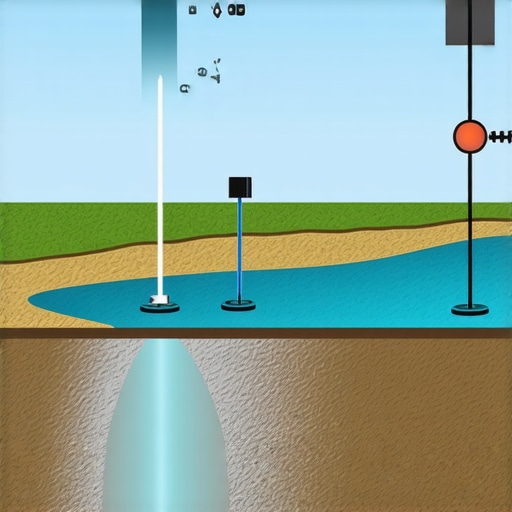
Enhancing Tunneling Accuracy Through Multidisciplinary Sensor Fusion
Fusion of electromagnetic, seismic, and inertial measurement units (IMUs) provides a holistic understanding of the subsurface environment and drill trajectory. Multisensor data fusion algorithms synthesize inputs to offer real-time 3D mapping and deviation detection, enabling dynamic course corrections. Such integrated systems demand interdisciplinary expertise—geophysicists, data scientists, and drill operators—that work collaboratively to refine accuracy thresholds to near-perfect levels.
Why Is Adaptive Control the Future of Underground Navigation?
Adaptive control systems dynamically modify drilling parameters in response to incoming sensor data, allowing for instantaneous correction of unforeseen deviations. Incorporating predictive analytics and control theory, these systems continuously learn and adapt, maintaining alignment despite variable geological factors. This evolving capability minimizes the need for costly remedial work and supports the complex demands of urban underground infrastructure development.
Is Investing in Multiparameter Sensing the Next Leap for Drilling Precision?
Combining magnetic, seismic, and acoustic sensors into a unified multichannel system offers unparalleled insights into subsurface heterogeneity. Supported by machine learning, this sensor fusion approach detects minute anomalies, permitting preemptive course adjustments and significantly reducing deviation occurrences. For industry professionals seeking a competitive edge, deploying such integrative sensing solutions is paramount for 2026 and beyond.
To explore the full potential of these innovations, visit Advances in Sensor Fusion for Subsurface Exploration and stay at the forefront of underground drilling excellence. Sharing your experiences or challenges encountered with emerging technologies helps push the boundaries of what is achievable in borehole precision.
Transforming Urban Boring with Real-Time Correction Protocols
Urban environments compel engineers to develop adaptive strategies that accommodate unforeseen underground features. Implementing real-time correction protocols—leveraging high-speed data processing and agile control algorithms—is essential. These protocols enable drill heads to respond instantaneously to sensor feedback, navigating around utilities, rock layers, and obstructions with minimal deviation. Consequently, urban boreholes meet their intended paths, ensuring infrastructure integrity and cost efficiency.
Expert Innovations Shape Underground Construction. As the underground infrastructure landscape evolves rapidly, industry leaders recognize that embracing cutting-edge techniques is essential for achieving unparalleled borehole accuracy in 2026. Integrating real-time data analytics, advanced sensor fusion, and adaptive control systems enables practitioners to stay ahead of geological challenges, ensuring projects are completed with minimal deviations and maximal safety.
Implementing Strategic Soil Stabilization. Beyond technology, the deployment of segmented stabilization methods allows for tailored soil reinforcement in heterogeneous terrains. This nuanced approach mitigates lateral deviations, especially in urban settings where underground obstructions are frequent. Staying vigilant and adaptable in these techniques is vital for maintaining directional integrity and reducing costly rework.
Prioritizing Interdisciplinary Collaboration. Achieving industry-leading precision necessitates synergy among geotechnical engineers, data scientists, and drilling operators. Collaborative efforts optimize sensor deployment, data interpretation, and intervention strategies, which collectively elevate borehole quality and project reliability. Cultivating such cross-disciplinary expertise will define successful projects in the complex underground environments of 2026.
Curated Resources to Elevate Your Expertise
- Hydrovac Excavation and Safer Subsurface Work: Offers comprehensive insights into precision excavation techniques and safety protocols, essential for high-stakes underground projects. – https://hydrovacdrilling.com/hydrovac-excavation-ultimate-guide-to-safer-underground-work-in-2025
- Advances in Sensor Fusion for Subsurface Exploration: Delivers in-depth coverage of integrated sensor systems supporting real-time deviation correction. – https://hydrovacdrilling.com/advances-in-sensor-fusion-for-subsurface-exploration
- Effective Utility Mapping Strategies for 2026: Guides on proactive planning and execution to reduce deviation risks during subterranean utility placement. – https://hydrovacdrilling.com/borehole-drilling-methods-effective-strategies-for-precise-utility-mapping
Reflecting on Precision and Preparedness
Achieving borehole accuracy in 2026 hinges on embracing innovative tools, fostering interdisciplinary partnerships, and applying strategic stabilization methods. These elements combine into a robust framework, empowering professionals to push the boundaries of underground engineering excellence. As the field advances, your proactive engagement with these insights can lead to safer, more efficient, and precise infrastructure development—setting new standards for the industry. Share your experience, explore further resources, or contribute your expertise to help shape the future of underground drilling and trenching advancements.