Elevating Urban Subsurface Operations Through Sophisticated Hydrovac Applications
In today’s complex urban environments, the demand for precise, efficient, and safe excavation methods has intensified. Vacuum excavation, especially hydrovac technology, has emerged as a pivotal solution, transforming traditional trenching and borehole procedures. To fully leverage its capabilities, understanding the nuanced interplay between soil properties, equipment specifications, and site-specific challenges is essential. This article delves into advanced strategies and innovations that elevate the efficacy of vacuum excavation in intricate settings.
The Science Behind Soil Variability and Its Impact on Trenching Efficacy
Soil heterogeneity significantly influences hydrovac performance, demanding an expert comprehension of subsurface conditions. Saturated soils, dense clay layers, or gravelly substrates require tailored vacuum pressures and strategically placed auxiliary shoring systems to prevent collapse or unintended settlement. Recent studies, such as those published in the Geotechnical Journal, emphasize the importance of pre-excavation soil analysis to optimize vacuum parameters and minimize site disruption.
Cutting-Edge Hydrovac Equipment and Its Role in Safety and Precision
Modern hydrovac units boast adaptive control systems that fine-tune vacuum intensity based on real-time feedback, significantly reducing the risk of utility damage. Advanced nozzle designs and high-capacity pumps enable faster excavation with reduced soil disturbance, which is crucial in congested urban landscapes where utility lines are densely packed. Integrating these technological innovations with comprehensive site assessments leads to safer and more accurate trenching and boreholes.
Environmental Considerations and Regulatory Compliance in High-Density Zones
Urban excavation progresses within strict environmental regulations, demanding meticulous waste management and dust control. High-level planning encompasses erosion prevention measures and noise mitigation protocols, especially during sensitive operations near historical sites or occupied buildings. Implementing best practices from authoritative sources such as the EPA guidelines ensures regulatory adherence while optimizing operational integrity.
Addressing Groundwater Intrusion and Soil Liquefaction Challenges
When excavating near water tables or in saturated sediments, the risk of soil liquefaction and groundwater ingress escalates. Techniques such as controlled dewatering and real-time soil stability monitoring prevent trench failure. In addition, employing high-pressure water jets combined with robust vacuum systems can mitigate risks associated with sandy or silty soils, which are prone to collapse or flow failure. Mastery of these methods reduces hazards and enhances project longevity.
How can advanced sensor technology improve utility detection accuracy during hydrovac operations?
Utilizing pioneering sensor systems, including ground-penetrating radar (GPR) integrated with real-time data analytics, markedly enhances the detection of underground utilities, even in complex urban settings. This synergy between sensor precision and adaptive excavation techniques diminishes the risk of accidental utility strikes and improves overall site safety. Continuous innovation in this domain warrants ongoing professional training and integration with digital site management platforms.
For comprehensive insights into optimizing utility detection, explore our authoritative guide on borehole drilling with advanced vacuum technology. Professionals are encouraged to contribute their field experiences to build a collective expertise base, moving towards safer and more efficient urban excavation practices.
Mastering the Art of Soil Reinforcement During Vacuum Excavation
One of the most complex challenges in urban hydrovac operations is maintaining soil stability, especially in zones characterized by loose, saturated, or variable soil conditions. Traditional shoring methods, while effective, often fall short in rapid deployment or adaptability to unforeseen subsurface changes. Recent technological advancements, like real-time soil monitoring sensors integrated with vacuum systems, enable operators to dynamically adjust extraction parameters, thereby reducing risks of trench collapse or utility damage. These innovations not only enhance safety but also streamline excavation timelines, enabling more precise and less invasive operations.
Reimagining Utility Detection with Multi-Sensor Fusion
Accurate detection of underground utilities remains a cornerstone of safe excavation. While ground-penetrating radar (GPR) has served as a mainstay, its limitations in certain soil types necessitate supplementary technologies. The fusion of multiple sensing modalities—such as electromagnetic inductance, acoustic localization, and infrared thermography—creates a comprehensive utility detection framework, significantly reducing false positives and missed detections. By utilizing data analytics and machine learning algorithms, these multi-sensor systems adapt and evolve, providing an unprecedented level of accuracy even in complex urban landscapes. This approach embodies a proactive strategy for utility protection, aligned with the best practices highlighted by industry leaders like Hydrovac Drilling.
Challenging Assumptions: Does All Soil Deserve Immediate Excavation?
Common practice often dictates immediate removal of uncertain soil pockets, yet emerging research advocates for a more nuanced approach. For instance, saturated or chemically reactive soils can sometimes be left untouched temporarily, allowing in-situ stabilization measures to take effect. Techniques such as chemical grouting or soil reinforcement injections can transform problematic zones into stable substrates, reducing excavation complexity and environmental impact. This paradigm shift encourages professionals to consider site-specific soil behavior more thoroughly, fostering safer and more sustainable excavation strategies.
What cutting-edge innovations will redefine soil stabilization practices in the next decade?
Advancements in nanotechnology-based soil stabilizers and bio-engineered solutions promise to revolutionize traditional methods. These innovations aim to create more resilient soil structures with minimal environmental footprint, facilitating efficient excavations without extensive shoring or reinforcement. Staying abreast of these developments requires engagement with industry research and collaboration with innovative solution providers, highlighting the importance of continuous professional education. For an in-depth exploration of innovative soil stabilization methods, consult our comprehensive guide on the science behind hydrovac technology.
Interested in integrating these advancements into your projects? Reach out to our expert team to discuss tailored solutions or explore further resources on breakthrough techniques that keep your site safe and compliant. Sharing your experiences can also help shape future industry standards—connect with us through our contact page.
Are real-time soil monitoring sensors the game-changer for trench stability?
Integrating cutting-edge sensor technology directly into hydrovac equipment allows operators to continuously assess soil conditions during excavation. These sensors provide immediate feedback on parameters such as moisture content, shear strength, and stress levels, enabling dynamic adjustments to vacuum pressure and water flow. Such responsiveness significantly minimizes the risk of trench failure, especially in unpredictable subsurface environments common in dense urban zones. Adoption of these sensors, as highlighted by the recent findings in the Geotechnical Engineering Journal, marks a pivotal shift towards predictive excavation safety.
Adopting Nano-Engineered Soil Stabilizers for Future-Ready Excavation
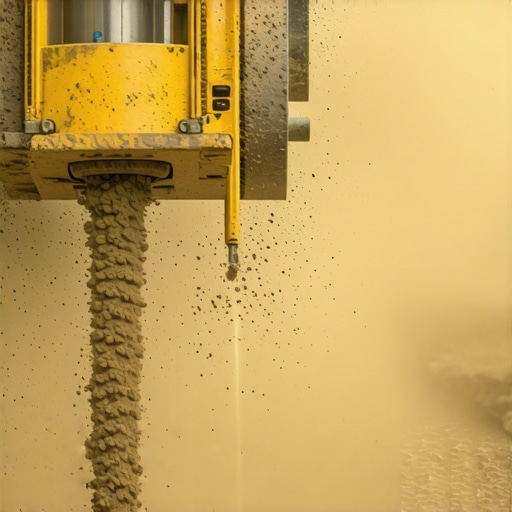
Looking beyond current practices, the advent of nanotechnology offers transformative potential in soil stabilization. Nano-aggregates, with their immense surface area and reactivity, can reinforce soil structures at a molecular level, offering enhanced resistance against liquefaction and collapse. These innovative materials can be applied via injection, creating a durable, non-invasive, and environmentally benign solution suitable for sensitive urban settings. The evolution of such materials is rapidly progressing, as documented by researchers at the Nanotech Update. Industry professionals must stay informed and experiment with pilot projects to realize these benefits fully.
Engaging with emerging nanotechnology solutions not only elevates safety standards but also aligns with the push for sustainable, low-impact construction practices. To explore practical implementations and case studies, consult our upcoming webinar series or contact us for personalized guidance.
What role will machine learning play in predictive soil analysis for urban excavation?
Machine learning algorithms, trained on vast datasets of soil types and excavation outcomes, have the potential to forecast subsurface behavior with unprecedented accuracy. By analyzing variables such as soil composition, moisture levels, and historical failure instances, AI-driven models can recommend optimal excavation parameters and preemptively flag risky zones. Combining these insights with sensor data creates a powerful decision-making framework, reducing delays and safeguarding infrastructure. Leading industry players, including SmartCity Geotech, are pioneering such integrated systems. Embracing these innovations necessitates a strategic commitment to digital transformation and workforce upskilling.
For those interested in adopting predictive modeling, consider participating in specialized training programs or collaborating with geotechnical AI developers. The future of urban excavation safety hinges on our ability to leverage intelligent data harnessing effectively.
Harnessing Digital Twins to Anticipate Subsurface Challenges Before Excavation
As urban subsurface complexity escalates, integrating digital twin technology offers a transformative approach for pre-emptive planning. These highly detailed virtual replicas of underground environments enable engineers to simulate soil responses, utility layouts, and risk scenarios with unparalleled precision. By leveraging high-resolution geospatial data, machine learning algorithms can predict potential complications, streamline decision-making, and optimize excavation sequences, ultimately saving time and reducing costly errors.
The Impact of Soil Microstructure Analysis on Excavation Precision
Recent advancements in nanoimaging and microstructural characterization provide insights into soil composition at a granular level. Understanding pore size distribution, mineralogy, and particle bonding influences vacuum pressure calibration, soil excavation behavior, and stabilization strategies. Deploying portable micro-analysis tools onsite allows operators to tailor equipment settings dynamically, facilitating safer and more efficient trenching, especially in heterogeneous urban terrains.
Can Ultrasonic Utility Detection Outperform Traditional Methods?
Emerging ultrasonic sensing technologies utilize high-frequency vibrations to detect utility lines with high spatial resolution, even through complex soil matrices. When integrated with robotic excavation arms, these sensors can provide real-time feedback, reducing false positives and utility strikes. Published research in the Journal of Applied Geophysics indicates that ultrasonic detection enhances reliability in challenging environments, advocating for broader adoption across the industry.
Why Environmental Sustainability Should Drive Innovation in Soil Stabilization
Eco-conscious practices now shape the future of urban excavation. Bio-based stabilizers, nanocomposites, and water-efficient dewatering techniques minimize ecological footprints. Implementing in-situ soil amendments reduces the necessity for extensive shoring and material transport, aligning construction practices with sustainability goals while maintaining safety standards. Industry leaders emphasize the importance of adopting environmentally friendly solutions as a competitive advantage and regulatory compliance measure.
Leveraging Predictive Analytics to Reduce Project Downtime
By analyzing historical and real-time data, predictive analytics can forecast soil behavior, equipment failures, and utility anomalies. Deploying these insights in project management dashboards allows teams to proactively address issues, reallocate resources, and adjust excavation tactics. This data-driven approach cultivates a proactive safety culture and enhances project reliability, essential in sensitive urban contexts where delays incur significant costs.
Mastering Soil Reinforcement through Adaptive Materials
Adaptive materials, responsive to environmental and mechanical stimuli, are revolutionizing soil stabilization. Shape-memory alloys, self-healing composites, and responsive polymer injections dynamically adapt their properties to shifting subsurface conditions. Their incorporation into excavation workflows promises higher stability, fewer intervention requirements, and minimized environmental impact, making them invaluable in complex, layered urban settings.
How Can Augmented Reality Shape Operator Training and Safety Protocols?
Augmented reality (AR) overlays enhance operator awareness by visualizing underground utilities, soil layers, and hazard zones in real time. This immersive training and operational tool improves precision, reduces accidents, and accelerates decision-making. As AR technology matures, its integration into standard training modules promises to elevate safety standards and operational confidence significantly, especially for complex underground environments.
Interested in pioneering these frontier technologies? Connect with our expert consultants to navigate the integration process, and stay ahead in urban excavation innovation. Your next project could set new industry benchmarks for safety, efficiency, and sustainability.
Expert Insights Shaping Tomorrow’s Groundbreaking Excavation Approaches
Precision in Complex Underground Landscapes
Mastering soil microstructure analysis facilitates tailored excavation strategies, reducing risks in unpredictable urban terrains.
Innovative Sensor Fusion Revolutionizes Safety
Integrating ground-penetrating radar with electromagnetic and acoustic sensors dramatically improves utility detection accuracy, safeguarding infrastructure.
Soil Stabilization Transcending Traditional Methods
Advanced nanotechnology-based stabilizers offer sustainable solutions that enhance trench integrity while minimizing environmental impact.
Real-Time Soil Monitoring Transforms Excavation Control
Onsite sensors provide immediate feedback on subsurface conditions, enabling dynamic adjustments that prevent collapses and utility damages.
Digital Twins Enable Pre-Excavation Simulation
Virtual modeling of underground environments aids in planning and risk assessment, reducing surprises during actual trenching operations.
Curated Resources for the Forward-Thinking Professional
- Geotechnical Journal: Provides cutting-edge research on soil analysis and stabilization techniques that influence modern trenching practices.
- Nanotech Update: Showcases innovative nanomaterials transforming soil stabilization and site safety solutions.
- Journal of Applied Geophysics: Features breakthroughs in sensing technologies like ultrasonic utility detection adaptable to hydrovac excavation.
- EPA Regulatory Guidelines: Offers critical standards on environmental compliance, waste management, and site safety in urban projects.
- Hydrovac Drilling’s Comprehensive Guides: Serve as practical manuals integrating latest innovations, best practices, and expert advice for advanced excavation projects.
The Significance of Integrating Cutting-Edge Innovation into Excavation Strategies
In the rapidly evolving domain of urban trenching, harnessing technologies like sensor fusion, nanotechnology, and digital simulation elevates safety, efficiency, and sustainability. Embracing these innovations allows industry leaders to anticipate challenges, optimize resource use, and set new standards of excellence. Your mastery of advanced expertise directly impacts project success and infrastructure resilience—pioneering a smarter, safer future in underground construction. For continued professional growth, explore our ultimate guide on borehole drilling and vacuum technology, or connect with us to discuss tailored solutions. Your insights and field experience are invaluable—share them with our community to shape the next generation of urban excavation excellence.