Innovative Subsurface Excavation: Elevating Trenching and Vacuum Excavation Techniques
Properly navigating complex underground environments requires more than traditional methods; it demands an integration of advanced trenching strategies, hydrovac technology, and precise borehole management. These techniques are vital for minimizing risks, optimizing project timelines, and ensuring safety compliance in critical infrastructure development.
Leveraging Hydrovac Precision for Complex Soil Conditions
The advent of high-pressure hydrovac systems has revolutionized the excavation landscape by offering non-destructive, precise soil removal, especially in sensitive or congested environments. Experts emphasize adjusting vacuum pressure to match soil consistency, thus preventing damage to utilities and subsurface structures. For instance, in areas with swelling shale formations, fine-tuning the hydrovac pressure prevents blowouts and enhances operational efficiency, a challenge detailed extensively in Hydrovac Drilling’s comprehensive guide.
Optimizing Borehole Stability in Heterogeneous Substrates
Engineering boreholes in layered, variable soils presents unique challenges, particularly regarding sidewall stability and drilling accuracy. Advanced torque and mud circulation settings are crucial for navigating cobble-strewn or fractured bedrock formations. Maintaining optimal mud weight and circulation rates prevents borehole collapse and reduces bit wear, ensuring borehole integrity. Referencing recent studies, such as those found in specialized drilling manuals, provides field-tested parameters to mitigate common issues.
Historical Data and Real-Time Monitoring: Pioneering Adaptive Excavation
The integration of sensor data with drilling and trenching operations enhances predictive capabilities, enabling real-time adjustments to pressures and tool settings. This adaptive approach reduces downtime and mitigates unforeseen complications like soil liquefaction or fluid loss, which are critical in high-risk zones.
What Are the Hidden Risks in High-Pressure Trenching That Experts Overlook?
While managing pressure is fundamental, outstanding practitioners recognize that factors like soil heterogeneity, moisture content, and utility congestion significantly influence trench stability. Overlooking these aspects can lead to catastrophic failures, such as trench wall collapse or utility damage. Consulting specialized documentation, for example, industry white papers, promotes best practices that preempt common pitfalls.
Engineers and operators should also engage in continuous knowledge-sharing through forums and technical workshops, contributing to the collective expertise and safety standards in underground construction. For professionals seeking further depth, exploring advanced mud circulation techniques can yield substantial productivity gains.
As underground projects become increasingly complex, the imperative for nuanced understanding and strategic application of trenching, hydrovac, and borehole techniques grows correspondingly. Embracing technological innovations and leveraging expert insights are essential for pioneering resilient and efficient subsurface infrastructure development.
Redefining Ground Prep: How Precision Can Prevent Costly Mishaps
Effective ground preparation is the backbone of successful underground projects. Experts stress that meticulous site assessment, including soil testing and utility mapping, is essential before trenching begins. Relying solely on traditional methods can lead to unforeseen issues like soil liquefaction or utility strikes. Incorporating advanced techniques such as smart mapping systems enhances accuracy, reducing the risk of accidental damage. For example, using non-invasive detection methods gleaned from expert guidance significantly improves detection reliability in complex sites.
Adaptive Pressure Control: The Key to Safe and Cost-Effective Excavation
One often-overlooked aspect of trench safety and efficiency is dynamic pressure management. Modern hydrovac units equipped with real-time monitoring can adjust jet pressures automatically based on soil feedback, minimizing risks of trench wall collapse or utility damage. Studies indicate that failing to tailor pressure settings to soil conditions increases maintenance costs and safety hazards (see this detailed analysis). Implementing adaptive controls not only safeguards workers but also extends equipment lifespan, translating into long-term savings.
Why Are Subsurface Variability and Utility Congestion Still Challenging Even for Experts?
Despite technological advancements, understanding the subterranean environment’s complexity remains a persistent challenge. Variability in soil composition, moisture levels, and legacy utility lines can undermine even the best planning efforts. Experts emphasize that continuous data collection and situational awareness are critical; however, many still underestimate the importance of integrating multiple data sources for comprehensive site understanding. For instance, combining geophysical surveys with real-time sensor data can give project teams a tactical advantage, reducing surprises during excavation.
Advancements in predictive analytics have promising potential. Referencing recent research from industry-leading studies, integrating this approach enables operators to anticipate soil behavior, fluid dynamics, and utility interference, leading to proactive decision-making and minimized delays.
What Next-Level Strategies Will Revolutionize Underground Construction in the Coming Decade?
As the industry evolves, embracing emerging technologies like AI-powered site analysis and machine learning-driven predictive models will be pivotal. These tools promise to decode complex subsurface data swiftly, enabling operators to adapt on the fly and avoid costly mistakes. For professionals eager to stay ahead, exploring the latest innovations in sensor networks and data analytics—discussed extensively in current research articles—is essential for sustaining competitive advantage.
If you have strategies or experiences navigating underground challenges, share your insights below—your expertise could help shape safer, more efficient excavation practices across the industry.
Enhancing Trench Integrity Through Soil Behavior Analysis
Achieving reliable trench stability begins with a comprehensive understanding of local soil dynamics, which significantly influence structural safety. Utilizing advanced geotechnical assessments, such as cone penetration testing (CPT) and shear wave velocity profiling, allows engineers to classify soil behavior accurately. These insights inform the selection of appropriate shoring techniques and support systems, reducing the risk of wall collapse during excavation. Incorporating real-time data from embedded sensors further refines this process, enabling immediate adjustments to trench support strategies as subsurface conditions evolve, exemplifying an integration of predictive analytics with traditional geotechnical methods.
Preventing Utility Damage: Strategic Approaches and Technological Aids
In highly congested underground environments, utility detection extends beyond surface markings and standard locator devices. Advanced electromagnetic induction technologies, such as ground-penetrating radar (GPR) and multi-sensor arrays, offer enhanced resolution of existing utility lines, including plastic pipes that are difficult to detect with traditional methods. Strategic planning involves not only precise detection but also the development of utility maps that incorporate depth, material, and operational parameters. Employing 3D modeling based on gathered data enables excavation teams to visualize utility networks comprehensively, leading to more targeted and safer trenching activities. For complex projects, iteratively refining these models as excavation proceeds minimizes surprises and utility strikes, which can be catastrophic and costly.
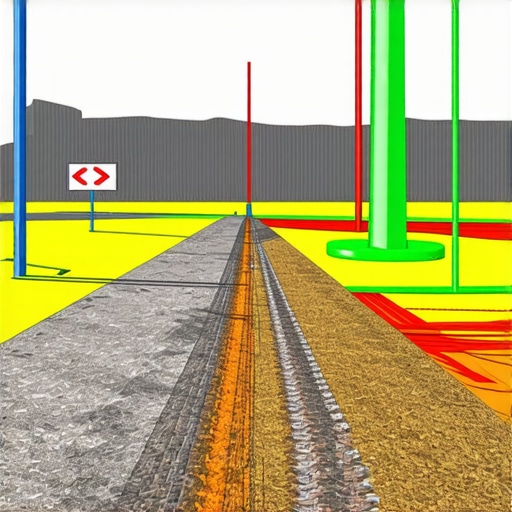
Illustration of advanced utility detection techniques and 3D underground utility models used in complex excavation projects.
Innovative Reinforcement Methods to Counteract Soil Swelling and Liquefaction
Given the unpredictable nature of certain soil types, especially those prone to swelling or liquefaction, engineers are turning to novel reinforcement solutions. Geopolymer injections and soil stabilization with lime or cement are traditional options, but recent innovations explore the use of bio-mediated soil strengthening and polymer-based grouting that adapt dynamically to environmental moisture levels. These methods help maintain trench wall integrity during environmental shifts, particularly in areas with fluctuating water tables. Implementing sensor networks that monitor pore water pressure and soil deformation in real-time allows for proactive reinforcement adjustments, significantly mitigating the potential for sudden failures in vulnerable zones.
The Role of Data Integration in Predictive Subsurface Management
Integrating diverse data streams from geophysical surveys, sensor networks, and historical records culminates in a holistic understanding of the subsurface. Machine learning algorithms process this vast information, identifying patterns and potential risk zones that might elude standard analysis. For instance, predictive models can forecast zones susceptible to soil liquefaction during seismic events or heavy rainfall, prompting preemptive reinforcement or excavation adjustments. This dynamic approach transforms reactive excavation into a proactive operation, enhancing safety and reducing downtime.
What Cutting-Edge Technologies Are Poised to Transform Subsurface Excavation?
Emerging innovations such as autonomous drilling robots, remote sensing drones equipped with multispectral imaging, and advanced simulations powered by artificial intelligence promise to elevate underground construction practices. These technologies facilitate faster detection of hazards, more precise excavation, and minimized environmental impact. Adopting such tools requires a paradigm shift in project planning and execution, emphasizing continuous learning and adaptation. For professionals committed to pushing the boundaries of subsurface engineering, staying abreast of these developments is vital. Explore industry reports and case studies on AI-driven site analysis to determine how these solutions can be integrated into your projects, propelling your practices into the future of underground infrastructure development.
Harnessing AI to Map the Unseen: A Leap in Subsurface Prediction
Advanced artificial intelligence systems now integrate geophysical survey data, sensor feedback, and historical records to create dynamic models of underground environments. These predictive analytics can measure soil liquefaction potential, utility line locations, and void spaces with unprecedented accuracy, enabling engineers to anticipate complications before they manifest. The adoption of machine learning algorithms in site analysis not only accelerates decision-making but also minimizes costly surprises, representing a paradigm shift towards predictive excavation management.
Are Adaptive Systems Reshaping Load-Bearing Decisions in Trench Engineering?
Innovations in real-time monitoring—such as embedded sensors capable of detecting soil deformation, pore water pressure, and material shifts—are revolutionizing how we approach trench stability. These adaptive systems automatically calibrate pressure and support mechanisms, responding to the evolving underground conditions. By doing so, they prevent trench wall collapses, preserve utility integrity, and extend equipment longevity. For professionals in the field, embracing these intelligent control systems is crucial for achieving safer, more efficient excavation outcomes.
External Expertise—The Source of Cutting-Edge Techniques
Top-tier industry resources like the Journal of Geotechnical and Geoenvironmental Engineering provide peer-reviewed insights into emerging methodologies, such as bio-mediated soil stabilization and polymer grouting innovations that adapt dynamically to environmental moisture variations. These specialized publications are indispensable references for geotechnical engineers seeking to implement evidence-based practices rooted in the latest scientific advancements.
How Can Integrating Multilayer Data Optimize Subsurface Operations?
Combining geophysical survey results, sensor feedback, and existing utility maps creates a comprehensive underground environment profile. This integration enables the development of 3D models that visualize utility lines, soil variances, and potential hazard zones with high precision. Such multidimensional data empowers project teams to strategize excavation plans that mitigate risks, improve accuracy, and conform to safety standards. For those aiming to lead in underground construction, mastering data integration techniques is a strategic imperative.
Ready to elevate your excavation projects? Dive into these advanced approaches and let innovation redefine how you manage subsurface challenges—your next project’s success depends on it.
Expert Insights & Advanced Considerations
Optimizing Pressure for Complex Soil Types
Tailoring hydrovac pressure settings based on soil consistency is crucial to prevent utility damage. Fine-tuning pressure prevents blowouts in swelling soils, enhancing safety and efficiency.
Utilizing 3D Utility Mapping to Prevent Strikes
Integrating multi-sensor data with geophysical surveys creates precise underground utility models, significantly reducing the risk of accidental damage during trenching and excavation.
Reinforcing Unstable Ground with Dynamic Solutions
Emerging reinforcement methods, such as bio-mediated stabilization combined with real-time pore pressure monitoring, offer adaptive support to prevent ground failure in variable conditions.
Embracing AI-Driven Site Analysis Innovations
Artificial intelligence enhances predictive capabilities, enabling proactive adjustments and reducing unforeseen complications, marking a new era in subsurface management.
Curated Expert Resources
- Hydrovac Drilling’s Technical Manuals: Offer in-depth guidelines on pressure adjustments, mud circulation, and stability strategies, essential for field professionals.
- Geotechnical Journal Publications: Provide cutting-edge research on soil behavior analysis, reinforcement techniques, and predictive modeling.
- Industry White Papers on AI in Excavation: Showcase the latest advances in integrating machine learning with subsurface exploration, guiding innovations in project planning.
- Geo-Environmental Data Platforms: Enable comprehensive site assessments by integrating multi-source data for precise underground mapping.
Final Expert Perspective
Achieving excellence in subsurface excavation hinges on integrating advanced pressure management, precise utility detection, and innovative reinforcement solutions. Mastering these elements requires continuous engagement with expert resources and embracing emerging technologies like AI-driven analysis. As underground projects grow more complex, professionals who leverage these insights will lead safer, more efficient, and resilient development efforts. Dive deeper into specialized techniques and contribute your insights—together, we shape the future of advanced excavation.